Appetizers · Part 2 of 3: Instructions
Flambéed Chorizo Queso Fundido with the Ultimate Cheese Pull Step-by-step instructions
- Prep
- Cook
- Total
- Serves
- 6
Before you start
Before the pan hits the heat, get the whole station ready, because the flambé at the end moves fast and leaves no time for prep. Shred the cheese, if starting from a ball, and keep it loose. Dice the white onion and the poblano into small, even pieces so they soften in the short cook.
Remove the chorizo from its casing if needed. Position the oven rack in the center and preheat to 425°F (218°C) so the oven is fully hot by the time the skillet is ready. Warm the serving tortillas and set out the chips.
Ingredients at a glance (8)
- 6 oz fresh Mexican pork chorizo, casings removed
- 1/2 white onion, diced
- 1 poblano pepper, diced
- 3 cups shredded Oaxaca and Chihuahua cheese
- 1 oz blanco tequila, warmed
- Tortilla chips, for serving
- Small flour tortillas, warmed, for serving
- Fresh cilantro, chopped, for serving
Instructions
Crisp the chorizo base
- Render the chorizoSet an 8-inch cast-iron skillet over medium heat and add the chorizo, squeezed from its casing. Break it up with a wooden spoon as the fat renders. Let it sizzle undisturbed for a minute at a time so the edges crisp and turn deep brick red, about 4 to 5 minutes total.Look for The chorizo looks crumbly with crisp, darkened edges and the skillet glistens with orange-red chile oil.Tip Cast iron holds heat gently, so medium, not medium-high, keeps the chile in the chorizo from scorching and turning bitter.
- Soften onion and poblanoStir in the diced white onion and poblano pepper, scraping up any browned bits from the bottom of the skillet. Cook for 3 to 4 minutes, stirring occasionally, until the onion turns translucent at the edges and the poblano softens with a light char. Cook until the chorizo reaches 160°F (71°C).Look for The vegetables are tender, the raw chorizo color is gone, and the kitchen smells of toasted chile and sweet onion.Safe temperature 160°F (71°C) internal temperature (ground meat)Tip A little char on the poblano deepens the dip; leave the pieces flat against the hot skillet for a few seconds before stirring.
At the end of this phase, the skillet holds deeply colored chorizo crumbles with crisp, darkened edges, tender-translucent onion, and poblano pieces softened with a light char, all glistening in orange-red chile fat. The aroma should be smoky, sweet, and meaty, with no raw pork smell remaining.
Check two things before moving on: the chorizo is cooked through to 160°F (71°C) with no pink left, and the vegetables are fully tender. If the mixture looks watery, keep it on the heat another minute so the excess moisture evaporates; a wet base will make the cheese weep later.
Bake into molten lava
- Heat the ovenWhile the chorizo mixture finishes, position a rack in the center of the oven and preheat to 425°F (218°C). A fully hot oven matters here: the cheese needs immediate, even heat from below and above so it melts smoothly instead of sitting and weeping while the oven climbs to temperature.Look for The oven reads 425°F on the dial or thermometer and the rack sits at center height.Tip Cast iron is oven-safe handle and all; just remember the handle stays scorching hot, so drape a towel over it once the skillet is out.
- Fold in the cheeseScatter the shredded Oaxaca and Chihuahua cheese over the chorizo mixture in two additions, folding gently with the spoon so the strands tangle around the chorizo and vegetables rather than clumping in one spot. Level the top into an even layer so every scoop pulls up cheese and meat together.Look for Cheese covers the chorizo mixture completely, with no skillet bottom peeking through.Tip Shred the cheese cold and keep it loose; compacted cheese melts unevenly and can seize into a rubbery mass before it turns molten.
- Bake until moltenTransfer the skillet to the hot oven and bake for 8 minutes. The cheese on top should lose its shredded shape and merge into a single bubbling layer, with the chorizo and poblano peeking through like islands. If the top is pale after 8 minutes, give it another minute or two, watching closely.Look for The surface bubbles actively at the edges and the cheese has melted into one glossy, uniform layer.Tip Bubbling at the edge, not the center, is the signal; the center carries over heat and finishes as the skillet sits.
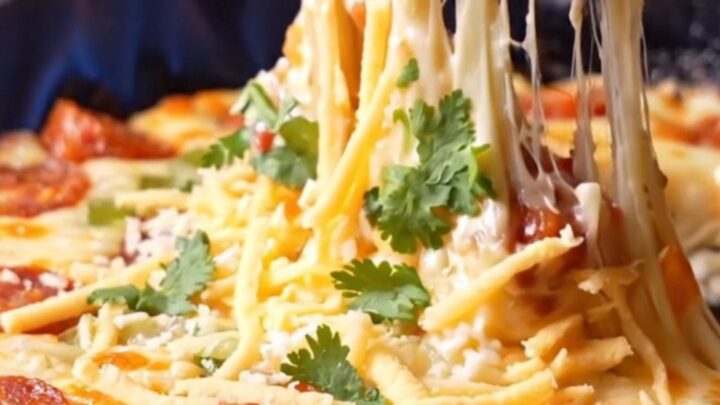
Out of the oven, the cheese should have completely lost its shredded identity, merged into a single glossy, lava-like layer that bubbles actively around the edges where cheese meets hot cast iron. Chorizo and poblano should stud the surface like islands in the melt.
Tilt the skillet slightly with an oven mitt: the cheese should shift as one slow-moving mass, not slide as separate greasy pools. If strands of unmelted cheese remain in the center or the surface looks dull and matte, return it to the oven for one to two minutes. The skillet handle is now extremely hot, so keep a towel over it.
Flame and serve hot
- Warm the tequilaWith about two minutes of baking left, warm the tequila briefly, a few seconds in a microwave-safe cup, until it feels warm to the touch. Warm spirits vaporize readily, which is exactly what a flambé needs; cold tequila poured over hot cheese often refuses to catch. Handle it carefully and keep it away from the stove burners.Look for The tequila is warm, not hot, and no longer cool on the fingertip.Tip Warm it in a small cup on its own, never in the measuring spoon, and set it beside the skillet with the long lighter ready to go.
- Flambé tablesideSet the hot skillet on a trivet away from curtains, shelves or cabinets. Pour the warm tequila evenly over the bubbling cheese, step back, and touch a long lighter to the surface. The blue-orange flames will dance over the top for about 10 seconds, then die on their own as the alcohol burns off.Look for Blue flames with orange tips flicker across the surface, then extinguish themselves within ten seconds.Tip Never lean over the skillet while it flames, and keep a lid within reach; sliding the lid over the pan snuffs the flame instantly if needed.
- Serve with the pullScatter chopped cilantro over the molten cheese, then bring the skillet to the table with warm flour tortillas and a bowl of tortilla chips. Dig a chip in deep, twist, and lift slowly for the dramatic molten pull. Refill warm tortillas with scoops of chorizo-studded cheese and eat while the dip still bubbles.Look for The cheese stretches in long ribbons from chip to skillet and stays glossy and flowing for several minutes.Tip Warm the tortillas in a dry skillet or wrapped in foil in the oven for the final minutes; warm tortillas fold without cracking.
After the tequila is poured and ignited, blue-orange flames sweep across the surface for about ten seconds and then extinguish on their own; that self-extinguishing is the sign the alcohol has burned off and only warm, tequila-scented cheese remains. The surface should look lacquered and slightly deepened in color where the flames passed. Once the flames are fully out, scatter the cilantro over the top and serve immediately, because the dip is at its most fluid in the first five minutes.
Common mistakes
The most common failure is crowding the chorizo at high heat, which steams it into gray, chewy bits instead of crisping it; medium heat and a little patience render the fat properly. The second is using pre-shredded cheese from a bag: the anti-caking starch coating prevents the smooth, flowing melt and the long pull this dish is famous for, so shred from a block or ball. Third, cold tequila often fails to ignite over the cheese; warming it for a few seconds makes the flambé reliable.
How to tell it’s done
The dip is done when three things line up. First, the chorizo: no pink anywhere, crumbly with crisp edges, cooked through to 160°F (71°C) at the stovetop stage. Second, the cheese: after 8 minutes at 425°F it has lost all shredded definition, merged into one glossy, uniformly bubbling layer, and moves as a single molten mass when the skillet is nudged.
Third, the finish: after the tequila flame extinguishes itself, the surface should look lacquered and slightly darker where the flames licked it, releasing a toasty caramel note along with the chile aroma.
- Ground meat: 160°F (71°C) in the thickest part
Up next · Part 3 of 3
4 variations · storage & make-ahead · 5 answers · printable card
Tips, FAQ & printable recipe (Part 3)← Back to the ingredients (Part 1)