Breakfast · Part 1 of 3: Ingredients
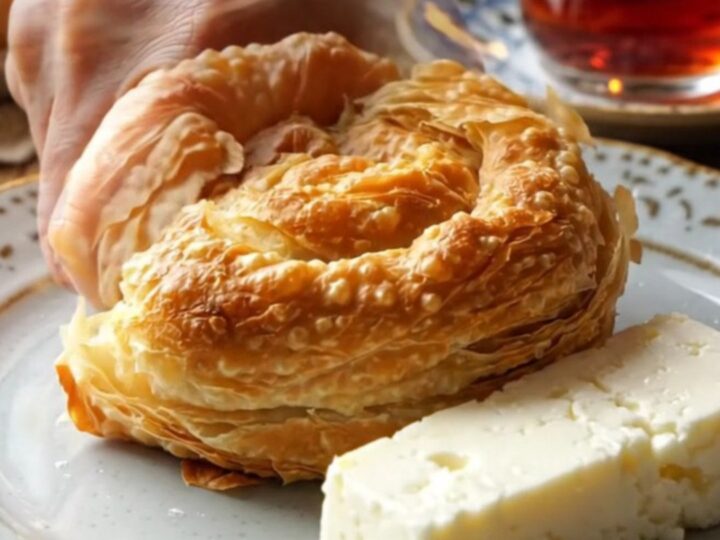
Flaky Turkish Katmeri Flatbread with 50 Buttery Layers
- Prep
- Cook
- Total
- Serves
- 8
This traditional Turkish Tokat Katmeri is a round flatbread with fifty paper-thin, butter-laminated layers that shatter like pastry leaves and melt like butter in your mouth. The dough is simple — flour, water, salt — but the technique of folding, coiling, and rolling creates dozens of delicate strata. Cooked on a hot skillet until blistered and brushed with butter, it turns deep golden and irresistibly crisp. Serve it warm with Turkish cheese and hot tea for an authentic experience.
Tokat Katmeri is a beloved Turkish flatbread from the Tokat region, known for its extraordinary flakiness and rich, buttery flavor. Unlike many breads, it is not baked in an oven but cooked on a hot griddle, which gives it a unique blistered surface and a tender, layered interior. The key is in the lamination: spreading butter and tahini on a thin sheet of dough, folding it like an envelope, coiling it into a spiral, and then rolling it flat again.
This process creates dozens of paper-thin layers that separate and crisp during cooking. The result is a bread that is crispy on the outside, soft and airy within, with a nutty undertone from the tahini. Perfect for breakfast or as a snack, it is often served with Turkish cheese and a glass of hot tea.
Ingredients
- 4 cups all-purpose flour
- 1 1/2 cups water
- 1 tsp salt
- 1/2 cup unsalted butter, melted
- 1/2 cup tahini
Why this recipe works
The method of laminating the dough with butter and tahini is what gives Tokat Katmeri its signature flaky texture. When the dough is folded and coiled, the fat creates barriers between the layers, preventing them from fusing together. As the bread cooks on the hot skillet, the water in the butter turns to steam, pushing the layers apart and creating pockets of air.
This steam also helps the layers become crisp and shatteringly delicate, similar to puff pastry but with a more rustic, homemade feel. The tahini adds a subtle nuttiness that complements the richness of the butter, making every bite deeply flavorful.
The high heat of the skillet is crucial for achieving the blistered, golden exterior. A hot pan quickly sets the outer layers, while the interior steams and cooks through, resulting in a contrast of textures: crisp and crackly on the outside, tender and slightly chewy within.
The brief cooking time — just a few minutes per side — ensures that the bread does not dry out, and brushing with melted butter after cooking adds a final layer of richness and sheen. This method is simple yet precise, and with a little practice, you can produce flatbreads that rival those from a Turkish bakery.
Notes and substitutions
Use all-purpose flour for the best balance of structure and tenderness. Bread flour will make the dough chewier, but all-purpose yields a more delicate crumb. The water should be at room temperature; if it is too cold, the dough will be stiff, and if too hot, it may kill the gluten. The salt not only seasons the dough but also strengthens the gluten network, making it easier to roll thin. When kneading, aim for a smooth, pliable dough that springs back when pressed — this indicates good gluten development.
Tahini is a key ingredient in authentic katmer; it adds a distinct sesame flavor and helps with the flakiness. If you cannot find tahini, you can substitute with other nut or seed butters, but the taste will differ.
Use unsalted butter so you can control the salt level; if you only have salted, reduce the salt in the dough to 1/2 teaspoon. A heavy skillet or cast-iron griddle is ideal for even heat distribution and achieving those beautiful blisters. A non-stick pan will work, but you may not get the same level of browning.
- tahini: You can substitute the tahini with an equal amount of smooth almond butter or sunflower seed butter for a nutty flavor, though the taste will differ.
- unsalted butter: Salted butter works; just reduce the added salt to 1/2 teaspoon.
- all-purpose flour: Bread flour yields a chewier texture, but all-purpose is best for flaky layers.
Equipment
- Large mixing bowl
- Rolling pin
- Heavy skillet or griddle
- Pastry brush
- Clean kitchen towel
Up next · Part 2 of 3
8 steps · 20 min of cooking · what to look for at each stage
Step-by-step instructions (Part 2)