Dinner · Part 2 of 3: Instructions
Fall-Off-the-Bone Crockpot BBQ Ribs (Easy Slow Cooker Recipe) Step-by-step instructions
- Prep
- Cook
- Total
- Serves
- 4
Before you start
Before you begin cooking, make sure your slow cooker is clean and plugged in. Prepare a large, sturdy cutting board and a sharp chef's knife to portion the ribs. Pat the rack of ribs completely dry with paper towels; this helps the barbecue sauce adhere better to the meat.
Carefully peel off the silver skin membrane from the bone side of the ribs if it has not been removed by your butcher. Measure out your barbecue sauce and set up a foil-lined baking sheet for the final broiling step.
Ingredients at a glance (2)
- 3 lb pork baby back ribs, membrane removed
- 2 cups BBQ sauce, divided
Instructions
Prep and Slow Cooker Setup
- Prepare and Portion the RibsCut the rack of ribs into smaller portions of three to four ribs each so they fit comfortably inside your slow cooker. Place the rib sections upright in the crockpot, leaning them against the walls with the meatier side facing outward.Look for The ribs are snugly arranged in the pot.Tip If the ribs are too long, you can curve them slightly to fit.
The ribs should be cut into neat, manageable portions of three to four bones each and arranged upright inside the crockpot. The meatier sides should face outward against the ceramic wall of the slow cooker, ensuring even heat distribution. At this stage, the ribs are raw, cool to the touch, and ready to be coated in the initial layer of rich, savory barbecue sauce.
Low-and-Slow Simmering
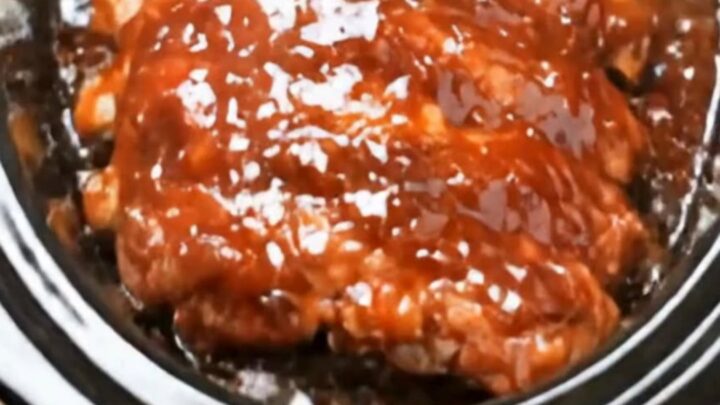
- Slow Cook with BBQ SaucePour half of the barbecue sauce over the ribs, using a brush or spoon to coat the meat evenly. Cover the slow cooker with its lid and cook on low for 7 to 8 hours, or on high for 3 to 4 hours.Look for The sauce is bubbling gently around the meat.Tip Keep the lid closed to maintain constant heat and moisture.
After several hours of slow cooking, the ribs will look incredibly tender, and the meat will begin to pull back slightly from the tips of the bones. A rich, bubbling barbecue sauce liquid will have pooled at the bottom of the crockpot, filling your kitchen with a deeply savory, sweet, and smoky aroma. The meat should feel extremely tender when pierced with a fork.
Glazing and Caramelization
- Transfer to Baking SheetCarefully lift the tender ribs out of the slow cooker using tongs, taking care not to let the meat fall apart, and place them on a baking sheet lined with aluminum foil.Look for The ribs are transferred without breaking.Tip Support the underside of the ribs to keep them intact.
- Glaze and BroilBrush the remaining barbecue sauce generously over the top of the ribs. Broil in the oven for 3 to 5 minutes until the glaze is bubbling and caramelized, ensuring the internal temperature reaches at least 145°F (63°C). Let the ribs rest for at least 3 minutes before slicing.Look for The glaze is glossy and slightly charred.Safe temperature 145°F (63°C) internal temperature (steaks, chops and roasts)Tip Watch closely under the broiler to prevent the sugar in the sauce from burning.
After a quick broil in the oven, the ribs will emerge with a gorgeous, glistening glaze that is bubbly, caramelized, and slightly charred at the edges. The sauce should be thick and sticky, adhering perfectly to the meat.
The pork must reach a safe internal temperature of 145°F (63°C) and rest for at least 3 minutes before slicing, resulting in a beautiful, steaming presentation.
Common mistakes
One common mistake is opening the slow cooker lid too frequently during the cooking process. Each time you lift the lid, a significant amount of heat and moisture escapes, which can add up to twenty minutes to the total cooking time and potentially dry out the meat.
Another mistake is skipping the final broiler step; without this quick blast of high heat, the barbecue sauce remains wet and runny rather than thick, sticky, and caramelized. Finally, do not cook the ribs on high heat if you have the time, as low heat yields the most tender results.
How to tell it’s done
To determine if your ribs are perfectly cooked, look for the meat pulling back from the ends of the bones by about half an inch. You can also perform the bend test: pick up the slab of ribs with tongs from one end; the rack should bend easily and start to crack in the middle, but not break completely apart.
Most importantly, ensure that the pork has reached a safe minimum internal temperature of 145°F (63°C) followed by a 3-minute rest, though ribs are often cooked to 190°F (88°C) for maximum tenderness.
- Steaks, chops and roasts: 145°F (63°C) in the thickest part, then a 3-minute rest
Up next · Part 3 of 3
2 variations · storage & make-ahead · 3 answers · printable card
Tips, FAQ & printable recipe (Part 3)← Back to the ingredients (Part 1)