Desserts · Part 2 of 3: Instructions
Espresso Mascarpone Cheesecake with Caramel and Chocolate, Ready to Slice Step-by-step instructions
- Prep
- Cook
- Total
- Serves
- 12
Before you start
Gather all the ingredients and equipment before you start the crust. Bring the mascarpone, cream cheese and eggs to room temperature so the filling mixes smoothly. Brew the espresso and let it cool completely. Grind the coffee finely and set it aside on a small plate.
Cut the caramel pieces into small cubes with a sharp chef's knife, and keep them chilled until you need them. Set the chocolate bar in the refrigerator to firm up. Line the bottom of the springform pan with a round of parchment paper and wrap the outside with foil if you plan to use a water bath. Preheat the oven to 325°F (163°C) and place a rack in the centre of the oven.
Ingredients at a glance (15)
- 2 cups chocolate biscuit crumbs (from about 20 crisp chocolate biscuits)
- 6 tbsp unsalted butter, melted
- 3/4 cup granulated sugar
- 2 tbsp finely ground espresso coffee
- 2 tbsp strong brewed espresso, cooled
- 24 oz mascarpone cheese, at room temperature
- 8 oz cream cheese, at room temperature
- 3 large eggs, at room temperature
- 1 tsp vanilla extract
- 1/2 cup soft caramel pieces, cut into small cubes, plus more for the topping
- 1/3 cup heavy cream, warmed
- 1 cup cold heavy cream, whipped to stiff peaks
- 2 oz dark chocolate bar, for grating
- 12 whole roasted coffee beans, for decorating
- kosher salt, to taste
Instructions
Crust and filling ready
- Prepare the chocolate crustCrush the chocolate biscuits into fine crumbs in a food processor or in a zip-top bag with a rolling pin. Stir in the melted butter until the crumbs look like damp sand. Press them firmly into the base and 1 inch up the sides of a 9-inch springform pan, then chill.Look for Crumbs hold their shape when pinched and stay compact on the base.Tip Press the crust with the flat bottom of a measuring cup for an even, firm layer.
- Grind the espresso and chop caramelPile the finely ground espresso on the board next to the whole roasted coffee beans. Cut the soft caramel pieces into small cubes with a chef's knife so they melt evenly into the filling and the sauce.Look for Caramel cubes are small and uniform, about the size of a sugar cube.Tip Wipe the knife between cuts so the soft caramel does not stick.
The chocolate crust is firm and pressed evenly into the pan, and the filling is smooth, pale and free of lumps. The espresso is cool, the caramel cubes are small and evenly cut, and the cream cheese and mascarpone have blended completely. Before baking, check that the filling reaches the rim without spilling over the crust.
Smooth the surface with a spatula so the top will bake level. The batter should look glossy and thick, not thin or watery, and it should fill the pan evenly. If the crust slides or the filling looks grainy, chill the pan for 10 minutes and beat the cheese again briefly before baking to restore a smooth texture for the final result.
Baked and chilled cheesecake
- Make the espresso mascarpone fillingBeat the mascarpone and cream cheese with the sugar until smooth. Add the eggs one at a time, beating on low speed after each. Mix in the cooled espresso, ground espresso, vanilla and a pinch of salt, then fold in the caramel cubes.Look for The filling is smooth, pale coffee-coloured and free of lumps.Tip Scrape the bowl often so no pockets of cheese stay unmixed.
- Fill and bake the cheesecakeSpread the filling evenly into the chilled crust, smoothing it to the rim. Bake in a preheated 325°F (163°C) oven until the edges are set and the centre has only a slight wobble, about 55 to 65 minutes. Cool on a rack, then refrigerate at least 6 hours.Look for The edges look set and the centre jiggles only slightly when the pan is tapped.Safe temperature 160°F (71°C) internal temperature (egg dishes)Tip Set the springform pan in a larger pan with hot water to keep the top from cracking.
After baking, the edges are set and the centre has only a slight wobble. The top shows a soft golden tone and no large cracks. Let the cheesecake cool on a rack for about 1 hour, then refrigerate it uncovered for at least 6 hours until fully firm. Before decorating, press the top gently with a fingertip; it should feel cool and firm, not soft. Remove the outer foil and loosen the sides with a thin knife if needed. The cheesecake should lift cleanly from the base and hold its shape when moved, ready for the caramel web.
Decorated and ready to slice
- Make the caramel sauceWarm the heavy cream in a small saucepan. Melt the remaining caramel pieces with the warm cream over low heat, stirring until glossy and smooth. Let it cool slightly so it thickens enough to pipe.Look for The sauce is golden, glossy and flows slowly from a spoon.Tip Keep the heat low so the caramel does not scorch or seize.
- Pipe the caramel spiderwebFill a piping bag with the caramel sauce. Pipe concentric circles and straight lines from the centre across the top of the chilled cheesecake to form a spiderweb pattern.Look for Lines are even and touch at the crossings, forming a clear web.Tip Pipe with steady pressure and lift the tip slowly at the end of each line.
- Add the whipped cream rosettesWhip the cold heavy cream to stiff peaks. Pipe swirled rosettes in a ring around the edge of the cheesecake, then drizzle a little more caramel over the rosettes.Look for Rosettes hold sharp swirls and stand upright without slumping.Tip Chill the piping bag for 10 minutes if the cream softens while you work.
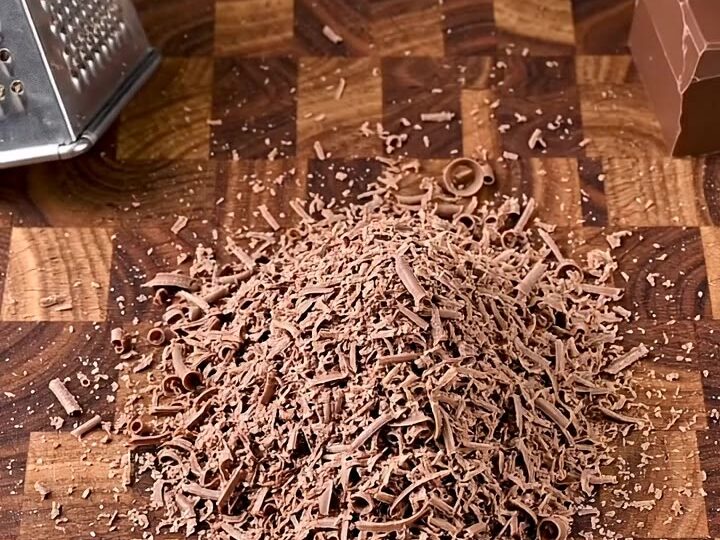
- Grate chocolate and finishGrate the chocolate bar over a box grater so fine shavings fall onto the cheesecake. Scatter the whole roasted coffee beans on top, then slice cleanly with a knife dipped in hot water.Look for Fine chocolate shavings cover the top evenly and the slices come out clean.Tip Chill the chocolate bar for 15 minutes so it grates into fine shavings.
The caramel spiderweb is glossy and evenly spaced, the whipped cream rosettes stand upright in a neat ring, and the grated chocolate covers the top in fine shavings. Look for crisp, well-defined swirls with no slumping and caramel drizzled cleanly over the rosettes. Before slicing, set the cheesecake on a flat surface and check that the decorations are secure. Warm your knife in hot water and wipe it dry between cuts. The interior should look creamy, dense and even when the first slice is lifted, and each piece should keep its shape on the plate without sagging or sliding.
Common mistakes
The most common mistake is overmixing the filling after the eggs go in, which adds too much air and can cause cracks across the surface. Another frequent problem is using cold cream cheese or mascarpone, which leaves lumps in the batter. Pouring hot espresso into the mixture will thin the cheese and weaken its structure.
Skipping the chilling time before slicing causes the cheesecake to tear and the caramel to smear. Piping the caramel sauce when it is too hot can make the web run into a blurred pattern, so let it cool until it thickens slightly. Finally, grating the chocolate at room temperature produces soft clumps instead of fine shavings, so chill the bar first.
How to tell it’s done
A properly baked cheesecake has set edges and a centre that only slightly wobbles when the pan is gently shaken. The top should look smooth and matte, without deep cracks. For safety, the eggs in the filling must reach 160°F (71°C) internally. To check, insert an instant-read thermometer about 1 inch from the edge without touching the crust; the reading should be at least 160°F (71°C).
The cheesecake continues to firm as it cools and chills, so do not bake it until the centre is fully firm, or the texture will become dense and dry. After chilling for at least 6 hours, the slices should hold their shape cleanly when cut with a warm knife.
- Egg dishes: 160°F (71°C) in the thickest part
Up next · Part 3 of 3
4 variations · storage & make-ahead · 5 answers · printable card
Tips, FAQ & printable recipe (Part 3)← Back to the ingredients (Part 1)