Appetizers · Part 2 of 3: Instructions
Effortless Crockpot Swiss and Gruyere Alpine Fondue Step-by-step instructions
- Prep
- Cook
- Total
- Serves
- 6
Before you start
Before beginning, ensure all your ingredients are at room temperature to facilitate even melting. Grate the Gruyere and Emmental cheeses using the coarse side of a box grater for the best consistency.
Prepare your dipping items by cutting artisanal bread into uniform, bite-sized cubes and roasting baby potatoes until they are tender and golden. Have your slow cooker clean and ready, and measure out the wine and Kirsch in advance to ensure the assembly process is smooth and efficient.
Ingredients at a glance (8)
- 1 lb shredded Gruyere cheese
- 1 lb shredded Emmental Swiss cheese
- 2 tbsp cornstarch
- 1 cup dry white wine
- 2 tbsp Kirsch
- 4 cloves smashed garlic cloves
- 1/4 tsp freshly grated nutmeg
- 1/2 tsp black pepper
Instructions
Assembly Phase
- Layering the IngredientsCombine the shredded Gruyere and shredded Emmental Swiss cheese in a bowl, tossing them thoroughly with the cornstarch until every strand is coated. Transfer the cheese mixture into the slow cooker insert. Pour the dry white wine and Kirsch over the cheese, then tuck the smashed garlic cloves into the mixture.Look for The cheese should be evenly coated with the cornstarch to ensure a smooth, stable emulsion during the melting process.Tip Coating the cheese with cornstarch is the secret to preventing the proteins from clumping or separating while the fondue bubbles slowly.
At the end of this phase, the slow cooker insert should contain a well-mixed layer of cheese, aromatics, and liquids. The cornstarch should be evenly distributed, ensuring no dry pockets remain. All the ingredients are now perfectly positioned for the slow, controlled melting process that will occur over the next two hours, setting the stage for a flawless, emulsified final result.
Melting Phase
- Slow Cooking the FondueSet the slow cooker to HIGH for 1 hour, allowing the wine and cheese to begin breaking down. After the initial hour, switch the setting to LOW for another hour. During this time, the cheese will undergo a transformation into a velvety, molten state. Ensure the lid remains on to trap the heat and moisture, which helps create a consistent, smooth texture throughout the cheese blend.Look for The mixture should look uniform, glossy, and bubbling softly around the edges of the ceramic insert.Tip Resist the urge to lift the lid frequently, as heat loss can disrupt the slow, gentle emulsification required for a perfect fondue texture.
After the full two-hour cooking time, the cheese should have transformed into a homogeneous, bubbling mass. The wine and cheese have integrated into a single, glossy emulsion. The aroma should be rich and savory, filling the kitchen with the scent of melted Gruyere and garlic. Check that the mixture is consistent throughout before moving to the final seasoning and serving stage.
Finishing Phase
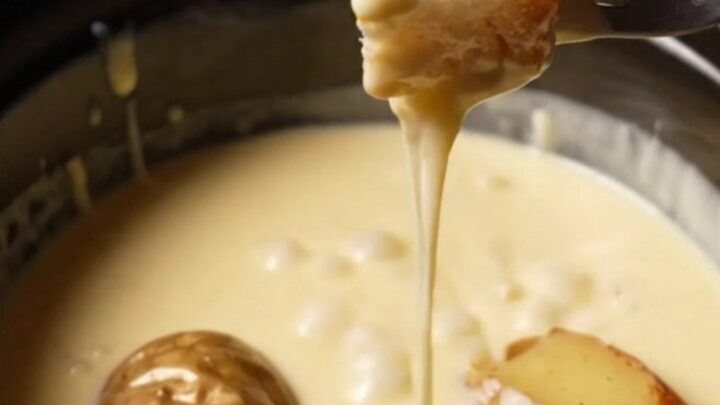
- Final Seasoning and ServiceOnce the fondue is smooth and velvety, stir in the freshly grated nutmeg and freshly cracked black pepper to taste. Give the mixture a final, thorough stir to ensure all flavors are incorporated. Serve immediately while warm, directly from the ceramic Crockpot, accompanied by cubes of crusty artisanal bread and roasted baby potatoes for dipping.Look for The fondue should be thick enough to coat a spoon or piece of bread without dripping off immediately.Tip Keep the slow cooker on the 'Warm' setting if the fondue is being enjoyed over an extended period to prevent the cheese from hardening.
The final phase concludes once the nutmeg and black pepper are stirred in and the fondue reaches a silky, dipping-ready consistency. The dip should look invitingly smooth and be warm enough to maintain its texture while guests serve themselves.
The final check involves ensuring the seasoning is balanced and the fondue is at the optimal temperature for the best possible dipping experience.
Common mistakes
One common mistake is using pre-shredded cheese, which often contains anti-caking agents that prevent a smooth melt. Another error is neglecting to toss the cheese with cornstarch, which is vital for keeping the cheese and liquid emulsified.
Avoid using a high-heat setting for the entire duration, as this can cause the cheese to separate or become stringy. Finally, ensure the garlic is thoroughly smashed to infuse the flavor without leaving large, pungent chunks that might detract from the smooth texture of the dip.
How to tell it’s done
The fondue is ready when the cheese has fully melted into a thick, glossy, and uniform sauce that coats the back of a spoon without any separation. The mixture should be bubbling gently and smell aromatic from the garlic and wine.
When tested with a spoon, the texture should be smooth and velvety, with no visible clumps of unmelted cheese remaining. If the fondue appears too thick, a tiny splash of warm white wine can be stirred in to adjust the consistency to your liking.
Up next · Part 3 of 3
2 variations · storage & make-ahead · 3 answers · printable card
Tips, FAQ & printable recipe (Part 3)← Back to the ingredients (Part 1)