Dinner · Part 1 of 3: Ingredients
Crockpot Beef Bourguignon Short Ribs: Effortless French Luxury
- Prep
- Cook
- Total
- Serves
- 6
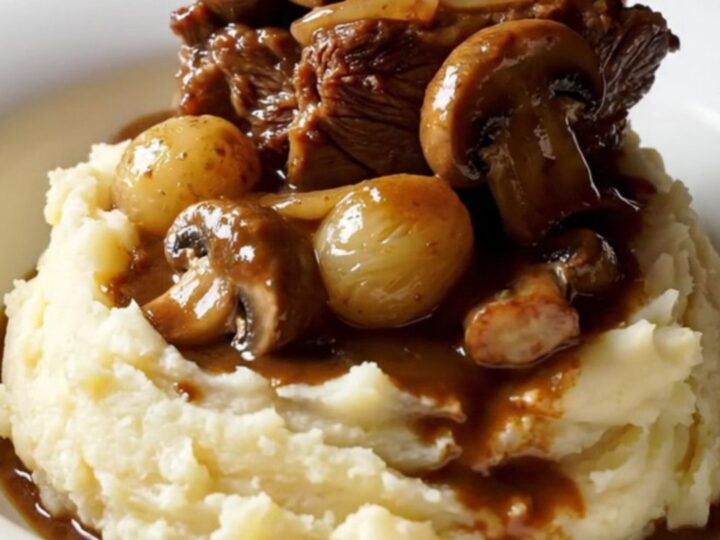
Imagine coming home to the scent of red wine and herbs, with short ribs so tender they fall off the bone. This Crockpot Beef Bourguignon delivers that magic with almost no effort. Just layer the ingredients, pour the wine, and let the slow cooker work its transformation over eight hours. The result is a deeply savory, velvety sauce that clings to every bite, perfect for spooning over buttery mashed potatoes. This is French comfort at its finest, made effortless for busy weeknights.
Beef Bourguignon is a classic French stew, traditionally braised for hours in the oven. This version simplifies the process by using a slow cooker, allowing the flavors to develop slowly while you go about your day. The key is using bone-in short ribs, which become meltingly tender and enrich the sauce with their collagen.
The combination of smoky bacon, earthy mushrooms, sweet pearl onions, and a full-bodied Pinot Noir creates a sauce that is both rustic and elegant. Serve it over mashed potatoes to soak up every last drop of the luxurious gravy.
Ingredients
- 4 lb bone-in beef short ribs
- 150 g smoked bacon lardons
- 250 g cremini mushrooms
- 250 g pearl onions
- 400 ml Burgundy Pinot Noir
- fresh thyme sprigs, to taste
For serving
- buttery mashed potatoes, for serving
Why this recipe works
The slow cooker is the perfect vessel for this dish because it maintains a gentle, consistent heat that breaks down the tough collagen in short ribs, turning them fork-tender without drying out.
The low-and-slow method also allows the flavors of the wine, bacon, and vegetables to meld and concentrate, creating a sauce that is far greater than the sum of its parts. Unlike a stovetop or oven braise, there is no need to monitor the heat or stir constantly; the Crockpot does the work, making this an effortless yet impressive meal.
Bone-in short ribs are ideal for this recipe because the bone adds depth of flavor and the marrow enriches the sauce. The bacon lardons provide a smoky, savory base, while the mushrooms and pearl onions add texture and sweetness.
The Pinot Noir, particularly a Burgundy, is the classic choice, offering bright fruit and earthy notes that complement the beef beautifully. The slow cooking process allows the wine to mellow and integrate, resulting in a sauce that is balanced and complex, not overly alcoholic or sharp.
Notes and substitutions
For the best flavor, choose a Pinot Noir that you would enjoy drinking—it does not need to be expensive, but it should be dry and full-bodied. Look for short ribs that are well-marbled and have a good amount of meat on the bone.
Cremini mushrooms are a good choice because they hold their shape during long cooking; if using button mushrooms, consider leaving them whole or halving them. Pearl onions can be found fresh or frozen; if using fresh, you may want to blanch them briefly to loosen the skins, but this is optional.
This recipe is very forgiving. If you do not have thyme, you can use a teaspoon of dried thyme. The mashed potatoes are the classic accompaniment, but the stew is also delicious over egg noodles or with crusty bread for soaking up the sauce. The recipe can be doubled for a crowd, provided your slow cooker is large enough. The leftovers taste even better the next day, as the flavors continue to develop overnight.
- Burgundy Pinot Noir: Another dry red wine like Côtes du Rhône or Merlot works well; or use beef broth with a splash of red wine vinegar for a non-alcoholic version.
- Cremini mushrooms: White button mushrooms or baby bellas are fine; halve or quarter them if large.
- Pearl onions: Frozen pearl onions (thawed) or a small yellow onion cut into wedges can be substituted.
- Smoked bacon lardons: Thick-cut bacon, sliced into small strips, adds the same smoky depth.
Equipment
- 6-quart slow cooker (Crockpot)
- Tongs
- Measuring cups and spoons
- Cutting board and knife
- Wooden spoon
- Fork for shredding
Up next · Part 2 of 3
5 steps · 8 h of cooking · what to look for at each stage
Step-by-step instructions (Part 2)