Appetizers · Part 2 of 3: Instructions
Easy Slow Cooker Lasagna Dip for Every Party Step-by-step instructions
- Prep
- Cook
- Total
- Serves
- 8
Before you start
Before beginning, ensure that the ground turkey is fully cooked and crumbled according to safety guidelines. Have all your ingredients measured and ready to layer.
Ensure your slow cooker insert is clean and positioned on a level, heat-resistant surface near an electrical outlet. If you are using a ceramic insert, ensure it is at room temperature before starting the heating process to avoid thermal shock.
Ingredients at a glance (4)
- 1 lb ground turkey, cooked and crumbled
- 1 cup ricotta cheese
- 2 cups shredded mozzarella cheese
- 2 cups marinara sauce
Instructions
Layering the base
- Prepare the BaseAdd the cooked and crumbled ground turkey to the bottom of the slow cooker insert. Spread it evenly to create a solid base for the remaining ingredients.Look for The turkey should be spread across the bottom of the cooker.Safe temperature 165°F (74°C) internal temperature (poultry)Tip Ensure the turkey is fully cooked before adding it to the slow cooker.
The turkey should be spread evenly across the base of the slow cooker, creating a stable foundation for the subsequent layers of cheese and sauce. Ensure the turkey is not clumped together, allowing for even heating throughout the cooking process.
Adding the cheese and sauce
- Layer the Cheese and SauceDollop the ricotta cheese over the turkey layer in several spots. Sprinkle the shredded mozzarella cheese evenly over the ricotta. Finally, pour the marinara sauce over the top of the cheese layers.Look for The sauce should cover the cheese layers.Tip Use a spoon to gently distribute the marinara if needed.
The ricotta should be distributed in dollops, and the mozzarella should form a consistent layer over the top.
The marinara sauce must be poured carefully to cover the cheese, ensuring that the moisture is evenly distributed during the slow cooking phase.
Final heating
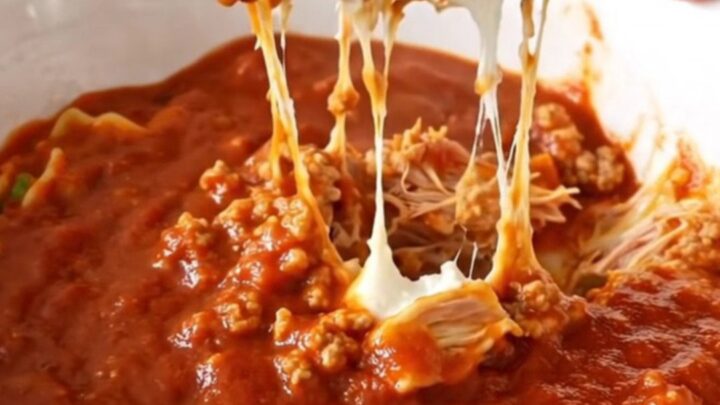
- Heat and ServeCover the slow cooker and cook on low heat for 2 hours until the cheese is melted and the dip is heated through. Once hot, stir slightly to combine the textures before serving.Look for The cheese should be melted and bubbly.Tip Keep the dip warm on the lowest setting during serving.
At the end of the cooking time, the dip should be hot, bubbly, and the cheese should be completely melted. The mixture should have a uniform, scoopable consistency, with the flavors well-integrated and the temperature safe for serving immediately.
Common mistakes
A common mistake is using low-quality cheese that does not melt well, which can result in a grainy texture. Avoid over-stirring the dip before it is fully heated, as this can break down the beautiful layers you have created.
Also, do not substitute the ricotta with a watery alternative, as the excess moisture can prevent the dip from reaching the correct thick consistency.
How to tell it’s done
The lasagna dip is done when the cheese is completely melted, bubbly, and the entire mixture is heated through to an internal temperature of at least 165°F (74°C).
The edges should look slightly browned, and the sauce should be simmering gently. The aroma will be savory and rich, signaling that the ingredients have successfully combined.
- Poultry: 165°F (74°C) in the thickest part
Up next · Part 3 of 3
2 variations · storage & make-ahead · 3 answers · printable card
Tips, FAQ & printable recipe (Part 3)← Back to the ingredients (Part 1)