Dinner · Part 2 of 3: Instructions
Easy Slow Cooker Kung Pao Pork for a Quick Dinner Step-by-step instructions
- Prep
- Cook
- Total
- Serves
- 4
Before you start
Before starting, ensure all vegetables are washed and chopped into uniform pieces. Have the pork loin cut into consistent bite-size chunks and measure out the sauce and seasonings.
Check that the slow cooker is clean and positioned on a stable, heat-resistant surface away from any water sources or flammable materials. Having all ingredients prepped and ready to go before you begin the assembly makes the process seamless and efficient.
Ingredients at a glance (5)
- 1.5 lb pork loin, cut into bite-size chunks
- 2 cups bell peppers, cut into squares
- 1/2 cup roasted peanuts
- 1 tsp red pepper flakes
- 1 cup kung pao sauce, store-bought or made ahead
Instructions
Layering the ingredients
- Prepare the slow cooker basePlace the bite-size pork loin chunks into the bottom of the slow cooker ceramic insert. Ensure the pork is distributed in an even layer to promote consistent cooking throughout the process.Look for The pork should cover the base of the slow cooker insert comfortably.Tip Pat the pork dry with paper towels before adding to the cooker for better browning potential.
At this phase, the pork should be arranged in an even layer at the bottom of the slow cooker. The vegetables, peanuts, and seasonings are layered on top, ready to be coated by the sauce. Ensure the ceramic insert is properly seated in the base before turning the unit on to the low setting to begin the slow, gentle transformation of the ingredients.
Infusion and braising
- Add aromatics and sauceScatter the bell pepper squares and roasted peanuts over the pork. Sprinkle the red pepper flakes evenly over the top, then pour the kung pao sauce over the entire mixture to coat everything thoroughly.Look for The sauce should settle around the pork and vegetables.Tip Avoid over-mixing, as the sauce will naturally distribute during the slow cooking process.
During this middle phase, the slow cooker will begin to emit a pleasant, savory aroma as the sauce heats through and starts to penetrate the pork. The peppers will begin to soften, and the peanuts will absorb some of the sauce. It is important to leave the lid closed to maintain the necessary temperature and moisture levels required for proper braising.
Final cooking and resting
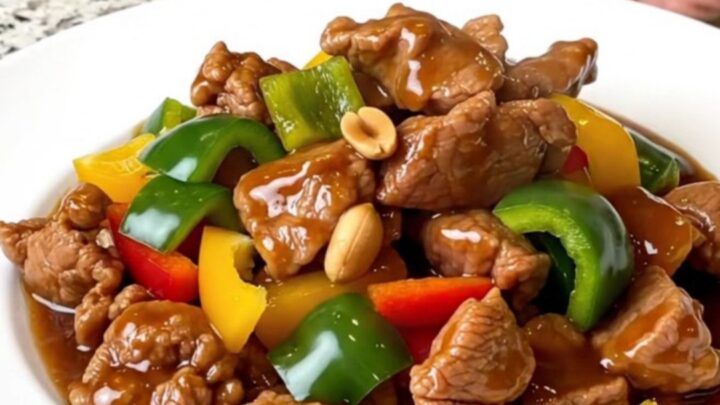
- Slow cook and serveCover and cook on low for 4 hours. Once done, ensure the pork reaches an internal temperature of at least 145°F (63°C). Let the meat rest for at least 5 minutes before serving to ensure the juices redistribute properly for the best texture.Look for The pork is tender and easily pierced with a fork, and the sauce is thickened.Safe temperature 145°F (63°C) internal temperature (steaks, chops and roasts)Tip If the sauce is too thin, stir in a small amount of cornstarch slurry during the last 30 minutes of cooking.
In the final phase, the pork should be tender and the sauce should have thickened slightly around the ingredients. Check the internal temperature of the pork to ensure it has reached the safety threshold of 145°F (63°C).
Once finished, the dish should be allowed to rest briefly, which helps the flavors settle and ensures the meat remains moist when served.
Common mistakes
A common mistake is overcrowding the slow cooker, which can lead to uneven cooking and excess liquid. Ensure the ingredients are spread out evenly. Another error is using too much liquid; because the slow cooker traps moisture, the sauce will not reduce as it would on a stovetop.
If the sauce appears too thin at the end, do not be tempted to add more liquid; instead, thicken it slightly if needed. Finally, avoid lifting the lid frequently, as this releases heat and increases the cooking time.
How to tell it’s done
The pork is done when it is fork-tender and reaches an internal temperature of at least 145°F (63°C). Because the meat is cooked in a slow cooker, it should be soft and succulent.
Use a digital meat thermometer inserted into the thickest piece of pork to verify the temperature. Allow the meat to rest for at least 5 minutes after cooking to ensure the juices are distributed, which contributes to the overall tenderness of the dish.
- Steaks, chops and roasts: 145°F (63°C) in the thickest part, then a 3-minute rest
Up next · Part 3 of 3
2 variations · storage & make-ahead · 3 answers · printable card
Tips, FAQ & printable recipe (Part 3)← Back to the ingredients (Part 1)