Dinner · Part 2 of 3: Instructions
Easy Slow Cooker Fajita Pulled Pork for Busy Weeknights Step-by-step instructions
- Prep
- Cook
- Total
- Serves
- 6
Before you start
Before beginning, ensure your slow cooker insert is clean and positioned on a level, heat-resistant surface. Prepare your ingredients by cutting the pork shoulder into uniform, large chunks, which helps ensure they cook through at the same rate.
Wash and slice your bell peppers and onions into consistent strips to ensure they soften at the same pace. Having your fajita seasoning measured and your jar of salsa ready to go will make the assembly process quick and efficient, allowing you to get the meal started in just minutes.
Ingredients at a glance (5)
- 3 lb boneless pork shoulder, cut into large chunks
- 2 cups red and green bell pepper strips
- 1 cup half-moon onion slices
- 2 tbsp fajita seasoning
- 16 oz chunky salsa
Instructions
Assembly Phase
- Assemble the slow cookerPlace the chunks of pork shoulder into the bottom of the slow cooker insert. Layer the red and green bell pepper strips and the half-moon onion slices evenly over the meat to ensure they cook through while the pork renders its juices.Look for The pork should be in a single layer or slightly piled, with the vegetables covering the top surface.Tip Ensure the pork chunks are relatively uniform in size to promote even cooking throughout the long duration.
At this stage, the slow cooker should be filled with the pork and vegetables. The ingredients should be layered, with the pork on the bottom and the peppers and onions on top. The slow cooker insert should be stable and ready for the lid. Ensure no ingredients are spilling over the sides of the insert, as this can burn during the long cooking process, creating unnecessary cleanup and affecting the overall flavor of the final dish.
Cooking Phase
- Season and cookSprinkle the fajita seasoning over the vegetables and meat, then spoon the chunky salsa over the entire mixture. Cover the slow cooker with its lid and set to low heat for 8 hours. This slow, moist heat environment is essential for breaking down the connective tissue in the pork shoulder.Look for The salsa should coat the ingredients, creating a flavorful liquid base for the pork to braise in.Tip Avoid lifting the lid during the first 6 hours to maintain the consistent internal temperature required for safe cooking.
During the cooking phase, the slow cooker should be emitting a gentle, savory aroma. The pork and vegetables are braising in their own juices combined with the salsa. You may notice some condensation on the inside of the lid, which is normal and helps keep the meat moist.
Do not be tempted to stir the ingredients, as the slow cooker is designed to work undisturbed, maintaining the internal temperature necessary for safe and even cooking throughout the process.
Shredding and Finishing Phase
- Shred and serveOnce the cooking time is complete, verify the pork is tender enough to pull apart easily with a fork. The internal temperature must reach at least 145°F (63°C). Let the meat rest for 5 minutes before shredding it directly in the pot, mixing it well with the peppers, onions, and salsa sauce, then serve warm.Look for The pork should fall apart with minimal pressure from a fork, and the vegetables should be soft and integrated into the sauce.Safe temperature 145°F (63°C) internal temperature (steaks, chops and roasts)Tip If the sauce is too thin after shredding, turn the slow cooker to high and leave the lid off for 15 minutes to reduce.
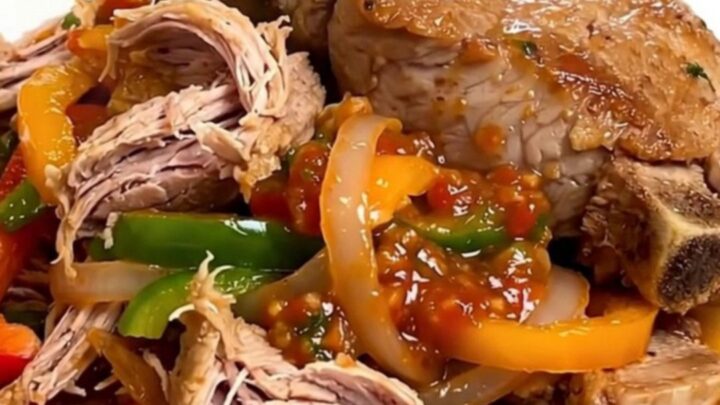
The final phase is characterized by the tender consistency of the pork. The meat should look dark and infused with the colors of the salsa and peppers. When you pierce the pork with a fork, it should offer no resistance. The sauce should be thick and clinging to the shredded meat. Once you have shredded the pork and mixed it thoroughly with the vegetables and sauce, the dish is ready to be plated and served hot.
Common mistakes
A common mistake is overcrowding the slow cooker with too much liquid, which can result in a watery sauce that lacks intensity. Rely on the moisture released by the pork and the vegetables, and only add the amount of salsa specified.
Another error is checking the food too frequently; opening the lid lets heat escape and extends the cooking time, which can lead to uneven results. Finally, failing to trim excessive, thick fat from the pork can result in a final dish that feels overly greasy, so perform a light trim before starting.
How to tell it’s done
The pork is done when it is fork-tender and reaches an internal temperature of at least 145°F (63°C). Use a meat thermometer inserted into the thickest part of the largest pork chunk to verify the temperature. The meat should pull apart easily with minimal resistance.
Once you confirm the temperature, allow the pork to rest for 5 minutes before shredding. This resting period allows the juices to redistribute throughout the meat, ensuring that every shredded portion remains moist and flavorful when served to your family or guests.
- Steaks, chops and roasts: 145°F (63°C) in the thickest part, then a 3-minute rest
Up next · Part 3 of 3
2 variations · storage & make-ahead · 3 answers · printable card
Tips, FAQ & printable recipe (Part 3)← Back to the ingredients (Part 1)