Dinner · Part 2 of 3: Instructions
Easy Sheet Pan Chicken and Broccoli with Ginger Sauce Step-by-step instructions
- Prep
- Cook
- Total
- Serves
- 4
Before you start
Preparation is the secret to a successful sheet pan meal. Before starting, clear enough counter space to accommodate your large sheet pan. Wash and dry the broccoli thoroughly, ensuring it is free of excess moisture so it roasts rather than steams.
Peel and slice the carrots into consistent coins to ensure even cooking. If the chicken breast is very thick, pound it slightly to an even thickness before cutting it into uniform chunks. Having all ingredients prepped and ready on your workspace allows for a seamless assembly process.
Ingredients at a glance (6)
- 1 1/2 lb chicken breast, cut into bite-sized chunks
- 2 cups broccoli florets
- 1 cup carrots, sliced into coins
- 1/2 cup soy ginger sauce, store-bought or made ahead
- 1 tbsp sesame seeds
- 2 tbsp green onions, sliced
Instructions
Pan Assembly
- Assemble the sheet panPreheat your oven to 400°F (200°C). Line a large rimmed sheet pan with parchment paper. Arrange the chicken breast chunks, broccoli florets, and carrot coins in a single, even layer across the pan to ensure uniform roasting.Look for Ingredients should be spread out without overlapping too much.Tip Using a large pan prevents crowding, which allows the vegetables to roast rather than steam.
The pan should be neatly arranged with ingredients in a single, even layer. Everything should look vibrant and fresh, with the chicken and vegetables evenly distributed across the parchment-lined surface. Ensure there is enough space between pieces to allow for proper airflow during the roasting process, which is critical for achieving the right texture and ensuring that the ginger sauce can coat everything effectively once added.
Seasoning and Coating
- Add sauce and garnishSpoon the soy ginger sauce evenly over the chicken and vegetables. Sprinkle the sesame seeds and sliced green onions over the top. Ensure everything is lightly coated for maximum flavor during the cooking process.Look for The sauce should lightly pool at the bottom of the pan.Tip Drizzle the sauce slowly to ensure even coverage across all ingredients.
The sauce should be drizzled evenly, and the garnish of sesame seeds and green onions should be distributed across the pan. At this stage, the pan should look like a cohesive, ready-to-cook meal. The ingredients should be lightly coated with the sauce, and the aroma of the ginger should be noticeable even before the pan enters the oven. This is the moment to double-check that everything is properly positioned for consistent roasting.
Roasting
- Roast until cooked throughPlace the pan in the oven and roast for about 18 to 20 minutes. The chicken must reach an internal temperature of 165°F (74°C) and be opaque white with no pink remaining. Remove from the oven and let the chicken rest for 5 minutes before serving.Look for Chicken is opaque and vegetables are tender but not mushy.Safe temperature 165°F (74°C) internal temperature (poultry)Tip Use a meat thermometer inserted into the thickest piece to verify doneness.
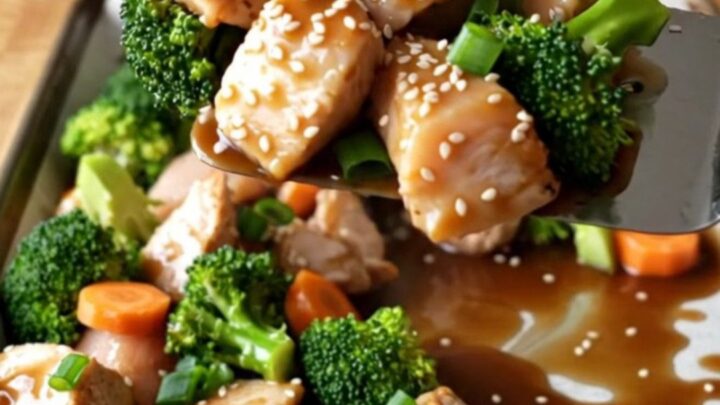
The finished dish should feature golden-tan chicken that is cooked through and tender vegetables that have softened beautifully. The sauce should have thickened slightly and adhered to the ingredients, creating a glossy finish.
The overall appearance should be appealing and appetizing, with the green onions and sesame seeds providing a nice contrast to the roasted vegetables. The kitchen should smell savory and fragrant, indicating that the meal is ready to be served.
Common mistakes
Avoid overcrowding the pan, as this is the most common mistake that leads to steamed rather than roasted ingredients. If the pan is too full, the chicken and vegetables will release moisture that cannot evaporate, resulting in a soggy texture.
Additionally, ensure the oven is fully preheated before putting the pan inside, as starting in a cold oven prevents the ingredients from developing the desired texture. Finally, do not skip the resting period, as it allows the juices to redistribute, ensuring the chicken remains moist and flavorful.
How to tell it’s done
The chicken is perfectly done when it is opaque white throughout with no visible pink. Use a meat thermometer to check that the thickest piece has reached an internal temperature of 165°F (74°C).
The broccoli should be bright green and tender-crisp, and the carrots should be easily pierced with a fork. If the chicken reaches the required temperature but the vegetables need more time, you can remove the chicken to a plate and return the pan to the oven for a few extra minutes.
- Poultry: 165°F (74°C) in the thickest part
Up next · Part 3 of 3
2 variations · storage & make-ahead · 3 answers · printable card
Tips, FAQ & printable recipe (Part 3)← Back to the ingredients (Part 1)