Desserts · Part 2 of 3: Instructions
Easy Moist Chocolate Wacky Cake with Vanilla Frosting Step-by-step instructions
- Prep
- Cook
- Total
- Serves
- 9
Before you start
Before beginning the assembly, gather all necessary equipment, including a clean mini metal spatula, a serving plate, and your prepared cake and frosting. Ensure your workspace is clean, well-lit, and free of unnecessary clutter to allow for smooth movement.
Check that the cake has cooled entirely on a wire rack or at room temperature, as applying frosting to a warm cake will cause it to melt and slide. Have all serving utensils ready to go so that the plating process is efficient and organized for the best presentation.
Ingredients at a glance (2)
- 1 recipe chocolate wacky cake, baked and cooled
- 1 recipe vanilla frosting, store-bought or made ahead
Instructions
Cooling the cake
- Prepare the cake baseEnsure the baked chocolate wacky cake is completely cooled in the glass baking dish before proceeding. This prevents the frosting from melting when applied to the surface of the cake.Look for The dish should feel cool to the touch at the bottom.Tip Cooling the cake fully is essential for a clean, professional finish.
The cake should be completely cool and firm to the touch. The surface should be matte, and there should be no visible steam rising from the pan. The edges should have pulled away slightly from the sides of the glass dish, indicating that the cake has finished setting and is ready for the frosting application.
Frosting application
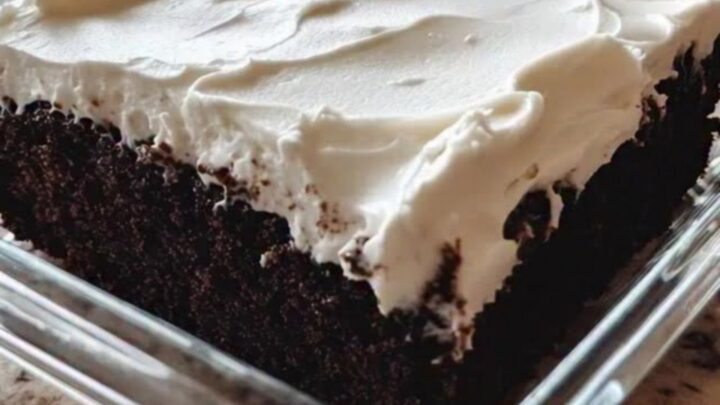
- Apply the vanilla frostingSpread the vanilla frosting evenly over the top of the cooled cake. Use a small offset spatula or the back of a spoon to create decorative swirls, ensuring the entire surface is covered.Look for The frosting should hold its shape when swirled.Tip Keep a light hand to achieve those beautiful, fluffy peaks.
The frosting should be spread in a uniform layer, with visible swirls that catch the light. It should feel stable and fluffy, not overly soft or greasy. Ensure the edges are neatly covered and the top is balanced, providing a clean, professional aesthetic that is ready to be sliced and served to your guests.
Final plating
- Slice and serveUse a mini metal spatula to lift a square slice from the dish. Carefully transfer the slice to a white plate, ensuring the moist, tender crumb remains intact during the process. If using a frosting containing raw eggs, ensure the cake was baked until the internal temperature reached 160°F (71°C).Look for The slice should lift cleanly from the glass dish.Safe temperature 160°F (71°C) internal temperature (egg dishes)Tip Wipe the spatula between cuts for the cleanest looking squares.
Each slice should be lifted cleanly from the dish, maintaining the integrity of the moist crumb and the thick layer of frosting.
The slice should sit level on the plate, with the distinct layers of cake and frosting clearly visible. The texture should appear soft, tender, and inviting, with no signs of crumbling or breakage.
Common mistakes
A common mistake is frosting the cake while it is still warm, which leads to a melted, runny finish that ruins the visual appeal. Another frequent error is using a dull knife for slicing, which can crush the delicate crumb; always use a sharp, clean tool or a dedicated cake server.
Failing to allow the cake to rest after baking can also make it difficult to remove clean slices from the dish. Avoid pressing down too hard when spreading the frosting, as this can tear the soft top layer of the cake.
How to tell it’s done
The cake is done when the top feels springy to the light touch and a toothpick inserted into the center comes out clean or with just a few moist crumbs attached. Avoid overbaking, as this will result in a dry texture that loses its signature tenderness.
The frosting should be applied when the cake is completely cool; it is done when it is spread to an even, smooth layer across the surface, with decorative swirls that hold their structure without drooping or losing their distinct shape.
- Egg dishes: 160°F (71°C) in the thickest part
Up next · Part 3 of 3
2 variations · storage & make-ahead · 3 answers · printable card
Tips, FAQ & printable recipe (Part 3)← Back to the ingredients (Part 1)