Dinner · Part 2 of 3: Instructions
Easy Garlic Butter Ribeye Steak with Herb Basting Step-by-step instructions
- Prep
- Cook
- Total
- Serves
- 2
Before you start
Before you begin cooking, place the ribeye steak on a clean plate and let it sit at room temperature for no more than 30 minutes. This helps the meat cook more evenly. Pat the steak completely dry on all sides using paper towels.
Measure out the unsalted butter, smash the garlic cloves with the flat side of a knife to release their oils, and gather the fresh thyme sprigs.
Having all your ingredients prepped and ready by the stovetop is essential because the cooking process moves very quickly.
Ingredients at a glance (5)
- 1 lb ribeye steak, approximately 1.5 inches thick
- 1 tbsp steak seasoning
- 4 tbsp unsalted butter
- 3 cloves garlic, smashed
- 4 sprigs fresh thyme
Instructions
Prep and Preheating
- Prep and SeasonPat the ribeye steak completely dry with paper towels. Season all sides generously with steak seasoning, pressing the seasoning into the meat. Let the seasoned steak sit at room temperature for no more than 30 minutes before cooking to ensure even heat distribution.Look for The steak surface should look matte and dry.Tip Do not skip patting the meat dry, as moisture prevents a proper sear.
- Heat the GriddlePlace a heavy cast-iron skillet or griddle over high heat. Allow the pan to heat thoroughly until it is smoking hot. This intense dry heat is necessary to create a deep, caramelized crust on the exterior of the steak without overcooking the inside.Look for A faint wisp of smoke rises from the griddle.Tip Ensure your kitchen ventilation fan is turned on high.
The griddle is preheated over high heat until it is smoking hot. The steak is patted completely dry and seasoned generously on all sides with steak seasoning, ensuring every inch of the surface is coated for maximum crust development.
Searing the Crust
- Sear the SteakCarefully place the seasoned steak onto the hot griddle. Sear undisturbed for 2 to 3 minutes, allowing a deep, golden-brown crust to form. Flip the steak using tongs and sear the second side for an additional 2 minutes to lock in the juices.Look for A loud, continuous sizzling sound fills the kitchen.Tip Press down gently with tongs to ensure flat contact.
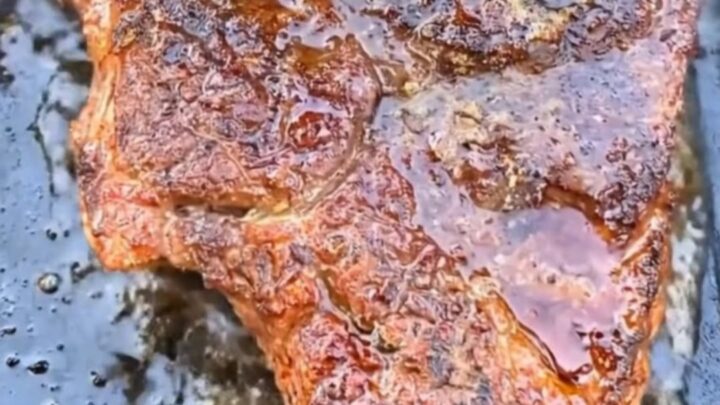
The steak sizzles loudly as it hits the griddle. After a few minutes of searing without moving, a deep, golden-brown caramelized crust forms on the bottom surface. The steak is then flipped to repeat the process on the second side.
Butter Basting and Rest
- Add Aromatics and BasteReduce the heat to medium-high. Add the unsalted butter, smashed garlic cloves, and fresh thyme sprigs to the griddle. Tilt the pan slightly and use a large spoon to continuously scoop the melting, foaming herb butter over the top of the sizzling steak for about 2 minutes.Look for The butter foams actively and turns golden brown.Tip Baste quickly to keep the butter from burning.
- Check Temperature and RestInsert an instant-read meat thermometer into the thickest part of the steak. Verify that the internal temperature has reached at least 145°F (63°C). Transfer the steak to a cutting board or warm platter, pour the remaining pan juices over it, and let the meat rest for at least 3 minutes before slicing.Look for The thermometer reads 145°F (63°C) and the juices stabilize.Safe temperature 145°F (63°C) internal temperature (steaks, chops and roasts)Tip Resting is crucial to keep the steak juicy.
The butter melts rapidly, foaming and bubbling around the smashed garlic and fresh thyme. The aromatic fat is spooned continuously over the steak, infusing it with flavor. Once cooked, the steak rests on a warm cutting board, allowing the juices to redistribute.
Common mistakes
One common mistake is moving the steak around too much once it hits the hot griddle. To develop a thick, flavorful crust, the meat needs continuous, undisturbed contact with the hot surface. Another error is adding the butter too early in the cooking process.
Butter has a low smoke point and will burn, turning bitter, if added at the start of a high-heat sear. Adding it in the final minutes allows you to baste safely without burning the milk solids.
How to tell it’s done
To determine the perfect level of doneness, always use an instant-read meat thermometer inserted into the thickest part of the steak. For a safe and delicious medium-rare to medium result, cook the steak until it reaches an internal temperature of 145°F (63°C).
It is absolutely essential to remove the steak from the heat and let it rest for at least 3 minutes before carving. This rest period allows the muscle fibers to relax and reabsorb the delicious juices.
- Steaks, chops and roasts: 145°F (63°C) in the thickest part, then a 3-minute rest
Up next · Part 3 of 3
2 variations · storage & make-ahead · 3 answers · printable card
Tips, FAQ & printable recipe (Part 3)← Back to the ingredients (Part 1)