Dinner · Part 1 of 3: Ingredients
Easy Dump-and-Bake Chicken Alfredo Broccoli Pasta
- Prep
- Cook
- Total
- Serves
- 6
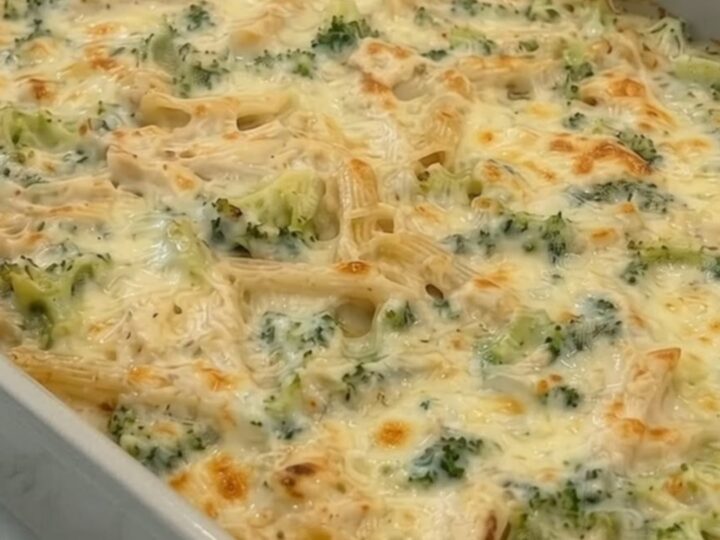
Skip the boiling pot and the dirty pans tonight with this incredibly easy dump-and-bake dinner. This recipe combines uncooked penne pasta, tender chicken breast, crisp broccoli florets, and rich, creamy Alfredo sauce in a single baking dish. Everything cooks together in the oven, emerging as a bubbly, golden-brown casserole that is perfect for busy weeknights when time is short but cravings for comfort food are high.
Comfort food does not have to mean spending hours in the kitchen or washing a mountain of pots and pans. This dump-and-bake chicken Alfredo broccoli pasta casserole is the ultimate shortcut to a satisfying dinner.
By cooking the dry pasta directly in the baking dish with the sauce and broth, the noodles absorb maximum flavor while releasing starches that naturally thicken the sauce. The result is an incredibly velvety texture that rivals any restaurant-style pasta dish. It is a complete, well-rounded meal made with minimal effort, making it a reliable addition to the weekly dinner rotation.
Ingredients
- 8 oz uncooked penne pasta
- 1 lb raw boneless skinless chicken breast, cut into 1/2-inch cubes
- 2 cups broccoli florets, cut into bite-sized pieces
- 16 oz jarred Alfredo sauce
- 1 1/2 cups chicken broth
- 1 1/2 cups shredded mozzarella cheese
Why this recipe works
The magic of this dump-and-bake method lies in the precise ratio of liquid to starch. When uncooked penne is baked in a tightly sealed environment with Alfredo sauce and chicken broth, the steam generated cooks the pasta to a perfect al dente texture. As the pasta cooks, it releases starch directly into the surrounding liquid.
In traditional cooking, this starch is lost in the boiling water, but here, it binds with the Alfredo sauce, preventing the cream from breaking or separating. This creates a remarkably cohesive and luxurious sauce that clings beautifully to every noodle and broccoli floret.
In addition to cooking the pasta perfectly, this enclosed baking method ensures that the chicken breasts remain exceptionally tender and juicy. Rather than drying out under direct heat, the cubed chicken gently poaches in the rich Alfredo mixture, absorbing the savory garlic and cream flavors.
The broccoli florets also steam to tender-crisp perfection during the covered bake, maintaining their vibrant color and texture. When the foil is removed and the cheese is melted under the broiler, you get a beautiful contrast of textures, from the creamy interior to the crispy, golden mozzarella crust.
Notes and substitutions
For the best results, select high-quality jarred Alfredo sauce or use a batch of homemade sauce prepared beforehand. Standard jarred sauces can vary in thickness, so adding chicken broth is essential to provide the necessary moisture for the dry pasta to hydrate and cook through. If the sauce seems exceptionally thick, do not hesitate to add an extra quarter-cup of broth. When it comes to the pasta, sturdy shapes like penne, rotini, or rigatoni work best because they hold up well to the long baking time without becoming mushy or losing their structural integrity.
Fresh broccoli florets are highly recommended for this recipe, as they retain a pleasant bite. If utilizing frozen broccoli, thaw and drain it thoroughly beforehand to prevent excess water from diluting the creamy sauce.
For the cheese topping, shredding a block of low-moisture mozzarella at home yields a far superior melt and cheese pull compared to pre-shredded varieties, which are coated in anti-caking agents. You can easily adapt this dish by substituting raw turkey breast for the chicken, or using a gluten-free pasta option, provided you monitor the liquid absorption closely.
- chicken breast: raw turkey breast, cut into 1/2-inch cubes, or raw shrimp added during the last 10 minutes of baking
- penne pasta: rotini or rigatoni pasta
Equipment
- 9x13-inch baking dish
- measuring cups and spoons
- aluminum foil
- meat thermometer
- mixing spoon
Up next · Part 2 of 3
5 steps · 40 min of cooking · what to look for at each stage
Step-by-step instructions (Part 2)