Dinner · Part 2 of 3: Instructions
Easy Crockpot Pork and White Bean Stew Step-by-step instructions
- Prep
- Cook
- Total
- Serves
- 6
Before you start
Before beginning, ensure that the pork shoulder is trimmed of any excess fat and cut into uniform bite-size cubes. Drain and rinse the white beans thoroughly under cool running water to remove excess sodium and starchy liquid from the can.
Peel and slice the carrots into consistent coins about a quarter-inch thick. Prepare the slow cooker by verifying that the ceramic insert is clean and positioned securely. Having all ingredients measured and ready to add makes the process quick and seamless.
Ingredients at a glance (5)
- 2 lb boneless pork shoulder, cut into bite-size cubes
- 2 cans (15 oz each) white beans, drained and rinsed
- 2 cups carrot coins
- 1 tbsp garlic herb seasoning
- 2 cups vegetable broth
Instructions
Layering the ingredients
- Prepare the slow cookerPlace the cubed pork shoulder into the slow cooker insert, ensuring the meat is evenly distributed at the bottom of the vessel.Look for The pork should cover the bottom of the slow cooker insert evenly.Tip Cut the pork into uniform bite-size pieces to ensure even cooking.
- Add vegetables and beansAdd the drained white beans and sliced carrot coins on top of the raw pork cubes.Look for The beans and carrots should form an even layer over the meat.Tip Using canned beans helps maintain texture during the long cooking process.
The pork, beans, and carrots should be arranged in the slow cooker in a stable, even layer. The bottom of the insert should be covered by the pork, with the vegetables placed neatly on top. Ensure no ingredients are spilling over the sides of the ceramic insert. The setup should look organized and ready for the liquid components, providing a solid foundation for the slow cooking process to begin effectively without the need for constant monitoring or stirring.
Seasoning and liquid application
- Season and add liquidSprinkle the garlic herb seasoning over the bean and vegetable layer, then pour the broth over the entire mixture.Look for Ensure the liquid covers the majority of the solid ingredients.Tip Use a low-sodium broth if you prefer to control the salt levels of the final dish.
The garlic herb seasoning should be evenly distributed over the beans and carrots. The broth should be poured gently so as not to disturb the layers too much, ensuring the ingredients are just submerged. The mixture should look moist and fragrant, with the herbs beginning to settle into the liquid. Check that the broth level is appropriate; it should not be overflowing but should provide enough volume for the ingredients to braise properly in the subsequent cooking phase.
Slow cooking to tenderness
- Cook the stewCover the slow cooker and cook on low for 7 to 8 hours, or until the pork is tender and reaches an internal temperature of 145°F (63°C). Allow the stew to rest for at least 5 minutes before serving.Look for The pork should be tender and easily pierced with a fork.Safe temperature 145°F (63°C) internal temperature (steaks, chops and roasts)Tip Check the temperature in the thickest part of the meat pieces.
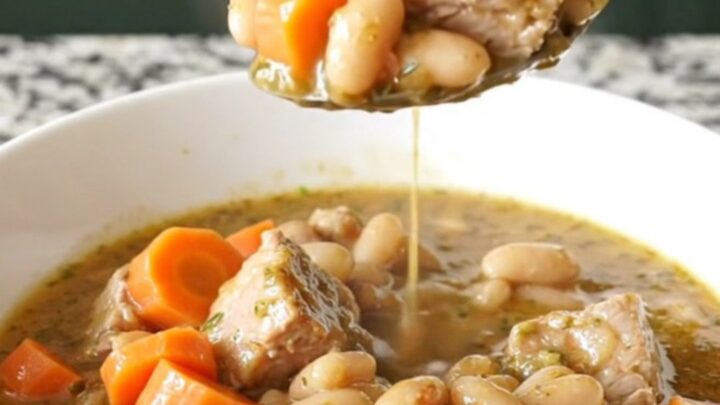
After the long cooking duration, the stew should have a rich, savory aroma and a thick, velvety consistency. The meat should be tender, the carrots soft, and the liquid transformed into a flavorful gravy. The internal temperature of the pork must be at least 145°F (63°C).
The stew should appear cohesive, with the ingredients melded together perfectly. Allow it to rest for a few minutes, which helps the flavors settle and the sauce thicken slightly before serving to guests.
Common mistakes
A common mistake is overcrowding the slow cooker with too much liquid, which can result in a thin, watery broth rather than a rich stew. Avoid adding too much extra water or broth, as the vegetables and meat will release their own juices during the cooking process.
Another error is cutting the pork into uneven pieces; large chunks may remain undercooked while smaller pieces become mushy. Always aim for consistent sizing. Finally, avoid lifting the lid frequently, as this releases heat and significantly increases total cooking time.
How to tell it’s done
The pork is fully cooked when it reaches an internal temperature of 145°F (63°C). At this point, the meat should be exceptionally tender, yielding easily when pressed with a fork. The carrots should be softened but still retain their shape, and the beans should be creamy.
The gravy should have reduced slightly, appearing thick and rich rather than watery. Always verify the temperature with a digital food thermometer inserted into the thickest piece of pork to ensure safety and perfect texture before serving.
- Steaks, chops and roasts: 145°F (63°C) in the thickest part, then a 3-minute rest
Up next · Part 3 of 3
2 variations · storage & make-ahead · 3 answers · printable card
Tips, FAQ & printable recipe (Part 3)← Back to the ingredients (Part 1)