Dinner · Part 3 of 3: Tips & recipe card
Easy Cheesy Bacon Cheeseburger Hashbrown Casserole Tips, FAQ & printable recipe

- Prep
- Cook
- Total
- Serves
- 6
Tips for success
For the absolute best results, let the casserole rest on a wire rack or trivet for at least ten minutes after removing it from the oven.
This resting period is essential because it allows the melted cheese sauce and starches from the hash browns to cool slightly and set, making it much easier to slice and serve clean portions. Slicing into the casserole immediately will result in a loose, messy scoop rather than a beautifully defined square.
If you want to enhance the signature cheeseburger flavor profile, consider stirring in a tablespoon of yellow mustard and some finely chopped dill pickles directly into the beef and potato mixture before baking.
This adds a bright, acidic contrast that cuts through the richness of the cheddar cheese and bacon. You can also garnish the finished casserole with freshly chopped green onions or sliced jalapeños just before serving to add a fresh, colorful pop.
Variations
- Spicy Jalapeño Cheeseburger: Fold chopped pickled jalapeños and a pinch of cayenne pepper into the beef mixture, and use pepper jack cheese instead of cheddar.
- BBQ Bacon Cheeseburger: Drizzle a quarter cup of sweet barbecue sauce over the beef before mixing it with the hash browns to add a smoky, sweet twist.
Storage and make-ahead
- Fridge
- Store in an airtight container in the refrigerator for up to 3 to 4 days, letting it cool for at most 2 hours beforehand.
- Freezer
- Freeze the unbaked or baked casserole tightly wrapped for up to 3 months. Thaw in the fridge overnight before baking.
- Reheat
- Reheat individual portions in the microwave, or warm the entire dish in a 350°F (175°C) oven for 15-20 minutes until hot.
Store any leftover casserole in an airtight container in the refrigerator for up to three to four days. To preserve the texture, let the casserole cool completely at room temperature for no more than two hours before sealing and refrigerating it. If you want to store it directly in the baking dish, cover it tightly with a layer of plastic wrap followed by aluminum foil to prevent the cheese from absorbing refrigerator odors.
This casserole is an excellent candidate for meal prep or making ahead of time. You can fully assemble the beef, potato, and soup mixture in the baking dish, cover it tightly with foil, and store it in the refrigerator for up to twenty-four hours before baking. When you are ready to serve, simply bake it as directed, adding about five to ten extra minutes to the initial baking time to account for the cold dish.
Serving ideas
Serve this hearty casserole hot, cutting it into generous squares that showcase the layers of seasoned beef, tender hash browns, and melted cheese. To complete the cheeseburger experience, set out a variety of classic burger toppings on the table so everyone can customize their plate.
Shredded iceberg lettuce, sliced ripe tomatoes, dill pickle chips, and a drizzle of ketchup or mustard make fantastic additions that bring fresh textures to the dish.
This dish is incredibly filling on its own, but it pairs beautifully with a simple, crisp green salad tossed in a light vinaigrette to balance the rich, savory flavors.
For a fun diner-style meal, you could also serve it alongside a bowl of creamy coleslaw or some roasted green beans. It is a fantastic option for potlucks, game day gatherings, or casual family dinners where you want to serve something comforting and universally loved.
Frequently asked questions
Can frozen hash browns be used without thawing them first?
What is the best way to prevent the casserole from turning out greasy?
Can this casserole be frozen after it has been fully baked?
Easy Cheesy Bacon Cheeseburger Hashbrown Casserole
Ingredients
- 1 lb ground beef
- 1 tsp seasoned salt
- 20 oz frozen shredded hash browns, thawed
- 10.5 oz canned condensed cheddar cheese soup
- 2 cups shredded cheddar cheese, divided
- 1/2 cup cooked bacon crumbles
Instructions
- Heat a large skillet over medium-high heat. Add the ground beef, breaking it apart with a wooden spoon as it cooks. Season the meat evenly with the seasoned salt. Continue cooking, stirring occasionally, until the beef is fully browned and has reached a safe internal temperature of 160°F (71°C), which takes about 8 to 10 minutes. Drain any excess grease from the skillet.
- In a large mixing bowl, combine the thawed and drained shredded hash browns, the condensed cheddar cheese soup, one cup of the shredded cheddar cheese, and the cooked and drained seasoned ground beef. Stir the mixture thoroughly with a large spoon until all the ingredients are evenly distributed and coated in the cheese soup.
- Grease a nine-by-thirteen-inch baking dish with cooking spray. Transfer the potato and beef mixture into the prepared baking dish, using a spatula to spread it into an even, flat layer. Press down gently on the surface to pack the ingredients slightly, which helps the casserole set properly as it bakes.
- Place the baking dish in the preheated oven at 375°F (190°C). Bake uncovered for 25 minutes, or until the casserole is heated completely through and you can see the cheese sauce bubbling vigorously around the edges of the dish.
- Carefully remove the baking dish from the oven. Sprinkle the remaining one cup of shredded cheddar cheese evenly over the top of the casserole, then scatter the cooked bacon crumbles over the cheese. Return the dish to the oven and bake for an additional 5 minutes until the cheese is completely melted and bubbling.
- Remove the casserole from the oven and place it on a wire rack or heat-resistant countertop. Let the dish rest undisturbed for 10 minutes before slicing. This allows the starches and cheese to set, ensuring clean, beautiful slices when serving.
Estimated nutrition per serving
- Calories
- 450
- Protein
- 22 g
- Carbohydrates
- 24 g
- Fat
- 30 g
- Fiber
- 2 g
- Sugar
- 3 g
- Sodium
- 850 mg
Next recipe
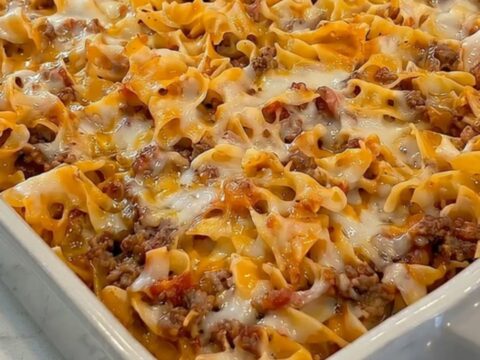
Cheesy Ground Beef Noodle Casserole
See the recipe → →This recipe is based on a short cooking video and is published under the pen name Clara Weller. It was checked before publication, but errors can slip through. Nutrition, when shown, is an estimate. Read more in our editorial policy and on our food safety page.
More recipes to try
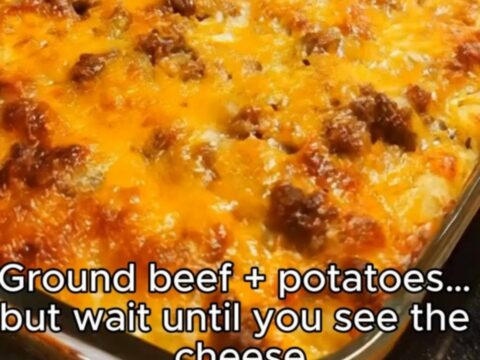
Cheesy Hamburger Potato Casserole
Total time: 1 h 15 min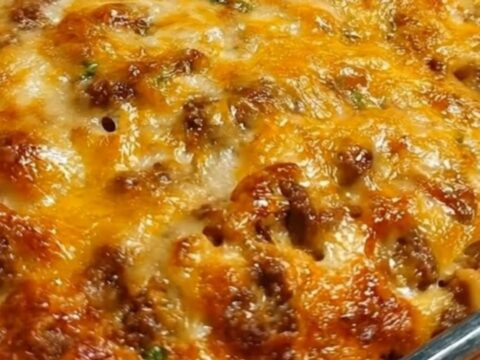
Million Dollar Cheesy Beef Spaghetti Casserole
Total time: 1 h
Creamy Ground Beef with Egg Noodles in One Skillet
Total time: 25 min
Easy Firecracker Casserole with Seasoned Beef and Bubbly Cheese
Total time: 55 min
Cheddar Bay Hamburger Casserole
Total time: 55 min