Dinner · Part 2 of 3: Instructions
Easy Cajun Salmon and Shrimp Bake in Garlic Butter Step-by-step instructions
- Prep
- Cook
- Total
- Serves
- 4
Before you start
Before you begin cooking, gather all your ingredients and prep them to ensure a smooth, uninterrupted process. Start by preheating your oven to 400°F (204°C) so it reaches the correct temperature by the time your sheet pan is ready.
Melt the butter in a small bowl, then stir in the minced garlic and Cajun seasoning until fully combined. Pat the salmon fillets and shrimp completely dry with paper towels to ensure the seasoned butter adheres properly and to prevent excess steam from diluting the rich flavors during baking.
Ingredients at a glance (7)
- 1 1/2 lb salmon fillets, cut into 4 portions
- 1 lb large shrimp, peeled and deveined
- 1/2 cup unsalted butter, melted
- 3 cloves garlic, minced
- 2 tbsp Cajun seasoning
- 1 lemon, sliced
- 2 tbsp fresh parsley, chopped
Instructions
Prep and Seasoning
- Prepare the Oven and Baking SheetPreheat your oven to 400°F (204°C). Line a large, rimmed baking sheet with aluminum foil or parchment paper for easy cleanup, then set it aside.Look for The oven should be fully preheated before the seafood goes in.Tip Using heavy-duty foil prevents the butter from leaking onto the pan.
- Mix the Cajun Garlic ButterIn a small bowl, combine the melted unsalted butter, minced garlic, and Cajun seasoning. Stir the mixture thoroughly until the spices are fully incorporated into the butter.Look for The mixture should look uniform and have a deep reddish-brown color.Tip Ensure the butter is warm but not hot when mixing.
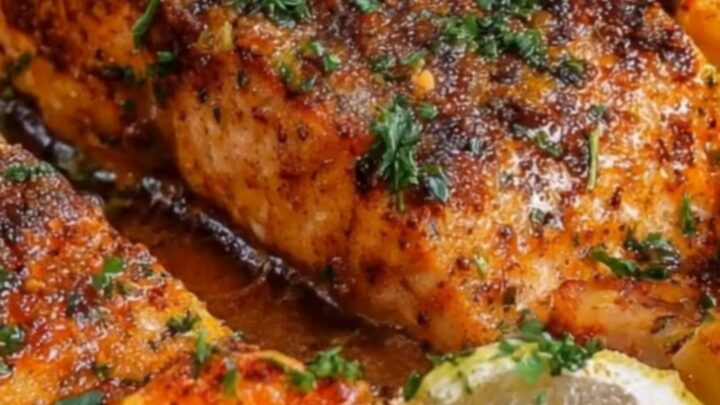
At the end of this phase, the salmon fillets and shrimp should be arranged neatly on the baking sheet, glistening under a generous, uniform coating of the spiced garlic butter. The raw seafood should be fully covered with the reddish-brown seasoning blend, with lemon slices tucked in between the pieces, releasing a faint, bright citrus aroma even before entering the hot oven.
Baking and Sizzling
- Arrange and Season the SeafoodPlace the salmon fillets and peeled shrimp in a single layer on the prepared baking sheet. Brush the Cajun garlic butter generously over the top of both the salmon and shrimp, ensuring every piece is well coated. Tuck the lemon slices around the seafood.Look for The seafood should be fully coated and not overcrowded on the sheet.Tip Pat the seafood dry with paper towels before seasoning so the butter sticks.
- Bake the SeafoodPlace the baking sheet in the preheated oven and bake at 400°F (204°C) for 12 to 15 minutes. The salmon must reach an internal temperature of 145°F (63°C) and the shrimp must reach 145°F (63°C) to be fully cooked and safe to eat.Look for The butter should be bubbling and the shrimp should be pink and opaque.Safe temperature 145°F (63°C) internal temperature (fish)Tip Check the thickest part of the salmon with a digital thermometer.
As this phase concludes, you will hear a loud, active sizzling sound coming from the oven, accompanied by the rich, mouthwatering aroma of toasted garlic, warm spices, and browned butter. The butter on the baking sheet should be bubbling rapidly around the edges of the seafood, and the spices will have darkened into a beautiful, caramelized crust on top of the salmon and shrimp.
Finishing and Garnishing
- Garnish and ServeRemove the baking sheet from the oven. Sprinkle the freshly chopped parsley over the hot salmon and shrimp, and serve immediately with the warm pan juices poured over the top.Look for The parsley should look bright green against the reddish-brown seafood.Tip Serve immediately while the butter is hot and bubbling.
At the final checkpoint, the salmon should easily flake with a fork, and the shrimp should be firm, plump, and bright pink. The entire baking sheet will be filled with rising steam and a glistening, savory sauce.
Once sprinkled with freshly chopped parsley, the dish presents a vibrant contrast of green herbs, yellow lemons, and deep orange-red Cajun spices, ready to be served immediately.
Common mistakes
One common mistake is overcrowding the baking sheet, which traps moisture and causes the salmon and shrimp to steam rather than roast and caramelize. Always ensure there is a bit of space between each piece of seafood on the pan.
Another frequent error is overcooking the shrimp, which can turn rubbery very quickly. If your shrimp are small, consider adding them to the baking sheet a few minutes after the salmon has started cooking, or simply monitor the oven closely to ensure both proteins reach their perfect doneness simultaneously.
How to tell it’s done
To determine perfect doneness, use an instant-read digital food thermometer inserted into the thickest part of the salmon fillet; it must register an internal temperature of 145°F (63°C). The salmon should also change from translucent to opaque and flake easily when pressed gently with a fork.
The shrimp are fully cooked when they reach an internal temperature of 145°F (63°C), turning opaque and curling into a loose 'C' shape. Avoid letting the shrimp curl tightly into an 'O' shape, which indicates they are overcooked.
- Fish: 145°F (63°C) in the thickest part
- Shellfish: 145°F (63°C) in the thickest part
Up next · Part 3 of 3
2 variations · storage & make-ahead · 4 answers · printable card
Tips, FAQ & printable recipe (Part 3)← Back to the ingredients (Part 1)