Desserts · Part 3 of 3: Tips & recipe card
Double Chocolate Skillet Brownie with Molten Fudge Center Tips, FAQ & printable recipe
- Prep
- Cook
- Total
- Serves
- 8
Tips for success
For the best texture, use a cast iron skillet that is well-seasoned. If you don't have one, a 9-inch round cake pan or a 9-inch oven-safe skillet will work, but check for doneness a couple of minutes earlier.
To get clean slices, use a sharp knife and wipe it between cuts. For a more intense chocolate flavor, use dark chocolate chunks instead of milk chocolate.
Serve the brownie straight from the skillet for a rustic, casual presentation. If you prefer a more elegant look, carefully transfer it to a serving plate. The brownie is best enjoyed warm, but it can be reheated in the microwave or oven. For an extra indulgent touch, drizzle with warm chocolate sauce or caramel.
Variations
- Peanut Butter Swirl: After spreading the batter in the skillet, drop spoonfuls of creamy peanut butter over the top and swirl with a knife. The peanut butter adds a salty, nutty contrast to the chocolate.
- Mint Chocolate Chip: Fold in 1/2 cup of chocolate chips and 1/2 teaspoon of peppermint extract along with the milk chocolate chunks. Top with mint chocolate chip ice cream instead of vanilla.
- Salted Caramel: Drizzle 1/4 cup of salted caramel sauce over the batter before baking, and swirl gently. Add an extra drizzle on top after baking for a gooey, sweet finish.
- Espresso Brownie: Add 1 tablespoon of instant espresso powder dissolved in 1 tablespoon of hot water to the batter along with the eggs. The espresso enhances the chocolate flavor without adding a coffee taste.
Storage and make-ahead
- Fridge
- Store leftover brownie in the refrigerator for up to 5 days. Wrap tightly or keep in an airtight container.
- Freezer
- To freeze, wrap the cooled brownie tightly in plastic wrap and then aluminum foil. Freeze for up to 3 months.
- Reheat
- Reheat individual portions in the microwave for 15-20 seconds, or in a 350°F (175°C) oven for 5-10 minutes until warm. The center will become molten again.
Store leftover brownie in an airtight container at room temperature for up to 3 days. To keep the center fudgy, reheat individual portions in the microwave for 15-20 seconds. For longer storage, wrap the brownie tightly in plastic wrap and then aluminum foil, and refrigerate for up to 5 days. Bring to room temperature or reheat before serving.
The brownie can be baked up to 2 days ahead. Let it cool completely, then cover the skillet with plastic wrap and store at room temperature. To serve, reheat in a 350°F (175°C) oven for 10-15 minutes until warm.
The batter can also be prepared ahead and stored in the refrigerator for up to 24 hours, but bring it to room temperature before baking and add a few extra minutes to the baking time.
Serving ideas
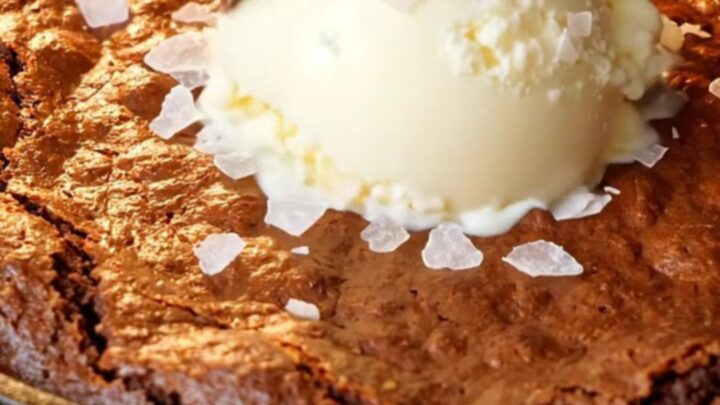
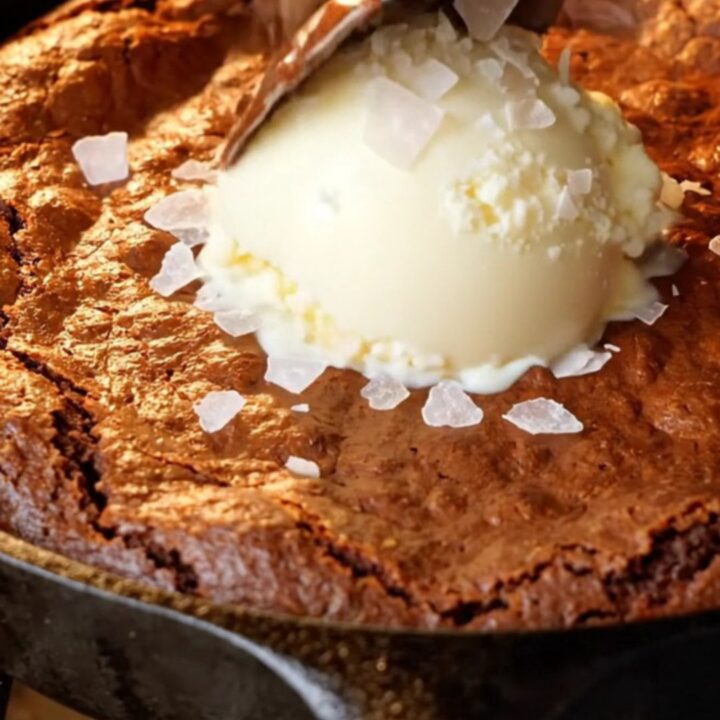
Serve the brownie warm, straight from the skillet, with a generous scoop of vanilla ice cream. The contrast between the warm, fudgy brownie and the cold, creamy ice cream is irresistible.
Sprinkle with flaky sea salt just before serving to enhance the chocolate flavor and add a pleasant crunch. For a special occasion, serve with fresh berries or a drizzle of caramel sauce.
This brownie is perfect for sharing, so place the skillet in the center of the table and let everyone dig in with spoons. It's also great for a casual dinner party or a cozy night in.
For a more formal dessert, cut into wedges and plate with a scoop of ice cream and a mint leaf. Enjoy it with a glass of cold milk or a strong cup of coffee.
Frequently asked questions
Can this brownie be made ahead of time?
Why is the top of the brownie not crackly?
Can the brownie be baked in a regular baking pan?
How do you know when the brownie is done?
Can you use milk chocolate instead of dark chocolate?
Double Chocolate Skillet Brownie with Molten Fudge Center
Ingredients
- 5 oz dark chocolate (60-70% cacao), chopped
- 1/2 cup unsalted butter, plus more for the skillet
- 3/4 cup granulated sugar
- 2 large eggs
- 1 tsp vanilla extract
- 1/2 cup all-purpose flour
- 1/4 cup Dutch-process cocoa powder
- 1/4 tsp salt
- 3.5 oz milk chocolate, roughly chopped into chunks
- vanilla ice cream, for serving
- flaky sea salt, for sprinkling, to taste
Instructions
- Heat the oven to 350°F (175°C). Butter an 8-inch cast iron skillet. In a heatproof bowl set over a pot of simmering water, melt the dark chocolate and butter together, stirring occasionally, until smooth and glossy. Remove from heat and let cool slightly.
- Whisk the granulated sugar into the chocolate mixture until well combined. Add the eggs one at a time, whisking vigorously after each addition. Continue whisking for a full 2 minutes until the mixture is pale, thick, and ribbony. Stir in the vanilla extract.
- Sprinkle the all-purpose flour, Dutch-process cocoa powder, and salt over the batter. Use a spatula to fold gently until just combined, with no dry streaks. Be careful not to overmix, as that can make the brownie tough.
- Scatter the roughly chopped milk chocolate chunks over the batter and fold them in with a few strokes, leaving some chunks visible on the surface for pools of melted chocolate.
- Scrape the thick fudgy batter into the prepared cast iron skillet and spread it into an even layer, smoothing the top with a spatula.
- Place the skillet in the preheated oven and bake for 20 minutes, until the edges are set and the top is shiny and crackly. The center should still look slightly moist and fudgy. A toothpick inserted near the center should come out with a few moist crumbs, not wet batter.
- Remove the skillet from the oven and let the brownie cool on a wire rack for 5 to 10 minutes. This allows the center to set slightly while remaining molten.
- Scoop vanilla ice cream onto the warm brownie and sprinkle with flaky sea salt. Serve immediately, digging into the warm molten fudge center with a spoon.
Estimated nutrition per serving
- Calories
- 420
- Protein
- 6 g
- Carbohydrates
- 45 g
- Fat
- 24 g
Next recipe
Brown Butter S'mores Skillet Blondie with Graham Crust
See the recipe → →This recipe is based on a short cooking video and is published under the pen name Clara Weller. It was checked before publication, but errors can slip through. Nutrition, when shown, is an estimate. Read more in our editorial policy and on our food safety page.
More recipes to try

Turkish Tahinli Çörek: Spiral Sesame Tahini Rolls
Total time: 1 h 25 min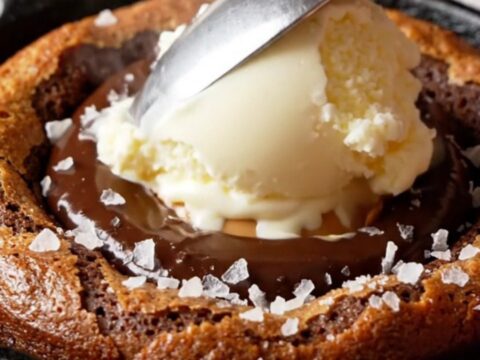
Molten Chocolate Peanut Butter Skillet Lava Cake
Total time: 33 min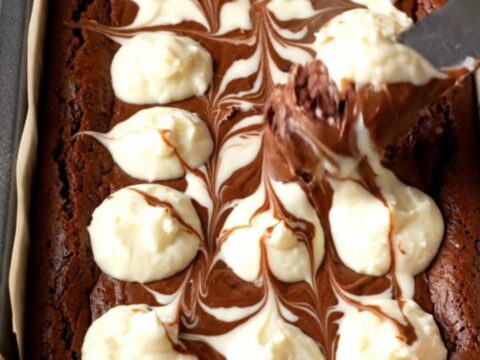
One Egg Fudgy Cheesecake Brownies
Total time: 1 h 30 min
Fluffy Hazelnut-Filled Berliner Donuts
Total time: 1 h 25 min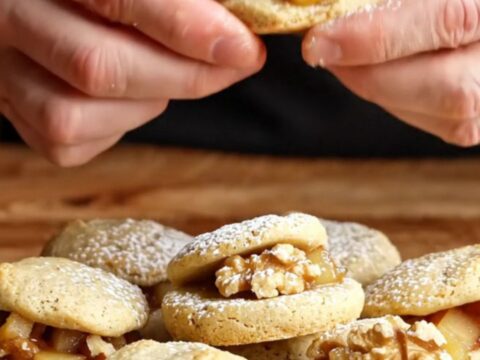
Toasted Flour Apple Walnut Cookies
Total time: 55 min