Desserts · Part 2 of 3: Instructions
Decadent Three-Layer Matilda Chocolate Cake Step-by-step instructions
- Prep
- Cook
- Total
- Serves
- 12
Before you start
Before beginning the assembly, ensure your cake layers are completely cooled to room temperature. A warm cake will cause the fudge frosting to slide off the sides, ruining the structure. Prepare your workspace by laying out the cake stand, the offset spatula, and a clean cloth for wiping the knife.
Having all components within reach ensures a fluid process, allowing you to focus on the smooth application of the fudge frosting for a professional, glistening finish on all three layers of the cake.
Ingredients at a glance (2)
- 3 chocolate sponge cake layers, made ahead
- 2 cups chocolate fudge frosting
Instructions
Setting the foundation
- Prepare the cake basePlace the first chocolate sponge cake layer onto the center of a cake stand. Ensure the surface is level and stable before beginning the frosting process to maintain the structural integrity of the towering dessert.Look for The cake layer is centered and secure on the stand.Tip Using a cake turntable helps achieve an even distribution of frosting.
The first layer should be anchored firmly to the cake stand. Check that the cake is centered; an off-center base will cause the entire structure to lean as you add height.
The sponge should be firm and free of excessive loose crumbs, providing a stable platform for the subsequent layers of rich, indulgent fudge frosting.
Stacking and coating
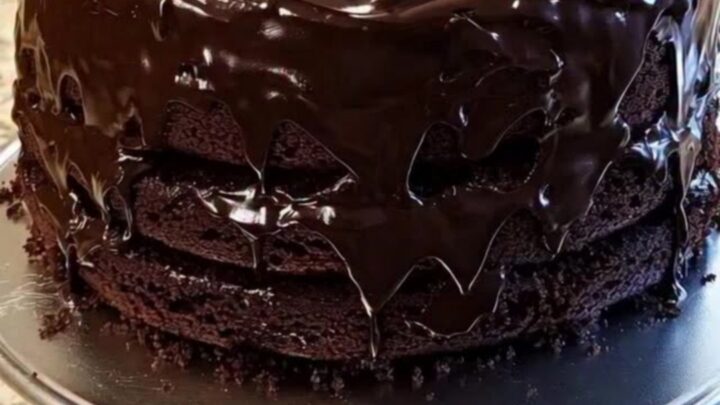
- Frosting the layersSpread a generous, thick layer of chocolate fudge frosting over the first sponge cake layer using an offset spatula. Repeat this process by stacking the remaining layers and coating each one until the entire cake is covered in a glistening, smooth finish.Look for The frosting appears thick, glossy, and evenly spread across all sides.Tip Warm the spatula slightly to achieve a perfectly smooth, professional-looking finish on the fudge.
Each layer must be coated evenly, with the frosting reaching all the way to the edges. Observe the consistency of the fudge as you spread it; it should be thick enough to hold its shape but soft enough to spread without tearing the cake. Ensure the sides are completely covered to seal in the moisture.
Final glazing and resting
- Final assembly and settingApply a final cascading drizzle of warm fudge over the top to allow it to drip naturally down the sides. Ensure the fudge reaches a safe internal temperature of 160°F (71°C) to fully set the egg-based components. Allow the cake to rest at room temperature for one hour so the frosting sets slightly before slicing with a sharp, warm knife.Look for The fudge has reached a firm yet supple consistency.Safe temperature 160°F (71°C) internal temperature (egg dishes)Tip Wipe the knife clean between each slice to ensure perfectly clean cuts through the dense cake.
The final drizzle should be applied slowly to ensure a natural, cascading effect over the sides. The cake should look uniform and glossy. After the final touch, the cake needs to rest in a cool, dry place. This allows the frosting to firm up, ensuring that when you slice it, the layers remain beautifully defined.
Common mistakes
A common mistake is attempting to frost the cake while the sponge layers are still warm, which leads to a runny mess. Another frequent error is using a dull knife for the final slicing, which crushes the delicate sponge instead of cutting through it cleanly.
Always take the time to clean your spatula between layers to prevent crumbs from getting mixed into your smooth fudge frosting, as this will affect the final aesthetic and texture of the dessert.
How to tell it’s done
The cake is ready to serve once the frosting has set enough to hold its shape while remaining soft to the touch. The internal structure should feel firm yet yielding when pressed lightly.
Because the cake layers are pre-made, the primary indicator of doneness is the visual appearance of the fudge, which should look glossy and smooth. The fudge must reach 160°F (71°C) to ensure the eggs are fully cooked. If the room is warm, allow extra time for the cake to set in a cool environment.
- Egg dishes: 160°F (71°C) in the thickest part
Up next · Part 3 of 3
2 variations · storage & make-ahead · 3 answers · printable card
Tips, FAQ & printable recipe (Part 3)← Back to the ingredients (Part 1)