Desserts · Part 2 of 3: Instructions
Decadent Matilda Chocolate Fudge Cake Step-by-step instructions
- Prep
- Cook
- Total
- Serves
- 12
Before you start
Before beginning the assembly, ensure the chocolate sponge layers are at room temperature and perfectly level. If the cake tops are domed, use a serrated knife to trim them flat for a stable structure. Prepare the ganache in advance and allow it to cool until it reaches a thick, spreadable consistency.
Have all decorative elements and tools, including the piping bag and offset spatula, ready and clean. A clean workspace is essential for handling the glossy ganache, as any crumbs will show immediately on the finished surface.
Ingredients at a glance (3)
- 2 layers store-bought or made ahead chocolate sponge cake
- 2 cups chocolate ganache, prepared
- 1/2 cup chocolate sprinkles
Instructions
Base assembly
- Prepare the layersPlace the first layer of chocolate sponge cake on a serving plate or cake stand. Spread a generous layer of chocolate ganache over the top of the sponge, ensuring an even coating that extends to the edges.Look for The ganache should be smooth and spreadable.Tip Ensure the cake is completely cool before applying the ganache to prevent melting.
The cake stand is prepared, and the first layer of sponge is securely positioned. The ganache is applied as a thick, even layer that reaches the very edges of the sponge, providing a sturdy foundation for the second layer and ensuring a consistent distribution of chocolate flavor throughout the entire dessert.
Coating the cake
- Assemble and coatTop with the second sponge layer. Pour the remaining ganache over the top, allowing it to drip gracefully down the sides. Use an offset spatula to smooth the top and sides, then gently press chocolate sprinkles onto the bottom base of the cake.Look for The ganache should coat the cake in a glossy, uniform layer.Tip Work quickly while the ganache is still fluid enough to spread evenly.
The entire cake is now covered in a smooth, high-gloss layer of ganache. The sides are perfectly coated, and the chocolate sprinkles are neatly pressed into the base, creating a clean, professional border.
The cake looks uniform, shiny, and ready for the final decorative touches that will complete its elegant appearance.
Piping and setting
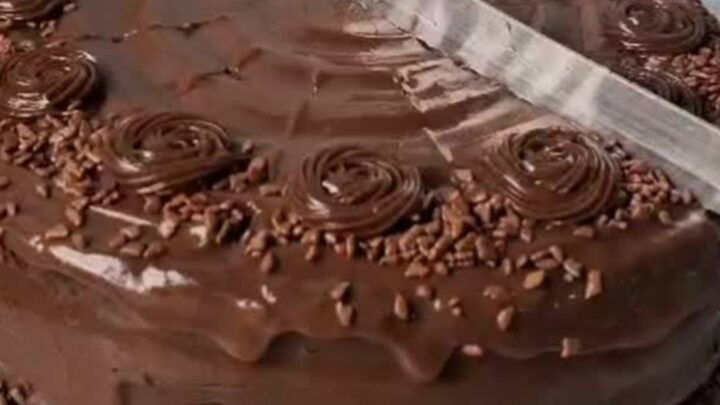
- Pipe and finishTransfer the remaining ganache into a piping bag fitted with a star tip. Pipe decorative rosettes in a circle around the top edge of the cake. If using a homemade custard-based ganache, ensure it reaches 160°F (71°C) during preparation to cook the eggs through. Allow the cake to set in a cool place for thirty minutes before slicing.Look for The rosettes should hold their shape clearly.Safe temperature 160°F (71°C) internal temperature (egg dishes)Tip Practice piping on a piece of parchment paper first to ensure consistency.
The rosettes are piped with precision around the top perimeter, each one identical in size and shape. The cake is now set in a cool environment, allowing the ganache to reach a firm, sliceable consistency. The final product is visually stunning, with a deep, dark color and a perfect, polished finish.
Common mistakes
Avoid over-whipping the ganache, which can introduce air bubbles and ruin the glossy finish. Do not attempt to frost the cake while the sponge layers are still warm, as this will cause the ganache to melt and slide off the sides.
Ensure that the sprinkles are applied firmly but gently to the base, taking care not to disturb the ganache coating. Finally, do not rush the setting time, as the cake needs to rest to ensure the layers bond properly.
How to tell it’s done
The cake is considered ready once the ganache has firmed up enough to hold its shape at room temperature, which typically takes about thirty minutes. When sliced, the knife should pass through the ganache and sponge smoothly without dragging.
The rosettes should remain firm and clearly defined. The final result should be a cohesive, stable cake that offers a consistent texture from the center to the edges, providing a clean appearance on the serving plate.
- Egg dishes: 160°F (71°C) in the thickest part
Up next · Part 3 of 3
2 variations · storage & make-ahead · 3 answers · printable card
Tips, FAQ & printable recipe (Part 3)← Back to the ingredients (Part 1)