Dinner · Part 2 of 3: Instructions
Lobster Mac and Cheese Stuffed Garlic Brioche Boat Step-by-step instructions
- Prep
- Cook
- Total
- Serves
- 6
Before you start
Before starting, make sure the lobster meat is already cooked and at room temperature. Cook the cavatappi until just al dente — it will finish cooking in the oven. Shred the cheeses from a block for the smoothest melt.
Prepare the garlic chive butter if not using store-bought. Heat the oven to 375°F (190°C) and line a baking sheet with foil. Have all ingredients measured and ready, as the steps come together quickly once the sauce starts.
Ingredients at a glance (13)
- 1 large rectangular brioche loaf
- 4 tbsp garlic chive butter, melted
- 6 oz butter-poached Maine lobster meat, chopped
- 2 cups cavatappi pasta, cooked
- 1 1/2 cups shredded Gruyère cheese
- 1 1/2 cups shredded sharp cheddar cheese
- 2 cups whole milk
- 3 tbsp unsalted butter
- 3 tbsp all-purpose flour
- 1 tsp Old Bay seasoning
- 1/2 cup garlic panko crumbs
- Kosher salt, to taste
- Freshly ground black pepper, to taste
Instructions
Make the Cheese Sauce and Pasta
- Make the béchamel and cook the pastaHeat the oven to 375°F (190°C). Bring a large pot of salted water to a boil and cook the cavatappi until just shy of al dente, about 7 minutes. Drain and set aside. Meanwhile, melt the butter in a medium saucepan over medium heat. Whisk in the flour and cook for 1 minute, stirring constantly, until lightly golden. Slowly pour in the milk while whisking to avoid lumps.Look for The sauce should be thick and velvety, with no raw flour taste.Tip Whisk constantly while adding milk to prevent lumps.
- Combine pasta, lobster, and sauceIn a large mixing bowl, combine the cooked cavatappi, chopped lobster meat, and the cheese sauce. Fold gently with a rubber spatula until every piece of pasta and lobster is coated in the creamy sauce. The mixture should look glossy and rich, with the lobster evenly distributed. Set aside while preparing the brioche boat.Look for The pasta and lobster are fully coated, and the sauce clings to the pasta.Tip Fold gently to keep the lobster pieces intact.
The sauce should be smooth, thick, and glossy, with the cheese fully melted and no lumps. The pasta is al dente — tender but with a slight bite.
The mixture in the bowl looks creamy and rich, with the lobster pieces evenly distributed. The aroma is buttery and cheesy with a hint of Old Bay spice.
Assemble and Bake the Boat
- Hollow the brioche loafUsing a serrated knife, carefully cut a rectangular opening in the top of the brioche loaf, leaving a 1-inch border around the edges and bottom. Remove the top piece and set aside. Gently pull out the soft bread inside to create a boat with walls about 1 inch thick. Reserve the removed bread for another use, such as breadcrumbs or croutons. Place the hollowed loaf on a baking sheet lined with foil.Look for The brioche boat has sturdy walls and a flat bottom.Tip Keep the walls at least 1 inch thick so the boat holds its shape.
- Brush with garlic chive butterBrush the inside and the cut edges of the brioche boat generously with the melted garlic chive butter, reserving about 1 tablespoon for the top. Make sure to coat the bottom and all the interior surfaces so every bite of bread is fragrant and golden. The butter will soak into the bread as it bakes, creating a crisp, savory crust.Look for The bread glistens with butter and smells of garlic and chives.Tip Use a pastry brush to reach every corner.
- Fill the boat with lobster macSpoon the lobster mac and cheese into the hollowed brioche boat, packing it gently to fill all the space. The filling should mound slightly above the top of the bread. Sprinkle the garlic panko crumbs evenly over the surface, pressing them lightly so they adhere. The panko will toast to a golden, crunchy topping.Look for The boat is filled to the brim with creamy mac, topped with crumbs.Tip Don't overfill — the filling will bubble as it bakes.
- Bake the brioche boatPlace the filled brioche boat on the prepared baking sheet and transfer to the oven. Bake at 375°F (190°C) for 15 minutes, until the bread is deeply toasted, the cheese is bubbly and molten, and the panko is golden brown. If the top browns too quickly, loosely tent with foil. The internal temperature of the lobster mixture should reach 145°F (63°C) to ensure the shellfish is safely cooked.Look for The bread is golden and crisp, and the cheese is bubbling at the edges.Safe temperature 145°F (63°C) internal temperature (shellfish)Tip Check the temperature with an instant-read thermometer inserted into the center.
The brioche boat is hollowed, buttered, and filled to the brim. As it bakes, the kitchen fills with the smell of garlic and toasted bread. The top is golden brown, the panko is crisp, and the cheese is bubbling at the edges. The bread is firm to the touch, and the filling is hot and molten.
Rest, Slice, and Serve
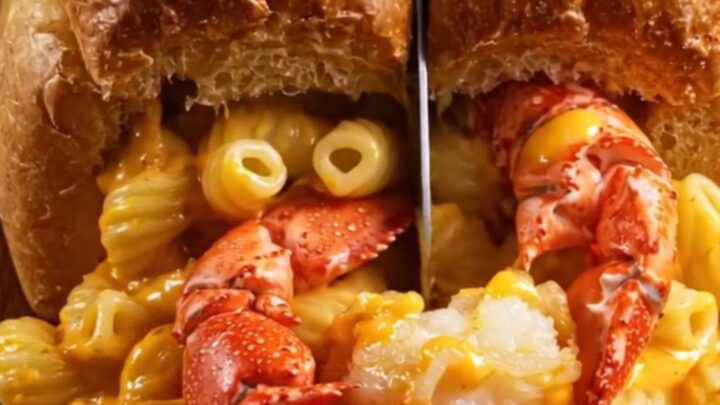
- Rest and sliceRemove the brioche boat from the oven and let it rest for 5 minutes on a cutting board. This allows the cheese to set slightly and makes slicing easier. Using a sharp serrated knife, slice through the toasted bread to cut the boat into thick slices. The molten lobster mac and cheese will cascade out as you cut, revealing the creamy, cheesy interior.Look for The slices show layers of bread, cheese, and lobster.Tip Letting it rest prevents the filling from running out too much.
- Serve warmServe the lobster mac and cheese brioche boat immediately while it's warm and the cheese is still molten. Use a spatula to transfer each slice to plates, making sure to include plenty of the crispy bread edges. The contrast of the crunchy, garlicky crust with the creamy, rich filling is the star of the dish.Look for Each slice is golden, cheesy, and fragrant.Tip Pair with a simple green salad to balance the richness.
After resting, the boat has set slightly. Slicing through reveals distinct layers of toasted bread, creamy mac, and chunks of lobster. The cheese is still molten and stretches as you cut. Each slice holds together well enough to lift with a spatula, and the bread edges are crispy, not soggy.
Common mistakes
One common mistake is hollowing the brioche too aggressively, leaving walls too thin that can collapse or burn. Keep at least a 1-inch border on all sides. Another is undercooking the béchamel — if the sauce is too thin, it will make the bread soggy.
Cook it until it coats the back of a spoon. Finally, resist the urge to overfill the boat; the filling will bubble and expand as it bakes, so leave a little room at the top.
How to tell it’s done
The brioche boat is done when the bread is deeply golden and toasted on the edges, the panko topping is browned, and the cheese is visibly bubbling around the edges.
The internal temperature of the lobster mixture should read 145°F (63°C) on an instant-read thermometer. Let it rest for 5 minutes before slicing — this allows the cheese to set just enough that the slices hold their shape but still stay molten and creamy.
- Shellfish: 145°F (63°C) in the thickest part
Up next · Part 3 of 3
4 variations · storage & make-ahead · 5 answers · printable card
Tips, FAQ & printable recipe (Part 3)← Back to the ingredients (Part 1)