Desserts · Part 2 of 3: Instructions
Decadent Layered Chocolate Pudding Dessert Step-by-step instructions
- Prep
- Cook
- Total
- Serves
- 6
Before you start
Before beginning, ensure all ingredients are at the appropriate temperatures; the pudding should be cool and the ganache should be just warm enough to pour. Prepare the cookie crumbs by pulsing them in a food processor or crushing them in a sealed plastic bag.
Ensure the whipped cream is prepared in advance and kept cold until assembly. Having all components ready on the counter will allow for efficient layering and prevent the cream from melting during the assembly process.
Ingredients at a glance (5)
- 2 cups chocolate pudding, prepared or store-bought
- 1 1/2 cups chocolate cookie crumbs
- 1 1/2 cups whipped cream, prepared
- 1/2 cup chocolate ganache, warm
- 1/4 cup dark chocolate chunks, chopped
Instructions
Base assembly
- Layering the baseSpread an even layer of chocolate pudding into the bottom of the square glass dish. Sprinkle a generous layer of chocolate cookie crumbs over the pudding, pressing down lightly to create a firm, even base for the next layers.Look for smooth and even surfaceTip Use the back of a spoon to ensure the pudding layer is uniform across the dish corners.
The pudding and cookie layers are neatly pressed into the bottom of the dish. The surface of the pudding should be level, and the cookie crumbs should be distributed evenly to provide a sturdy foundation for the subsequent layers.
Cream application
- Adding the creamCarefully spread the whipped cream over the cookie layer. Use a spatula to create a smooth, flat surface. Ensure the cream reaches the edges of the dish to maintain the distinct visual layers of the dessert.Look for a smooth white layer across the dishTip Chill the whipped cream bowl before whipping to achieve maximum volume and stability.
The whipped cream is spread to the very edges of the dish, forming a clean white line. The surface should be flat and free of streaks, ensuring the next layer of ganache will sit perfectly level on top.
Ganache finish
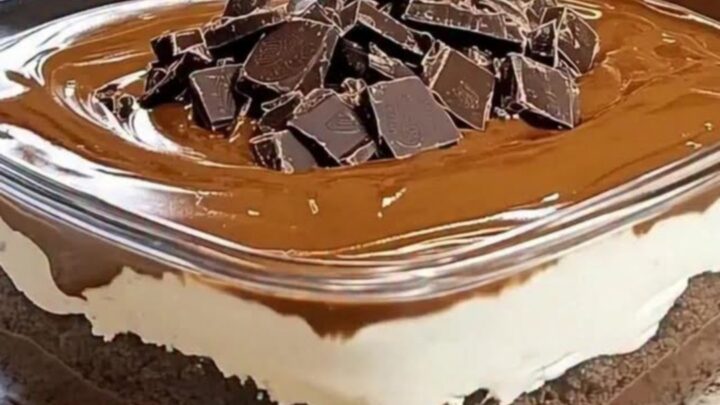
- Finishing with ganachePour the warm chocolate ganache over the whipped cream, smoothing it gently until it covers the surface completely. Immediately sprinkle the chopped dark chocolate chunks over the glossy ganache before it sets completely. Ensure the egg-based custard in the pudding is heated to 160°F (71°C) during its initial preparation to ensure safety. Chill for at least one hour before serving.Look for glossy finish that covers the entire surfaceSafe temperature 160°F (71°C) internal temperature (egg dishes)Tip Allow the ganache to cool slightly before pouring so it does not melt the whipped cream layer underneath.
The ganache is smooth, glossy, and covers the entire surface. The dark chocolate chunks are evenly distributed, adding a final textural contrast. The dessert is now ready for its mandatory cooling period in the refrigerator.
Common mistakes
A common mistake is pouring the ganache while it is too hot, which can cause the whipped cream to melt and the layers to bleed together. Ensure the ganache is warm to the touch but not steaming before application.
Another error is using pudding that is too loose; the pudding must be thick enough to support the weight of the layers above it.
Finally, failing to chill the finished dish properly will result in difficulty serving clean squares, as the layers need time to set.
How to tell it’s done
The dessert is ready once the ganache has cooled and set to a firm, glossy finish on the surface. When a spoon is inserted, it should glide through the layers with minimal resistance, revealing distinct, clean lines between the pudding, cookies, and cream.
The ganache should remain soft enough to cut through without cracking but firm enough to hold its shape. The egg-based pudding must reach 160°F (71°C) to be considered fully cooked.
- Egg dishes: 160°F (71°C) in the thickest part
Up next · Part 3 of 3
2 variations · storage & make-ahead · 3 answers · printable card
Tips, FAQ & printable recipe (Part 3)← Back to the ingredients (Part 1)