Desserts · Part 2 of 3: Instructions
Decadent Chocolate Coconut Crumble Cake Step-by-step instructions
- Prep
- Cook
- Total
- Serves
- 8
Before you start
Before beginning, ensure that your workspace is clean and organized. Have your cake layers ready and completely cooled, and ensure the coconut cream has been refrigerated for at least four hours. Prepare your serving stand and have an offset spatula nearby, as this tool is essential for achieving a smooth, professional application of the cream filling between the delicate sponge layers.
Clean your surfaces thoroughly and ensure you have enough space to work comfortably, as assembling a layer cake requires precision and steady hands to prevent the delicate sponge from breaking or the cream from smearing during the process.
Ingredients at a glance (3)
- 2 layers chocolate sponge cake, store-bought or made ahead
- 1 cup coconut cream, chilled and whipped
- 1 cup chocolate cake crumbs
Instructions
Whipped Coconut Preparation
- Prepare the fillingIn a medium mixing bowl, whisk the chilled coconut cream until it reaches a thick, spreadable consistency. Ensure the cream is cold to maintain its structure during the assembly process.Look for The cream should hold soft peaks.Tip Keep the bowl over an ice bath if the kitchen is warm to ensure the coconut cream stays firm.
The coconut cream should be thick, smooth, and able to hold soft peaks when whisked. It should look like a rich, velvety mousse with no liquid pools at the bottom of the bowl, indicating that the fat has been successfully emulsified through the whipping process. The texture should be consistent throughout, and it should feel cool to the touch, which is vital for maintaining its stability during the subsequent assembly steps of the recipe.
Layering the Sponge
- Assemble the layersPlace one layer of the chocolate sponge cake onto the serving stand. Use an offset spatula to spread a generous, even layer of the prepared coconut cream over the top. Carefully place the second sponge layer on top to create a stable base.Look for The filling should be level and slightly visible at the edges.Tip Wipe the edges of the cake stand clean after assembly for a professional presentation.
The cake layers should be perfectly centered with a consistent thickness of coconut cream between them. The edges of the filling should be clean and uniform, providing a stable foundation that does not lean or bulge, which is essential for a professional finish. Check that the layers are aligned vertically so the cake stands straight on the plate. The cream should be spread evenly to the very edge of the sponge, ensuring every bite has the perfect balance of ingredients.
Applying the Crumbs
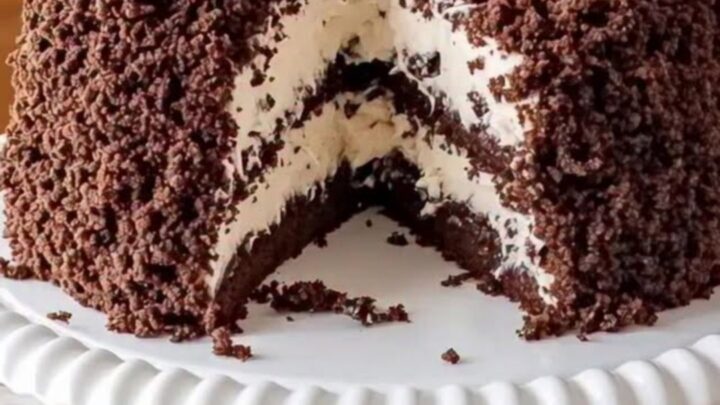
- Coat with crumbsSpread the remaining coconut cream over the top and sides of the cake. Gently press the chocolate cake crumbs into the exterior of the cake until it is fully covered, creating the signature textured finish. If you baked the sponge, ensure the eggs reached 160°F (71°C) during the baking process.Look for The entire surface should be coated in a dense layer of crumbs.Safe temperature 160°F (71°C) internal temperature (egg dishes)Tip Use your hands to gently pat the crumbs into place to ensure they adhere firmly to the cream.
The entire exterior should be coated in a dense, uniform layer of chocolate crumbs. The cake should appear rustic and textured, with no visible gaps or patches of cream showing through, and the overall shape should remain symmetrical and clean at the base.
Ensure the crumbs are pressed firmly enough to stay in place but lightly enough to avoid compressing the cake. The final result should look polished and inviting, with a clear contrast between the dark exterior and the light filling.
Common mistakes
A common mistake is applying the coconut cream while the cake layers are still warm, which leads to a sliding, unstable assembly. Another issue is using thin coconut milk instead of thick coconut cream, which prevents the filling from whipping properly.
Ensure all crumbs are applied gently to avoid disturbing the cream layer beneath, which could create streaks in the final presentation. Avoid over-whipping the coconut cream, as this can cause the fat to separate and turn into a grainy texture, which ruins the smooth mouthfeel desired for this elegant dessert.
How to tell it’s done
The cake is considered ready once the coconut cream is firmly set between the layers and the exterior is fully coated in chocolate crumbs. There is no raw protein to cook in this dessert, but if you are baking the sponge, ensure the eggs reach 160°F (71°C) to be fully cooked.
Standard food safety protocols focus on maintaining the cold temperature of the filling to ensure the final structure remains stable and visually appealing during serving. The cake should feel firm to the touch, and the crumbs should adhere well to the cream surface without falling off.
- Egg dishes: 160°F (71°C) in the thickest part
Up next · Part 3 of 3
2 variations · storage & make-ahead · 3 answers · printable card
Tips, FAQ & printable recipe (Part 3)← Back to the ingredients (Part 1)