Desserts · Part 2 of 3: Instructions
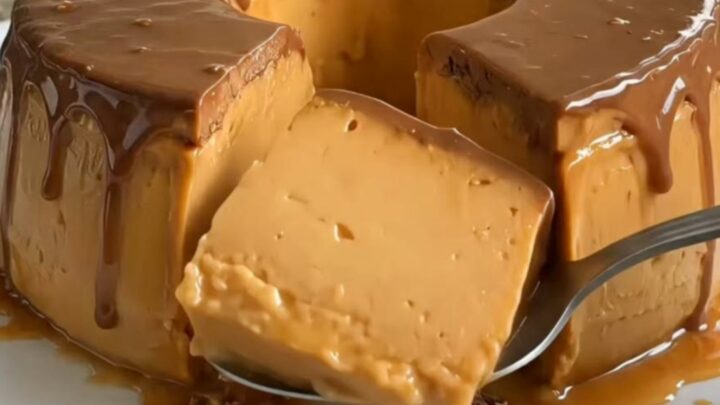
Decadent Caramel Chocolate Pudding Ring Step-by-step instructions
- Prep
- Cook
- Total
- Serves
- 8
Before you start
Before beginning, ensure all components are ready and at the appropriate temperature. Prepare your workspace by gathering the ring mold, whisk, and mixing bowl.
Verify that you have a larger baking dish that can comfortably hold the ring mold, as this will be used for the water bath.
Read through the recipe steps entirely to understand the timing, particularly the baking process, which requires steady attention to achieve the desired silky texture without any lumps.
Ingredients at a glance (2)
- 1 cup caramel
- 2 cups chocolate pudding mixture
Instructions
Caramelizing
- Prepare the CaramelPour the caramel into the ring mold, swirling the mold to ensure the bottom and sides are evenly coated with the golden mixture. Set the mold aside to allow the caramel to settle and coat the interior surfaces completely.Look for The caramel should form a smooth, glossy layer across the bottom and up the sides of the mold.Tip Ensure the mold is clean and dry before adding the caramel to help it adhere properly.
The caramel should be a rich, golden amber color and pourable. Check that it coats the bottom and sides of the mold evenly before it begins to harden. If the caramel thickens too much before pouring, gently warm it over low heat to restore its fluidity.
Custard Preparation
- Prepare the Pudding BaseIn a mixing bowl, whisk the chocolate pudding mixture until it reaches a velvety, smooth consistency. Ensure there are no lumps and the mixture is uniform in color and texture before proceeding to the next step.Look for The mixture should look glossy and feel velvety when whisked.Tip Whisk steadily to incorporate air and maintain the silky texture of the pudding.
The chocolate mixture should be completely melted and smooth, with no visible streaks or lumps. The mixture must be fully combined, resulting in a uniform, creamy liquid that is ready for the mold. Ensure the texture is silky and consistent throughout the bowl.
Baking and Setting
- Bake and SetPour the chocolate pudding mixture into the caramel-lined mold. Bake the pudding in a water bath at 325°F (163°C) until the center is set and reaches an internal temperature of 160°F (71°C). Remove from the oven, let cool to room temperature, then refrigerate for at least 3 hours to firm up.Look for The pudding should be firm to the touch with a slight jiggle in the center.Safe temperature 160°F (71°C) internal temperature (egg dishes)Tip Use hot water for the water bath to ensure even cooking.
The pudding should be set throughout, with a slight, gentle wobble in the center. The internal temperature must reach 160°F (71°C) to ensure the eggs are fully cooked. After cooling, it should be firm enough to release from the mold cleanly onto a serving plate.
Common mistakes
A common mistake is rushing the caramelization process, which can lead to burnt sugar that tastes bitter. Keep a close eye on the color; as soon as it reaches a deep amber, remove it from the heat immediately.
Another error is adding the hot mixture to the eggs too quickly, which can scramble the eggs. Always temper the mixture by adding just a small amount of liquid at a time while whisking vigorously to incorporate the heat gradually into the eggs.
How to tell it’s done
The pudding is done when it is set firmly around the edges but retains a slight, uniform jiggle in the center. An instant-read thermometer inserted into the center should register 160°F (71°C), ensuring the eggs are fully cooked for safety.
The surface should look smooth and appear slightly glossy. Once removed from the oven, allow it to cool completely in the water bath before transferring it to the refrigerator to chill and firm up properly.
- Egg dishes: 160°F (71°C) in the thickest part
Up next · Part 3 of 3
2 variations · storage & make-ahead · 3 answers · printable card
Tips, FAQ & printable recipe (Part 3)← Back to the ingredients (Part 1)