Desserts · Part 2 of 3: Instructions
Dark Silk Chocolate Cake: A Decadent Triple-Layer Treat Step-by-step instructions
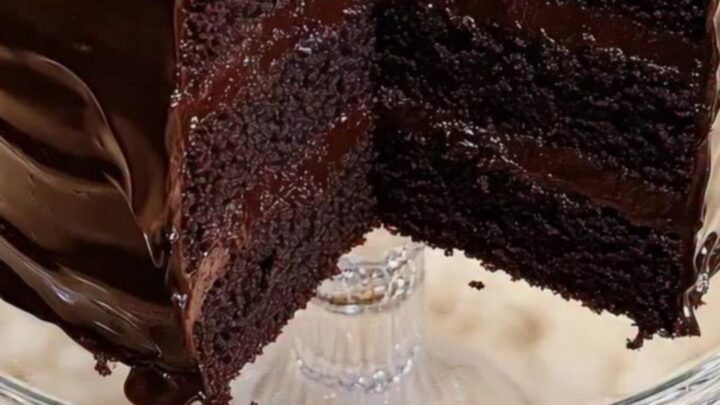
- Prep
- Cook
- Total
- Serves
- 12
Before you start
Before beginning assembly, ensure all components are at the correct temperature. The cake layers must be completely cool to the touch to prevent the ganache from melting or sliding off the sides.
Have your offset spatula cleaned and ready, and prepare a workspace that is free from clutter so you can rotate the cake stand without obstruction during the frosting process.
Having everything organized beforehand allows you to focus entirely on the delicate task of smoothing the ganache, ensuring a flawless result that highlights the beautiful, dark layers of the cake.
Ingredients at a glance (2)
- 3 chocolate cake layers, pre-baked or made ahead
- 2 cups dark chocolate ganache, prepared
Instructions
Layering the base
- Prepare the layersPlace the first pre-baked chocolate cake layer onto the center of your beaded glass stand. Ensure the surface is level and stable before beginning the assembly process to prevent any shifting during the frosting stage.Look for The cake base should be firm and completely cooled to room temperature before any frosting is applied.Tip Using a rotating cake turntable makes the smoothing process significantly easier and more professional in appearance.
The base layer should sit securely on the stand. Ensure the surface is completely level so the subsequent layers remain stable throughout the assembly process. A steady base is the foundation for a perfectly upright and professional-looking cake.
Applying the ganache
- Fill and frostSpread a generous, even layer of dark chocolate ganache over the top of the first sponge layer. Repeat this process with the second layer. Finally, apply the remaining ganache over the top and sides of the entire cake, using an offset spatula to smooth the exterior into a glossy, uniform finish. Ensure the ganache is heated to 160°F (71°C) if incorporating raw egg yolks for a traditional custard-based ganache to ensure safety.Look for The ganache should be spreadable but thick enough to hold its shape against the sides of the cake.Safe temperature 160°F (71°C) internal temperature (egg dishes)Tip Warm your offset spatula slightly under hot water and wipe it dry to achieve a mirror-like finish on the ganache.
The ganache should be glossy and evenly distributed. Check that the sides are smoothed thoroughly with the offset spatula, ensuring no gaps or uneven patches remain. The cake should look uniform and polished, with a consistent thickness of frosting across the top and sides.
Final setting
- Set and serveTransfer the cake to a cool area and allow the ganache to set for at least one hour before slicing. This resting period ensures that the ganache firms up properly, allowing for clean, beautiful slices that reveal the moist crumb and luscious filling layers.Look for The ganache surface should appear set and slightly firm to the touch, no longer feeling tacky or runny.Tip For the cleanest slices, dip your knife in hot water and wipe it clean between every single cut.
The cake is ready when the ganache feels firm to the touch and no longer transfers to your finger. The layers should be clearly defined and the overall structure should feel stable and ready to be sliced for serving.
Common mistakes
A common mistake is applying ganache to cake layers that are still slightly warm, which causes the frosting to become runny and prevents it from setting into a smooth, thick layer. Another error is rushing the cooling process; allowing the cake to rest properly is crucial for achieving clean, sharp slices that showcase the distinct layers of the sponge and filling.
Additionally, avoid overworking the ganache once it begins to set, as this can lead to a dull finish rather than the desired glossy, silk-like appearance that makes this cake so visually appealing.
How to tell it’s done
The cake is considered done when the ganache has firmed up sufficiently to hold its shape when sliced. There is no internal temperature requirement for this assembly-only recipe, but the visual cue of a set, glossy, and non-tacky surface indicates that the dessert is ready for service and will provide the desired texture.
If you have incorporated eggs into your ganache, ensure the mixture reached 160°F (71°C) during the heating process to ensure safety. The cake should feel firm to the touch and the layers should appear distinct and stable.
- Egg dishes: 160°F (71°C) in the thickest part
Up next · Part 3 of 3
2 variations · storage & make-ahead · 3 answers · printable card
Tips, FAQ & printable recipe (Part 3)← Back to the ingredients (Part 1)