Dinner · Part 1 of 3: Ingredients
Crockpot Tenderloin Tips with Creamy Gruyère Sauce
- Prep
- Cook
- Total
- Serves
- 6
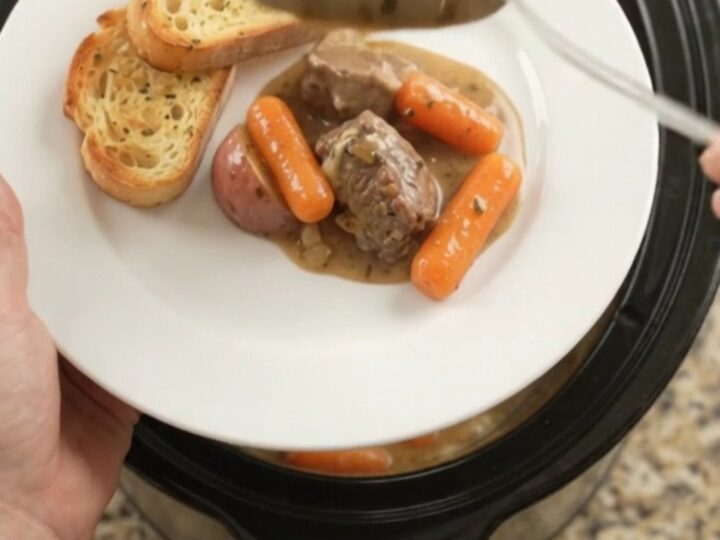
This slow cooker beef tenderloin tips recipe is the definition of set-it-and-forget-it comfort food. Tender pieces of beef, sweet baby carrots, and buttery red potatoes cook low and slow in a luscious sauce made from cream cheese and nutty Gruyère. Just layer everything in the crockpot, walk away, and come back to a bubbling, aromatic dinner that tastes like it simmered all day — because it did. Serve it over toasted garlic brioche to soak up every drop of the creamy gravy.
There are slow cooker dinners, and then there are slow cooker dinners that feel like a special occasion. This one falls firmly into the second camp. Beef tenderloin tips are naturally tender, and when they simmer for hours in a rich, cheesy sauce, they become almost buttery.
The carrots turn sweet and silky, the potatoes soak up all that savory goodness, and the sauce — a combination of cream cheese and Gruyère — is pure indulgence. The best part? There is no browning, no stirring, no fuss. Just dump the ingredients into the crockpot, cover, and let time do the work. This is the kind of meal that makes a weekday dinner feel like a weekend feast.
Ingredients
- 2 lb beef tenderloin tips
- 1 lb baby carrots
- 1 1/2 lb red bliss potatoes, quartered
- 8 oz cream cheese, softened
- 1 1/2 cups shredded Gruyère cheese
- 1/2 cup beef broth
- 1 tsp kosher salt
- 1/2 tsp black pepper
- Toasted garlic brioche slices, for serving
Why this recipe works
The magic of this recipe lies in the slow, gentle heat of the crockpot. Beef tenderloin tips are already a tender cut, but cooking them low and slow allows the connective tissue to break down further, resulting in meat that is fork-tender and melts in your mouth.
The long cooking time also gives the carrots and potatoes time to absorb the savory flavors of the beef and cheese, while the cream cheese and Gruyère melt together into a velvety, cohesive sauce that coats every ingredient.
The order of layering is key. Placing the beef and vegetables on the bottom means they are in direct contact with the heat, ensuring they cook through properly. The cheeses go on top, where they slowly melt and cascade down over the other ingredients, creating a rich, bubbling gravy. Adding the broth around the edges prevents the cheese from being washed off and keeps the dish from drying out. The result is a perfectly balanced, one-pot meal that requires almost no effort.
Notes and substitutions
Beef tenderloin tips are the star of this dish, and they are worth seeking out. They are the trimmed pieces from the tenderloin, which is already one of the most tender cuts. If you cannot find them, you can substitute beef sirloin tips or even a chuck roast cut into cubes, though you will need to extend the cooking time for the chuck.
The cream cheese should be softened to room temperature so it melts smoothly without forming lumps. Gruyère adds a nutty, slightly sweet flavor that pairs beautifully with the beef, but you can use Swiss or white cheddar in a pinch.
A 6-quart slow cooker is ideal for this recipe, as it gives everything room to cook evenly without overcrowding. If your slow cooker is smaller, you may need to reduce the ingredient amounts slightly. The red bliss potatoes are chosen for their waxy texture, which holds up well during long cooking.
Baby carrots are convenient, but you can also use full-size carrots peeled and cut into 2-inch pieces. For the broth, use a good-quality beef broth or stock; it adds depth to the sauce. Toasted garlic brioche is a delicious way to serve this, but crusty bread or even mashed potatoes would work well too.
- beef tenderloin tips: chuck roast cut into 1-inch cubes (cook 1 hour longer)
- Gruyère cheese: sharp white cheddar or Emmental
- red bliss potatoes: Yukon Gold potatoes, quartered
Equipment
- 6-quart slow cooker
- Cutting board
- Chef's knife
- Measuring cups and spoons
- Mixing spoon
Up next · Part 2 of 3
5 steps · 6 h of cooking · what to look for at each stage
Step-by-step instructions (Part 2)