Dinner · Part 2 of 3: Instructions
Crockpot Sour Cream Flank Steak Stroganoff Step-by-step instructions
- Prep
- Cook
- Total
- Serves
- 6
Before you start
Before you start, thinly slice the flank steak against the grain into strips about 1/2-inch wide. Quarter the red potatoes, leaving the skin on for texture and color. If using baby carrots, they can go in as-is. Measure out the sour cream and have the gravy mix packet ready.
No need to pre-cook anything—the slow cooker does all the work. Make sure your slow cooker is clean and dry. Have a large pot ready for the noodles later, but you can start those near the end of the cooking time.
Ingredients at a glance (6)
- 2 lb flank steak, thinly sliced against the grain
- 1 lb baby carrots
- 1 1/2 lb red bliss potatoes, quartered
- 1 cup sour cream
- 1 oz brown gravy mix (1 packet)
- 12 oz egg noodles, cooked and buttered for serving
Instructions
Layer and Cook
- Layer the IngredientsPlace the thinly sliced flank steak strips in the bottom of a 6-quart slow cooker. Scatter the baby carrots and quartered red potatoes over the beef. Dollop the sour cream over the top, then sprinkle the brown gravy mix evenly over everything. Do not stir.Look for The sour cream and gravy mix sit on top of the beef and vegetables in distinct layers.Tip Slicing the steak thinly against the grain helps it become tender during the long cook.
- Cover and CookCover the slow cooker and cook on LOW for 8 hours or on HIGH for 4-5 hours, until the beef is fork-tender and the potatoes are easily pierced. Do not lift the lid during cooking unless checking near the end. Let it rest for 3 minutes before slicing.Look for The gravy will be bubbling gently and the meat will shred easily with a fork.Safe temperature 145°F (63°C) internal temperature (steaks, chops and roasts)Tip Cooking on LOW gives the best texture for the beef. Resist the urge to peek.
At the end of this phase, the slow cooker is filled with raw ingredients: beef strips at the bottom, carrots and potatoes on top, and a layer of sour cream and gravy mix. The pot looks like a study in contrasts—white sour cream and brown powder over colorful vegetables.
As it cooks, the aromas of beef and gravy begin to fill the kitchen, and the mixture gradually turns into a bubbling, aromatic stew. Check that the meat is submerged in liquid and the cooker is set to the correct temperature.
Finish the Gravy
- Finish the GravyOnce the beef is tender, stir the sauce gently to combine the sour cream and gravy mix into a smooth, velvety gravy. If the sauce seems thin, let it cook uncovered for 15-20 minutes to thicken slightly.Look for The sauce turns a rich mahogany color and coats the back of a spoon.Tip Stirring at the end blends the flavors without breaking down the meat.
The beef is now tender enough to shred with a fork, and the vegetables are soft. The sauce has turned a rich mahogany color, and the sour cream has blended into a smooth, velvety gravy. The kitchen smells deeply savory and comforting. Stir gently to combine everything, and if the sauce is too thin, let it cook uncovered for a few minutes to reduce. The texture should be thick enough to coat the back of a spoon.
Cook Noodles and Serve
- Cook the NoodlesWhile the slow cooker finishes, bring a large pot of salted water to a boil. Cook the egg noodles according to package directions until al dente. Drain and toss with a little butter if desired.Look for Noodles are tender but still firm to the bite.Tip Butter the noodles before serving to keep them from sticking together.
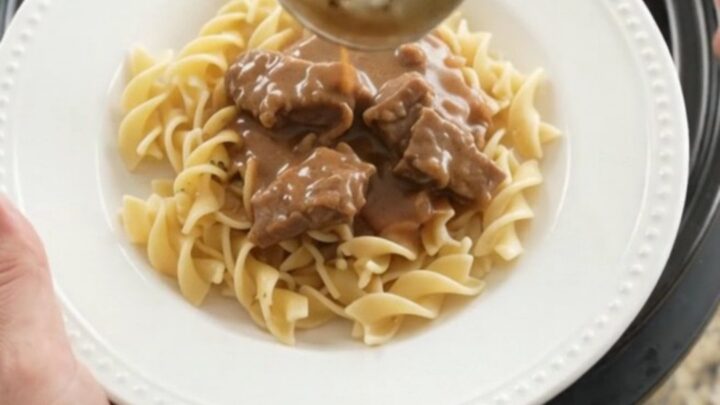
- ServeSpoon the buttered noodles onto plates or a platter. Ladle the beef, carrots, potatoes, and gravy over the top. Serve hot.Look for Steam rises from the creamy gravy as it hits the noodles.Tip For a prettier presentation, arrange the beef and vegetables evenly over the noodles.
The egg noodles are cooked and buttered, ready to receive the beef and gravy. When you spoon the stroganoff over the noodles, the hot gravy soaks into the pasta, and the beef and vegetables sit on top in a glossy, appetizing pile. Steam rises, and the dish looks hearty and inviting. The flavors are rich, tangy, and savory—a perfect comfort meal. Serve immediately while hot.
Common mistakes
One common mistake is lifting the lid too often during cooking, which lets heat escape and extends the cooking time. Another is overcooking the vegetables until they turn to mush—check them near the end and remove them if they are done before the meat.
Using low-fat sour cream can cause the sauce to curdle, so stick with full-fat. Also, do not stir the ingredients before cooking; the layering helps the flavors develop and prevents the sour cream from separating. Finally, do not forget to slice the steak against the grain—this is key to tenderness.
How to tell it’s done
The dish is done when the beef is fork-tender and easily pulls apart. The potatoes should be soft when pierced with a fork, and the carrots should be tender but not mushy. The gravy will be bubbling and slightly thickened.
If you have a meat thermometer, the beef should read at least 145°F (63°C) for food safety, but for the best texture, cook until it is much more tender. Let the beef rest for at least 3 minutes before serving to allow the juices to redistribute.
- Steaks, chops and roasts: 145°F (63°C) in the thickest part, then a 3-minute rest
Up next · Part 3 of 3
4 variations · storage & make-ahead · 5 answers · printable card
Tips, FAQ & printable recipe (Part 3)← Back to the ingredients (Part 1)