Dinner · Part 2 of 3: Instructions
Slow Cooker Smothered Pork Steaks with Onions and Gravy Step-by-step instructions
- Prep
- Cook
- Total
- Serves
- 6
Before you start
Before you start, make sure your slow cooker is clean and ready. Slice the onions into half-moons, about 1/4-inch thick. In a small bowl, mix the paprika, garlic powder, salt, and black pepper. Have the brown gravy measured and ready to pour.
If using store-bought gravy, you can warm it slightly in a saucepan or microwave to help it pour evenly, but cold gravy works fine too. Place the pork steaks in the slow cooker first, then layer everything else on top.
Ingredients at a glance (7)
- 3 lb bone-in pork shoulder steaks
- 3 medium yellow onions, sliced into half-moons
- 2 tsp paprika
- 1 tsp garlic powder
- 1 tsp kosher salt
- 1/2 tsp black pepper
- 2 cups brown gravy
Instructions
Layer and Season
- Layer the Pork and OnionsPlace the bone-in pork shoulder steaks in the slow cooker insert, overlapping slightly if needed. Scatter the sliced onions evenly over the top of the pork, covering as much surface as possible.Look for The steaks should be nestled together with onions piled high.Tip Use a 6-quart or larger slow cooker so the steaks fit in a single layer.
- Season with Paprika and GarlicIn a small bowl, stir together the paprika, garlic powder, salt, and black pepper. Sprinkle the seasoning mixture evenly over the onions and pork, covering all visible surfaces.Look for The spices should form a light, even coating over the onions.Tip For more even coverage, sprinkle half the seasoning, then toss gently with tongs before adding the rest.
- Pour Over the GravyPour the brown gravy evenly over the seasoned pork and onions. Use a spatula to scrape every last bit from the bowl. The gravy should pool around the meat but not completely submerge it.Look for The gravy will look rich and glossy, coating the onions and pooling at the bottom.Tip If using homemade gravy, make sure it is warm before adding so it blends easily.
At the end of this phase, the slow cooker insert holds the raw pork steaks in a single layer, topped with a generous heap of sliced onions. The seasoning mixture is sprinkled evenly over the onions, and the brown gravy has been poured over everything, creating a glossy, dark sauce that pools around the meat and onions.
The aroma is savory and inviting, with hints of paprika and garlic. Before moving on, make sure the gravy is evenly distributed and the onions are well coated.
Cook and Rest
- Cook Low and SlowCover the slow cooker and set it to low. Cook for 6 to 7 hours, until the pork is fork-tender and easily pulls apart. Avoid lifting the lid during cooking to keep the heat steady. Let it rest for 3 minutes before slicing.Look for The meat should be very tender and the onions soft and translucent.Safe temperature 145°F (63°C) internal temperature (steaks, chops and roasts)Tip Cooking on low gives the collagen time to break down, resulting in the most tender meat.
- Check the TemperatureAfter 6 hours, use an instant-read thermometer to check the thickest part of a pork steak. It should read at least 145°F (63°C). If not, continue cooking and check again after 30 minutes. Let it rest for 3 minutes before slicing.Look for The thermometer should slide in easily and read at least 145°F (63°C).Safe temperature 145°F (63°C) internal temperature (steaks, chops and roasts)Tip For fork-tender smothered pork, aim for 190°F to 200°F internal temperature, which breaks down connective tissue.
- Rest the PorkTurn off the slow cooker. Let the pork steaks rest in the gravy for at least 3 minutes before serving. This allows the juices to redistribute and keeps the meat moist.Look for The meat should look juicy and the gravy should be slightly thickened.Tip Resting is essential for whole cuts of meat to keep them tender and juicy.
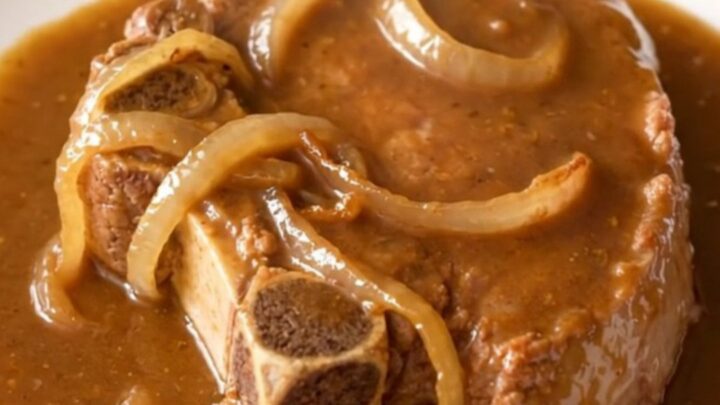
After 6 to 7 hours on low, the pork should be fork-tender, and the onions should have collapsed into soft, sweet strands. The gravy will have darkened and thickened slightly, with a rich, meaty aroma filling the kitchen. The meat should easily pull away from the bone, and the internal temperature should be at least 145°F (63°C). After turning off the heat, let the pork rest in the gravy for at least 3 minutes before serving.
Plate and Serve
- Plate and ServeUsing tongs, transfer each pork steak to a serving plate. Spoon the onions and gravy generously over the top. Serve hot, with extra gravy on the side if desired.Look for Each plate should have a pork steak smothered in onions and thick gravy.Tip Pair with mashed potatoes, rice, or crusty bread to soak up the gravy.
When plating, each pork steak is transferred to a plate and generously topped with onions and gravy. The meat is so tender it may fall apart as you lift it, and the gravy clings to every bite. The dish looks rustic and comforting, with deep brown gravy and soft onions. Serve immediately, with extra gravy on the side if desired.
Common mistakes
One common mistake is lifting the lid too often to check on the pork. Every time you open the slow cooker, heat escapes and adds 20 to 30 minutes of cooking time. Trust the recipe and wait until the minimum cooking time has passed.
Another mistake is using a slow cooker that's too small, which can cause the meat to be crowded and cook unevenly. Also, don't skip the rest time after cooking—it's essential for juicy meat.
How to tell it’s done
The pork is done when it's fork-tender and easily pulls apart with a fork. An instant-read thermometer inserted into the thickest part of the meat (without touching bone) should read at least 145°F (63°C) for food safety.
However, for the most tender, smothered texture, you'll want the internal temperature to reach 190°F to 200°F (88°C to 93°C), which allows the collagen to break down completely. The onions should be soft and translucent, and the gravy should have thickened slightly.
- Steaks, chops and roasts: 145°F (63°C) in the thickest part, then a 3-minute rest
Up next · Part 3 of 3
4 variations · storage & make-ahead · 5 answers · printable card
Tips, FAQ & printable recipe (Part 3)← Back to the ingredients (Part 1)