Dinner · Part 2 of 3: Instructions
Crockpot Ribeye Bites with Asparagus and Gruyère Step-by-step instructions
- Prep
- Cook
- Total
- Serves
- 4
Before you start
Before starting, cut the ribeye into 1-inch cubes and season with salt and pepper. Trim the asparagus and smash the garlic cloves. Soften the cream cheese to room temperature.
Shred the Gruyère if not already shredded. Have a 6-quart slow cooker ready. No other prep is needed—this recipe is designed for simplicity.
Ingredients at a glance (8)
- 2 lb well-marbled ribeye steak, cut into 1-inch cubes
- 1 lb fresh asparagus spears, trimmed
- 6 cloves garlic, smashed
- 8 oz cream cheese, softened
- 1 1/2 cups shredded aged Gruyère cheese
- 1 tsp kosher salt
- 1/2 tsp black pepper
- Toasted garlic brioche slices, for serving
Instructions
Layer and Top
- Layer the IngredientsPlace the cubed ribeye bites in the bottom of a 6-quart slow cooker in an even layer. Season with salt and pepper. Lay the asparagus spears over the beef, then scatter the smashed garlic cloves on top.Look for The beef should be well distributed, with asparagus and garlic covering it.Tip Cut the asparagus to fit if needed; thick stalks work best for slow cooking.
- Add the CheesesDot the softened cream cheese over the top of the beef and asparagus. Sprinkle the shredded Gruyère evenly over everything.Look for The top should be covered with cream cheese and Gruyère.Tip Soften the cream cheese beforehand so it melts more smoothly.
The raw beef is seasoned and layered with asparagus and garlic. The cream cheese and Gruyère are spread on top, covering the ingredients. The slow cooker is ready to go.
Slow Cook and Rest
- Slow Cook on LowCover the slow cooker and cook on low for 4 hours, or until the beef is tender and the sauce is bubbling. Do not stir during cooking unless needed. Let it rest for 3 minutes before slicing.Look for The sauce will be bubbly and the beef will be fork-tender.Safe temperature 145°F (63°C) internal temperature (steaks, chops and roasts)Tip Resist lifting the lid; each peek adds cooking time.
- Check Temperature and RestCheck that the internal temperature of the beef reaches at least 145°F (63°C) using an instant-read thermometer. Let the beef rest for at least 3 minutes before serving.Look for The thermometer reads 145°F (63°C) or higher.Safe temperature 145°F (63°C) internal temperature (steaks, chops and roasts)Tip The beef will continue to cook slightly while resting.
After 4 hours, the sauce is bubbling and the beef is tender. The internal temperature reaches 145°F (63°C). The beef rests for 3 minutes to lock in juices.
Serve with Brioche
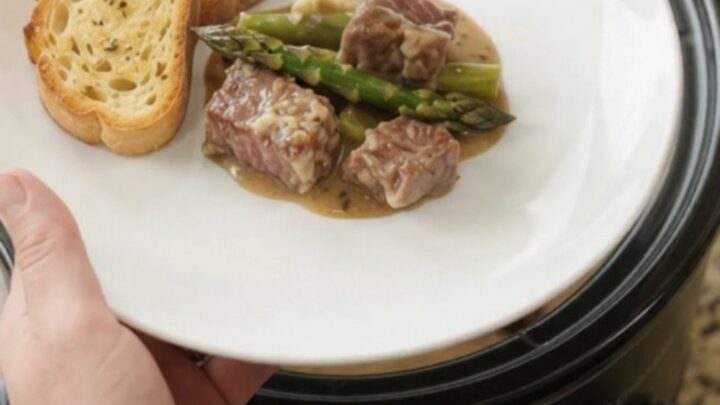
- Serve with BriocheSpoon the beef and asparagus onto a serving platter or individual plates. Ladle the creamy sauce over the top. Serve immediately with toasted garlic brioche slices for dipping.Look for The sauce is thick and creamy, coating the beef and asparagus.Tip Toast the brioche just before serving for the best texture.
The beef and asparagus are spooned onto plates, with creamy sauce ladled over. Toasted garlic brioche is served alongside for dipping.
Take a moment to check the color, texture and aroma before you move on to the next step.
Common mistakes
One common mistake is overcooking the beef, which can make it dry or mushy. Stick to the recommended time and check temperature early.
Another is stirring too much, which can break up the meat and make the sauce grainy. Also, avoid lifting the lid frequently; it lets heat escape and extends cooking time.
How to tell it’s done
The dish is done when the beef is fork-tender and the sauce is bubbly and thickened. Insert an instant-read thermometer into a few cubes of beef; it should read at least 145°F (63°C).
Let the beef rest for at least 3 minutes before serving to allow the juices to redistribute. The asparagus should be tender but still hold its shape.
- Steaks, chops and roasts: 145°F (63°C) in the thickest part, then a 3-minute rest
Up next · Part 3 of 3
4 variations · storage & make-ahead · 5 answers · printable card
Tips, FAQ & printable recipe (Part 3)← Back to the ingredients (Part 1)