Dinner · Part 2 of 3: Instructions
Easy Crockpot Pumpkin Curry Chicken for a Simple Weeknight Dinner Step-by-step instructions
- Prep
- Cook
- Total
- Serves
- 4
Before you start
Before starting, ensure that all ingredients are measured and ready. If you are using frozen chicken, thaw it completely in the refrigerator before placing it into the slow cooker to ensure even cooking and food safety.
Prepare your rice or side dishes separately so they are ready to be served as soon as the chicken is finished cooking. Clear your countertop space to allow for a clean and efficient assembly process, and confirm that your slow cooker is plugged in and ready for use.
Ingredients at a glance (4)
- 2 lb chicken thighs, cut into bite-sized pieces
- 1 cup pumpkin puree
- 2 tbsp yellow curry powder
- 1 cup canned coconut milk
Instructions
Preparation and Assembly
- Assemble the IngredientsPlace the raw chicken thigh pieces into the bottom of the slow cooker insert. Ensure the chicken is spread out in an even layer to allow for consistent cooking throughout the process.Look for The chicken should be at the bottom of the slow cooker.Tip Handle raw chicken with clean hands and sanitize the preparation area immediately after.
At the end of this phase, all ingredients should be layered in the slow cooker insert, ready to begin the cooking process.
The chicken should be at the bottom, topped with the pumpkin, curry powder, and coconut milk, ensuring a well-organized setup that allows the flavors to develop harmoniously during the long, slow cook.
Flavor Development
- Add FlavoringsAdd the pumpkin puree directly over the chicken. Sprinkle the yellow curry powder evenly across the mixture, then pour the coconut milk over everything to create the base of the sauce.Look for The ingredients are layered on top of the chicken.Tip Using full-fat coconut milk provides the best texture and richness for the final sauce.
During the cooking process, the ingredients will begin to integrate. The chicken will release its juices while the coconut milk and pumpkin create a fragrant, creamy base. By the end of the cooking time, the kitchen should be filled with the warm, inviting scent of yellow curry and roasted pumpkin.
Final Cooking and Resting
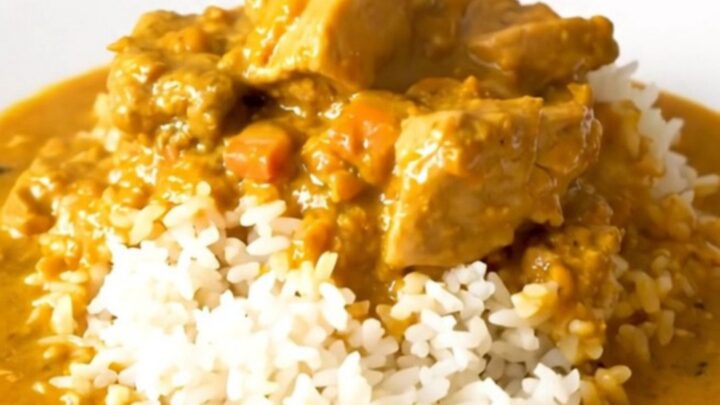
- Cook and ServeCover the slow cooker and cook on low for 4 hours until the chicken is tender and reaches an internal temperature of 165°F (74°C). Let the chicken rest for 5 minutes before serving over rice.Look for The sauce is thickened and glossy, and the chicken is fully cooked through.Safe temperature 165°F (74°C) internal temperature (poultry)Tip Check the internal temperature with a meat thermometer to ensure food safety.
When the chicken is cooked through and the sauce has reached a thickened, glossy consistency, the dish is ready. Check the internal temperature to ensure safety and let the meat rest briefly. The final result should be a harmonious, comforting bowl of curry that is perfectly tender and ready to be served.
Common mistakes
A common mistake is using pumpkin pie filling instead of plain pumpkin puree, which will introduce unwanted sugar and spices that clash with the curry. Another error is failing to cut the chicken into uniform pieces, which leads to uneven cooking; ensure all pieces are roughly the same size.
Finally, do not overcrowd the slow cooker, as this can prevent the sauce from reaching the proper temperature and consistency required for a perfect, creamy finish.
How to tell it’s done
The chicken is done when it is opaque throughout and reaches an internal temperature of 165°F (74°C). The sauce should be glossy, thickened, and aromatic. Use a digital meat thermometer inserted into the thickest part of the chicken to verify the temperature.
Allow the cooked chicken to rest for at least 5 minutes before serving to ensure the juices redistribute, resulting in the most tender and flavorful bite possible.
- Poultry: 165°F (74°C) in the thickest part
Up next · Part 3 of 3
2 variations · storage & make-ahead · 3 answers · printable card
Tips, FAQ & printable recipe (Part 3)← Back to the ingredients (Part 1)