Dinner · Part 2 of 3: Instructions
Crockpot Provolone Sausage Red Pepper Shells Step-by-step instructions
- Prep
- Cook
- Total
- Serves
- 6
Before you start
Before starting, brown the Italian sausage in a large skillet over medium-high heat, breaking it into crumbles, until fully cooked and no pink remains. Drain any excess fat. Have the pasta shells, red pepper sauce, ricotta, and provolone measured and ready. No need to pre-cook the pasta — it will cook in the slow cooker. Set out your slow cooker and ensure it's clean and dry.
Ingredients at a glance (5)
- 1 lb sweet Italian pork sausage, browned and crumbled
- 2 cups medium conchiglie pasta shells
- 2 cups smoky roasted red bell pepper cream sauce
- 1 cup whole-milk ricotta cheese
- 2 cups shredded provolone cheese
Instructions
Layering the Base
- Layer the SausagePlace the browned Italian sausage crumbles into the bottom of the slow cooker, spreading them in an even layer. The sausage should already be fully cooked through from browning, so this step is about building the base of the dish.Look for An even layer of savory sausage covers the bottom of the Crockpot.Safe temperature 160°F (71°C) internal temperature (ground meat)Tip Use a slotted spoon to lift the sausage from the skillet, leaving excess fat behind.
- Add Pasta and SauceAdd the uncooked pasta shells over the sausage, then pour the smoky roasted red pepper cream sauce over the top. Stir gently to combine everything, ensuring the pasta is mostly submerged in the sauce.Look for The shells are coated in the pinkish-red sauce.Tip If the sauce seems thick, add up to 1/2 cup water or broth to help the pasta cook.
At this stage, the slow cooker contains a layer of browned sausage, topped with uncooked pasta shells and a generous amount of red pepper sauce. The sauce should coat the pasta evenly, and the mixture should look moist but not swimming in liquid.
The sausage gives off a savory aroma, and the sauce's smoky pepper scent is inviting. All ingredients are in place, ready for the cheese topping.
Slow Cooking and Melding
- Top with Ricotta and ProvoloneDrop spoonfuls of ricotta over the pasta mixture, then sprinkle the shredded provolone evenly over the top. Do not stir — the cheeses will melt into a creamy layer as the slow cooker works.Look for The top is covered with white and golden cheese dollops.Tip Use whole-milk ricotta for the creamiest texture.
- Slow Cook on LowCover the slow cooker and cook on low for 3 to 4 hours, or on high for 1 1/2 to 2 hours, until the pasta is tender and the sauce is bubbling. The dish is done when the pasta is al dente and the internal temperature of the sausage reaches 160°F (71°C).Look for The sauce is bubbling around the edges and the cheese is melted.Safe temperature 160°F (71°C) internal temperature (ground meat)Tip Check at the 3-hour mark; slow cookers vary, and pasta can overcook quickly.
After a few hours on low, the slow cooker is bubbling gently around the edges. The cheese has melted into a golden, bubbly crust, and the sauce has thickened slightly. The kitchen smells of roasted red peppers, garlic, and melted cheese.
The pasta is tender when pierced with a fork, and the ricotta has blended into the sauce, creating creamy pockets. The internal temperature of the sausage should be at least 160°F (71°C).
Resting and Serving
- Stir and Let RestTurn off the slow cooker and stir the pasta gently to fold the melted cheese through the sauce. Let the dish rest for 5 to 10 minutes before serving — this allows the sauce to thicken slightly and the flavors to meld.Look for The mixture is creamy and cohesive, not soupy.Tip Resting also prevents the pasta from being too hot to eat.
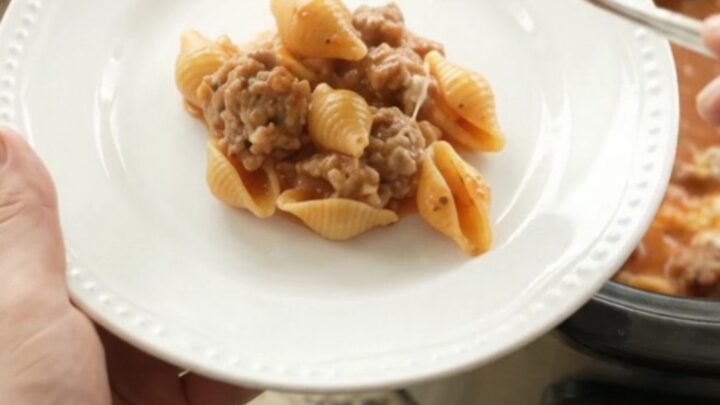
- Serve HotSpoon the pasta onto plates or into bowls, making sure to get a good mix of sausage, shells, and cheese in each serving. Serve hot, with extra red pepper sauce on the side if desired.Look for Steaming, cheesy pasta with visible sausage crumbles.Tip A wide spoon makes it easier to serve without breaking the shells.
After stirring and letting the dish rest, the pasta is coated in a rich, creamy sauce with visible crumbles of sausage and streaks of melted provolone. The texture is thick and luxurious, not runny. A spoonful holds its shape on the plate, and the cheese stretches slightly. The flavors are balanced — smoky, savory, and indulgent. Serve hot, and enjoy the satisfying aroma.
Common mistakes
One common mistake is adding too much liquid, which makes the dish soupy. Stick to the sauce amount and add extra only if needed. Another is lifting the lid frequently to check on the pasta — this lets out heat and slows cooking.
Also, avoid stirring the pasta right after adding the cheese; the cheese needs time to melt and create a creamy layer. Finally, don't overcook the pasta; check at the minimum time.
How to tell it’s done
The dish is done when the pasta is tender but still holds its shape, and the sauce is bubbling around the edges. The cheese should be fully melted and lightly golden in spots.
If you're unsure, taste a pasta shell — it should be al dente, not crunchy or mushy. For food safety, the internal temperature of the sausage should reach 160°F (71°C). If it hasn't, continue cooking and check again in 15 minutes.
- Ground meat: 160°F (71°C) in the thickest part
Up next · Part 3 of 3
4 variations · storage & make-ahead · 5 answers · printable card
Tips, FAQ & printable recipe (Part 3)← Back to the ingredients (Part 1)