Dinner · Part 2 of 3: Instructions
Crockpot Provolone Meatball Vodka Ravioli: Set-and-Forget Dinner Step-by-step instructions
- Prep
- Cook
- Total
- Serves
- 6
Before you start
Before starting, gather all ingredients and measure them out. If using frozen meatballs, keep them in the freezer until ready to use. For the ravioli, if using fresh, check the package for any special instructions. Ensure the slow cooker is clean and dry. Have the ricotta and provolone ready at room temperature for even melting. No need to pre-cook anything—this recipe is truly dump-and-go. Set out a serving plate and utensils for when the dish is done.
Ingredients at a glance (5)
- 2 lb homestyle Italian beef meatballs
- 20 oz jumbo four-cheese ravioli
- 24 oz pink tomato-vodka cream sauce
- 1 cup whole-milk ricotta cheese
- 2 cups shredded provolone cheese
Instructions
Layer Everything
- Layer the MeatballsPlace the beef meatballs in an even layer across the bottom of the slow cooker. Arrange them so they cover the surface without overlapping too much, allowing even cooking.Look for The meatballs form a single layer at the bottom of the crock.Safe temperature 160°F (71°C) internal temperature (ground meat)Tip If using larger meatballs, cut them in half for quicker cooking.
- Add Ravioli and SauceScatter the jumbo four-cheese ravioli over the meatballs. Pour the pink tomato-vodka cream sauce evenly over the top, making sure the ravioli and meatballs are mostly covered.Look for The sauce pools around the ravioli, coating them lightly.Tip Gently press the ravioli into the sauce so they stay moist.
- Dollop Ricotta and Sprinkle ProvoloneSpoon dollops of whole-milk ricotta over the top, then sprinkle the shredded provolone cheese over everything, covering as much surface as possible.Look for The top is covered with white ricotta and golden provolone.Tip Use a spoon to create small wells for the ricotta to melt into.
At the end of this phase, the slow cooker contains a neat layering: meatballs on the bottom, ravioli scattered on top, covered with vodka sauce, and topped with dollops of ricotta and a blanket of shredded provolone. The colors are vibrant—deep red sauce, white ricotta, and pale provolone.
The ingredients are not mixed, but the sauce covers most of the surface, and the cheese is evenly distributed. This is the 'dump it in' stage, where everything is ready for the slow cooker to work its magic.
Slow Cook and Bubble
- Slow Cook the CasseroleCover the slow cooker and cook on low for 4 hours, or until the meatballs are cooked through and the ravioli are tender. Do not stir during cooking to keep the layers intact.Look for The sauce is bubbling at the edges and the cheese is melted.Safe temperature 160°F (71°C) internal temperature (ground meat)Tip Resist the urge to lift the lid; the heat escapes and slows cooking.
- Check Meatball TemperatureAfter 4 hours, check that the meatballs have reached an internal temperature of 160°F (71°C) using an instant-read thermometer. The ravioli should be tender when pierced with a fork.Look for The thermometer reads at least 160°F (71°C) in the center of a meatball.Safe temperature 160°F (71°C) internal temperature (ground meat)Tip If not done, cover and cook for another 30 minutes, then check again.
After 4 hours on low, the slow cooker is filled with a bubbling, fragrant casserole. The sauce is simmering at the edges, and the cheese has melted into a golden, bubbly topping. The aroma is rich with tomato, cream, and herbs. The meatballs are cooked through, and the ravioli are tender. Use a thermometer to confirm the meatballs are at 160°F (71°C). The dish looks like a bubbling cauldron of comfort, with steam rising and the cheese stretching if you peek.
Serve and Enjoy
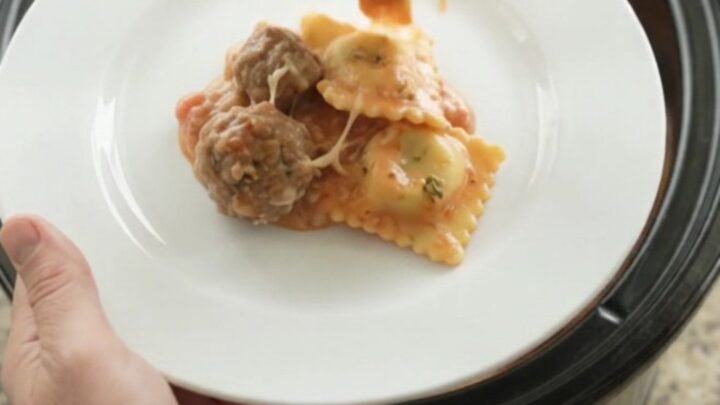
- Serve the CasseroleSpoon the bubbling casserole onto plates, making sure to include a meatball and a few ravioli in each serving. Serve hot, with extra sauce from the crock if desired.Look for The cheese stretches as you spoon it, and steam rises from the dish.Tip Use a slotted spoon to avoid excess sauce if you prefer a drier serving.
When spooned onto plates, the casserole holds its shape—meatballs and ravioli are coated in a creamy pink sauce, with pockets of melted ricotta and provolone. The cheese stretches as you lift it, and the steam carries the savory aroma.
The dish looks inviting, with a rich, creamy texture and golden-brown spots from the cheese. Each serving is hearty and satisfying, with a balance of meat, pasta, and sauce. The plate is filled with a generous portion, ready to be enjoyed.
Common mistakes
One common mistake is lifting the lid too often to check on the dish—this releases heat and extends cooking time. Another is stirring the casserole, which can break the ravioli and create a mushy texture. Overcooking can make the ravioli fall apart, so check for doneness at the minimum time.
Using pre-shredded cheese may result in a less creamy melt due to anti-caking agents. Lastly, if the sauce seems thin, don't add thickener—the cheese and pasta will naturally thicken it as they cook.
How to tell it’s done
The casserole is done when the meatballs are cooked through and have reached an internal temperature of 160°F (71°C). The ravioli should be tender but not mushy, and the sauce should be bubbling around the edges. The cheese on top should be melted and lightly golden.
If the top isn't browned, you can turn the slow cooker to high for the last 15 minutes, but watch closely to prevent overcooking. Let the dish rest for 5 minutes before serving to allow the sauce to thicken slightly.
- Ground meat: 160°F (71°C) in the thickest part
- Steaks, chops and roasts: 145°F (63°C) in the thickest part, then a 3-minute rest
Up next · Part 3 of 3
4 variations · storage & make-ahead · 5 answers · printable card
Tips, FAQ & printable recipe (Part 3)← Back to the ingredients (Part 1)