Dinner · Part 1 of 3: Ingredients
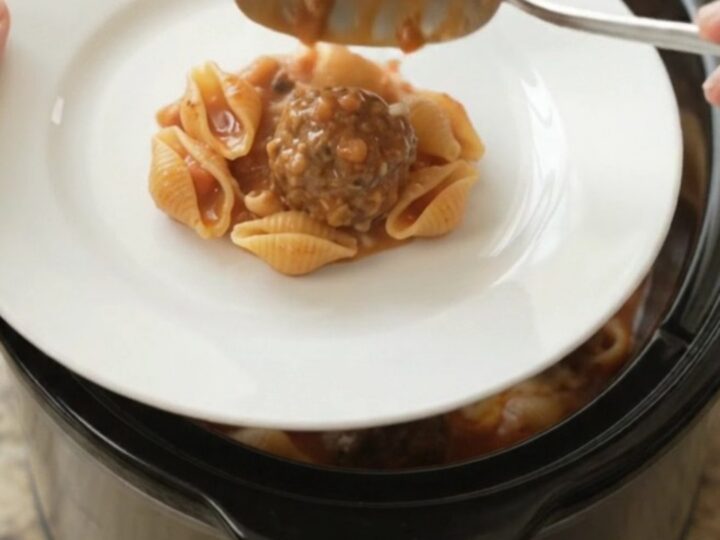
Crockpot Provolone Meatball Red Pepper Shells: Dump-and-Go Comfort
- Prep
- Cook
- Total
- Serves
- 6
This slow cooker dinner is the ultimate set-it-and-forget-it meal: tender beef meatballs, pasta shells, and a smoky roasted red pepper cream sauce all bubble together in the Crockpot with ricotta and provolone.
Just layer the ingredients in the morning, and by dinnertime you have a rich, comforting pasta bake that tastes like it simmered all day—because it did. The best part? No boiling pasta, no extra pots, and no stirring required. Everything cooks in one pot, and the result is creamy, cheesy, and deeply satisfying.
This recipe turns a handful of pantry staples into a hearty, restaurant-worthy dinner with almost no effort. The slow cooker does all the work: it gently simmers the meatballs and pasta in a velvety roasted red pepper sauce, while the ricotta and provolone melt into a golden, bubbly topping.
The flavors meld together as the pasta absorbs the sauce, creating a dish that's creamy, smoky, and full of savory richness. Perfect for busy weeknights, this dump-and-go meal is sure to become a family favorite.
Ingredients
- 2 lb homestyle Italian beef meatballs
- 12 oz medium conchiglie pasta shells
- 3 cups smoky roasted red bell pepper cream sauce
- 1 cup whole-milk ricotta cheese
- 2 cups shredded provolone cheese
Why this recipe works
The slow cooker's low, steady heat lets the meatballs release their juices into the sauce, infusing every shell with deep, beefy flavor.
The pasta cooks directly in the sauce, absorbing the liquid as it softens, which means every bite is coated in that smoky red pepper cream. The ricotta and provolone melt into the sauce, creating a luscious, cheesy texture that clings to the pasta and meat.
Because everything cooks together in one pot, there's no need to boil pasta separately or juggle multiple pans. The layers stay intact during cooking, so the flavors develop gradually and the cheese forms a beautiful, bubbly crust on top. This method also means less cleanup and more time to relax while dinner cooks itself.
Notes and substitutions
Use good-quality homestyle Italian beef meatballs—they're seasoned and ready to go. If you prefer to make your own, that works too.
The pasta shells are medium conchiglie, which hold the sauce well; feel free to swap in another short shape like rigatoni or penne. The smoky roasted red pepper cream sauce is the star: look for a jarred version or make a quick homemade blend.
A 6-quart slow cooker is ideal for this recipe. If your slow cooker runs hot, start checking at 3.5 hours to avoid overcooking the pasta. The ricotta should be whole-milk for the creamiest result, and the provolone should be freshly shredded if possible—pre-shredded cheese may not melt as smoothly. For a spicier kick, add a pinch of red pepper flakes or a dash of hot sauce.
- homestyle Italian beef meatballs: Frozen fully cooked meatballs (thawed) or homemade turkey meatballs; adjust cook time if using raw turkey.
- medium conchiglie pasta shells: Other short pasta like rigatoni or penne; adjust liquid if using a different shape.
- smoky roasted red pepper cream sauce: Use a jarred roasted red pepper Alfredo sauce or blend roasted red peppers with heavy cream and seasonings.
- whole-milk ricotta: Part-skim ricotta or cottage cheese (blended smooth) for a lighter option.
Equipment
- 6-quart slow cooker
- Large spoon
- Measuring cups
- Cutting board (optional)
Up next · Part 2 of 3
5 steps · 4 h of cooking · what to look for at each stage
Step-by-step instructions (Part 2)