Dinner · Part 2 of 3: Instructions
Crockpot Provolone Meatball Bolognese Rigatoni: Dump-and-Go Slow Cooker Dinner Step-by-step instructions
- Prep
- Cook
- Total
- Serves
- 6
Before you start
Before starting, gather all the ingredients and measure them out. If using frozen meatballs, keep them frozen until ready to use. No need to cook the pasta beforehand; it will cook in the slow cooker.
Ensure your slow cooker is clean and ready. Have a large spoon and measuring cups on hand. This recipe is truly dump-and-go, so there's minimal prep involved. Just layer the ingredients as directed and set the timer.
Ingredients at a glance (5)
- 2 lb homestyle Italian beef meatballs
- 1 lb rigatoni pasta
- 1 jar (24 oz) roasted garlic tomato basil sauce
- 1 cup whole-milk ricotta cheese
- 2 cups shredded provolone cheese
Instructions
Layering the Base
- Layer the IngredientsPlace the beef meatballs in an even layer at the bottom of the slow cooker. Pour the rigatoni pasta over the meatballs, then pour the roasted garlic tomato basil sauce over the pasta, making sure the pasta is mostly covered. Use a spoon to gently press the pasta into the sauce.Look for The meatballs should be in a single layer, with the pasta and sauce evenly distributed.Tip If the sauce doesn't fully cover the pasta, add a splash of water or extra sauce to ensure even cooking.
- Add the CheesesSpoon dollops of the whole-milk ricotta over the top of the sauce. Sprinkle the shredded provolone cheese evenly over the entire surface, covering the ricotta dollops. Do not stir; the layers will meld during cooking.Look for The top should be covered with ricotta dollops and a thick layer of shredded provolone.Tip Leave the cheese on top without stirring to create a golden, bubbly crust as it cooks.
At the end of this phase, the slow cooker contains a neat layer of meatballs, topped with dry rigatoni and covered with sauce. The ricotta and provolone sit on top, creating a white and yellow blanket.
The ingredients are not stirred; the layers are distinct. The sauce should cover most of the pasta, with some pieces peeking through. The cheese is evenly distributed.
Slow Cooking
- Slow Cook Until BubblingCover the slow cooker with the lid. Cook on low for 4 hours, or until the meatballs are cooked through and the pasta is tender. Avoid opening the lid during the first 3 hours to retain heat and moisture.Look for Sauce should be bubbling gently around the edges, and the cheese on top should be melted and lightly golden.Safe temperature 160°F (71°C) internal temperature (ground meat)Tip If the pasta absorbs too much liquid and looks dry, add a little hot water or broth in the last 30 minutes.
- Check the MeatballsAfter 4 hours, check that the meatballs have reached an internal temperature of 160°F (71°C) using an instant-read thermometer. The pasta should be al dente and the sauce thickened. If the meatballs are not done, continue cooking for 20-30 minutes.Look for The meatballs should be firm and cooked through, and the pasta should be tender but not mushy.Safe temperature 160°F (71°C) internal temperature (ground meat)Tip Use a thermometer to ensure the meatballs are safe to eat; the temperature should be 160°F (71°C).
After several hours, the sauce is bubbling gently around the edges, and the cheese has melted into a golden, blistered top. The aroma of garlic and tomato fills the kitchen. The meatballs are cooked through, and the pasta is tender. The sauce has thickened slightly, and the ricotta has melded with the provolone. The dish looks rustic and inviting.
Finishing and Serving
- Stir Gently and ServeOnce the meatballs are cooked, stir the pasta mixture gently to combine the cheese and sauce. Serve hot directly from the slow cooker, or transfer to a serving plate. Use a large spoon to scoop out portions, making sure to get a meatball and some cheesy pasta in each serving.Look for The cheese should stretch as you lift the spoon, and the sauce should be thick and clinging to the pasta.Tip For a crispier top, place the slow cooker insert under the broiler for 2-3 minutes after stirring, if the insert is broiler-safe.
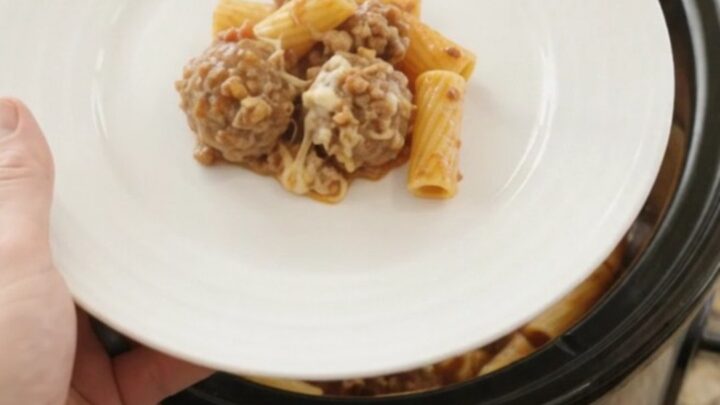
The final dish is a cohesive, cheesy pasta bake. When stirred, the sauce coats the rigatoni, and the meatballs are nestled throughout. The cheese stretches as you lift the spoon. The texture is creamy from the ricotta and gooey from the provolone. The meatballs are juicy and flavorful. Served on a plate, it looks hearty and satisfying.
Common mistakes
One common mistake is lifting the lid too often during cooking, which releases heat and extends the cooking time. Try to resist the urge to peek. Another issue is using too much liquid; the sauce might not fully cover the pasta, but that's okay.
The steam will help cook the pasta. Also, be careful not to overcook, as the pasta can become mushy. Check doneness at the 3.5-hour mark if your slow cooker runs hot.
How to tell it’s done
The dish is done when the meatballs are cooked through and reach an internal temperature of 160°F (71°C) on an instant-read thermometer. The pasta should be tender but still have a slight bite (al dente).
The sauce will have thickened and the cheese on top will be melted and bubbly. If the sauce seems too thin, remove the lid and cook on high for an additional 15-20 minutes to reduce. If the pasta is too firm, cook for another 15 minutes.
- Ground meat: 160°F (71°C) in the thickest part
Up next · Part 3 of 3
4 variations · storage & make-ahead · 5 answers · printable card
Tips, FAQ & printable recipe (Part 3)← Back to the ingredients (Part 1)