Dinner · Part 2 of 3: Instructions
Crockpot Provolone Meatball Alfredo Penne: A Dump-and-Go Dinner Step-by-step instructions
- Prep
- Cook
- Total
- Serves
- 6
Before you start
Before you start, make sure you have a 7-quart slow cooker (Crockpot) ready. Measure out all the ingredients: the meatballs, penne, broccoli, Alfredo sauce, ricotta, and provolone. If using fresh broccoli, cut it into small, bite-sized florets.
There's no need to pre-cook anything—this recipe is truly a dump-and-go. Have a large spoon or spatula for stirring, and an instant-read thermometer to check the meatballs' internal temperature. Set out your serving plates and utensils so everything is ready when the dish is done.
Ingredients at a glance (6)
- 2 lb homestyle Italian beef meatballs
- 12 oz penne pasta
- 3 cups fresh broccoli florets
- 1 jar (15 oz) creamy garlic parmesan Alfredo sauce
- 1 cup whole-milk ricotta cheese
- 2 cups shredded provolone cheese
Instructions
Layer and Top
- Layer the IngredientsPlace the beef meatballs in an even layer at the bottom of the slow cooker. Add the penne pasta and broccoli florets on top. Pour the Alfredo sauce over everything, making sure to coat the pasta and broccoli as much as possible.Look for The meatballs sit in a single layer with pasta and broccoli piled on top.Tip No need to stir yet—layering helps the pasta cook evenly.
- Add the CheesesSpoon dollops of ricotta over the top of the mixture. Sprinkle the shredded provolone evenly over the surface, covering the ricotta and the rest of the ingredients.Look for The top is covered with white and yellow cheese, ready for slow cooking.Tip The cheese will melt and create a creamy sauce as it cooks.
At this stage, the slow cooker contains a neat layer of meatballs, covered with penne and broccoli, then topped with Alfredo sauce and dollops of ricotta and shredded provolone. The ingredients are not mixed, but the sauce should coat the pasta and vegetables well.
The cheese is visible on top, and the dish looks colorful and inviting. Before moving on, ensure that the meatballs are evenly distributed and the cheese is spread over the surface.
Slow Cook to Perfection
- Slow CookCover the slow cooker and cook on low for 4 hours, or until the meatballs are cooked through and the pasta is tender. Stir gently once halfway through, if possible, to redistribute the sauce.Look for The sauce will bubble gently around the edges and the kitchen will smell of garlic and cheese.Safe temperature 160°F (71°C) internal temperature (ground meat)Tip Avoid lifting the lid too often; each time releases heat and extends cooking time.
- Check for DonenessAfter 4 hours, check that the meatballs have reached an internal temperature of 160°F (71°C) using an instant-read thermometer. The pasta should be al dente and the broccoli tender-crisp.Look for The meatballs are firm and the pasta is cooked but not mushy.Safe temperature 160°F (71°C) internal temperature (ground meat)Tip If the pasta is still too firm, continue cooking in 15-minute increments.
After 4 hours on low, the slow cooker is bubbling gently. The sauce has thickened and the cheese has melted into a creamy, golden layer. The aroma of garlic and herbs fills the kitchen. The meatballs are cooked through and the pasta is tender. A quick stir reveals a rich, cohesive sauce. Check that the meatballs reach 160°F (71°C) and the pasta is al dente. If not, continue cooking in 15-minute intervals.
Serve and Enjoy
- ServeOnce everything is cooked, stir the mixture gently to combine the melted cheese into the sauce. Serve hot directly from the slow cooker or spoon onto plates. Enjoy the creamy, cheesy pasta bake.Look for The cheese is melted and the sauce is creamy and thick.Tip This dish is rich, so serve with a simple green salad if desired.
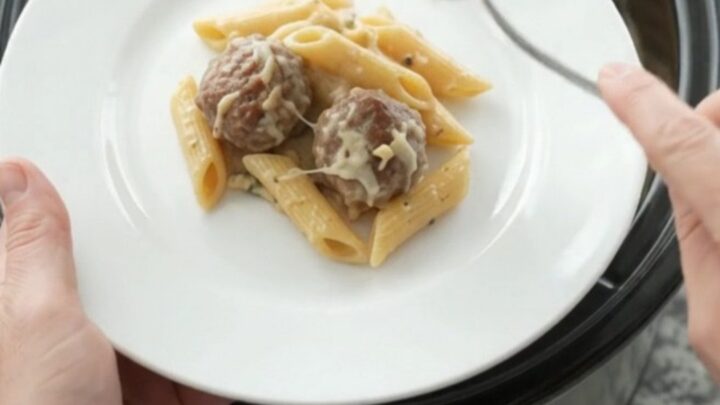
The dish is ready to serve. The sauce is velvety, the cheese is fully melted, and the meatballs are juicy. The penne is tender, and the broccoli is bright green. When spooned onto plates, the pasta holds its shape and is coated in a creamy sauce. The flavors are well-blended, and the dish looks as delicious as it tastes. Serve immediately while hot, and enjoy the comforting, cheesy goodness.
Common mistakes
One common mistake is lifting the lid too often during cooking, which releases heat and extends the cooking time. Another is overcooking the pasta, which can turn it mushy—check for doneness at the 3.5-hour mark if possible.
Adding too much liquid can also make the dish watery; the Alfredo sauce should be enough, but if you want extra sauce, add a splash of chicken broth. Also, be sure to use a slow cooker that is large enough (7 quarts) to avoid overflow, and avoid stirring too vigorously, which can break up the meatballs.
How to tell it’s done
The dish is done when the meatballs are cooked through and have reached an internal temperature of 160°F (71°C) on an instant-read thermometer. The penne should be tender but still have a slight bite (al dente), and the broccoli should be tender-crisp, not mushy.
The sauce should be creamy and the cheese fully melted, with a slightly golden top. If the pasta is still too firm, continue cooking in 15-minute increments, checking to avoid overcooking. Once everything is perfectly cooked, stir gently and serve hot.
- Ground meat: 160°F (71°C) in the thickest part
Up next · Part 3 of 3
4 variations · storage & make-ahead · 5 answers · printable card
Tips, FAQ & printable recipe (Part 3)← Back to the ingredients (Part 1)