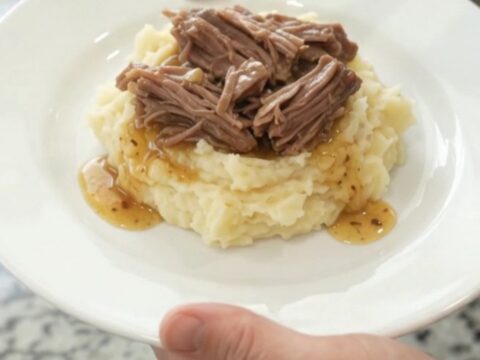
Dinner · Part 3 of 3: Tips & recipe card
Crockpot Portobello Dijon Cream Chuck Roast Tips, FAQ & printable recipe
- Prep
- Cook
- Total
- Serves
- 6
Tips for success
For the most tender beef, always cook on LOW. The longer, gentler heat breaks down collagen more effectively than high heat, which can make the meat stringy. If you're short on time, HIGH works, but the texture won't be quite as silky.
Also, let the roast rest after shredding—this allows the juices to redistribute and prevents the meat from drying out. Don't rush this step; even five minutes makes a difference.
To thicken the gravy without cornstarch, remove the lid for the last 30 minutes of cooking and turn the slow cooker to HIGH. The sauce will reduce and concentrate in flavor.
If you prefer a thicker sauce, you can stir in a slurry of 1 tablespoon cornstarch and 2 tablespoons cold water, then cook for 15 more minutes. But the natural reduction often works beautifully, especially if you started with a good amount of au jus.
Variations
- Herb-Infused: Add 2 sprigs of fresh thyme and 1 sprig of rosemary to the pot with the roast. The herbs infuse the sauce with woodsy, aromatic notes. Remove the sprigs before shredding the beef. This variation pairs beautifully with the Dijon and mushrooms.
- Smoky Twist: Replace the au jus with 1 cup of beef broth and 1 tablespoon of smoked paprika. Add 1 teaspoon of smoked salt instead of kosher salt. The smokiness adds a barbecue-like depth, and the sauce becomes a little more rustic. Serve with cornbread for a Southern-inspired meal.
- Spicy Kick: Stir 1 teaspoon of crushed red pepper flakes or 1 tablespoon of hot sauce into the sour cream mixture before adding to the pot. The heat balances the creaminess and tang. For extra depth, add a diced chipotle pepper in adobo. Serve with cooling sour cream or yogurt on top.
- Veggie-Loaded: Add 2 large carrots, cut into 2-inch chunks, and 1 large onion, sliced, to the bottom of the slow cooker before adding the roast. The vegetables cook in the juices and become tender and sweet. They add color and nutrition to the dish. The carrots will be soft and infused with the Dijon cream sauce.
Storage and make-ahead
- Fridge
- Store in an airtight container in the refrigerator for up to 4 days. Reheat gently, adding a splash of broth if needed.
- Freezer
- Freeze in a freezer-safe container for up to 3 months. Thaw overnight in the refrigerator before reheating.
- Reheat
- Reheat in a saucepan over medium-low heat, stirring often, until hot. Add a little beef broth if the sauce is too thick.
Store leftover shredded beef and sauce in an airtight container in the refrigerator for up to 4 days. The flavors will meld and deepen overnight, making the leftovers even more delicious.
Reheat gently on the stovetop or in the microwave, adding a splash of beef broth if the sauce has thickened too much. The beef may be even more tender after being refrigerated and reheated.
This recipe is perfect for meal prep. You can assemble the entire dish in the slow cooker insert the night before, cover it, and refrigerate overnight. In the morning, place the insert in the slow cooker and cook as directed.
The extended marinating time will infuse the beef with even more flavor. Alternatively, cook the roast completely, shred it, and store it in the refrigerator or freezer for later.
Serving ideas
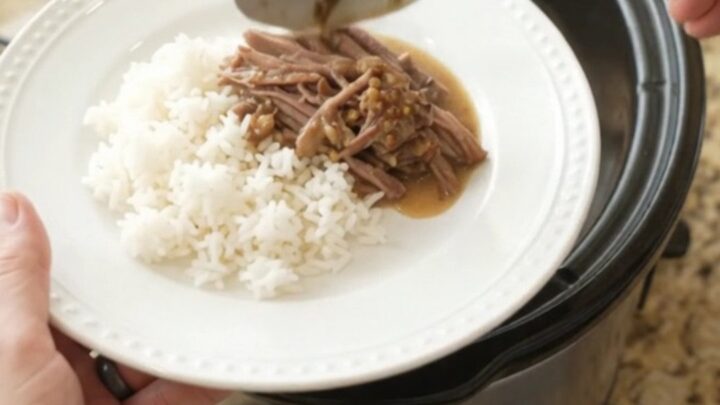
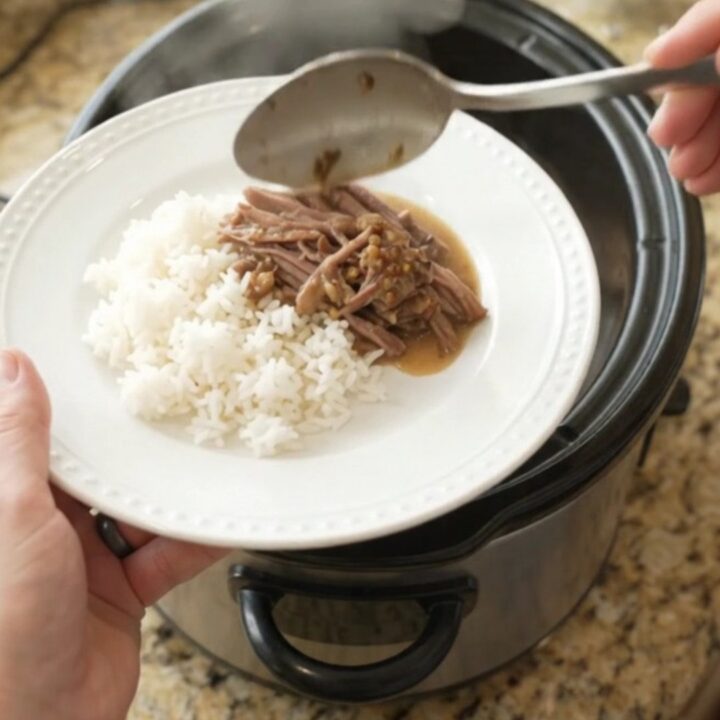
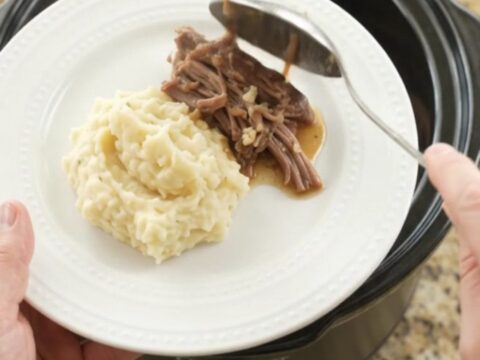
Serve this roast over steamed white rice, mashed potatoes, or buttered egg noodles to soak up the luscious sauce. A side of crusty bread is also great for dipping. For a low-carb option, serve over roasted cauliflower mash or steamed green beans. The rich, creamy gravy pairs well with bright, acidic sides like a simple green salad with vinaigrette or pickled vegetables.
For a complete meal, add a steamed green vegetable like broccoli or asparagus on the side. The dish is hearty enough to stand alone, but a light vegetable balances the richness. Garnish with fresh chopped parsley or chives for a pop of color and freshness, if you like. Leftovers can be turned into sandwiches, tacos, or a topping for baked potatoes.
Frequently asked questions
Can this recipe be made in a Dutch oven instead of a slow cooker?
Why did the sauce curdle or separate?
Can the beef be cooked on HIGH for a shorter time?
What is the best way to shred the beef?
Can the leftovers be frozen?
Crockpot Portobello Dijon Cream Chuck Roast
Ingredients
- 3 1/2 lb beef chuck roast
- 8 oz portobello mushrooms, thickly sliced
- 2 tbsp minced garlic
- 1/2 cup sour cream
- 1/4 cup coarse whole-grain Dijon mustard
- 1 cup au jus (beef broth with seasonings)
- 1 tsp kosher salt
- 1/2 tsp black pepper
Instructions
- Place the beef chuck roast in the center of a 6-quart slow cooker. Season both sides with kosher salt and black pepper. Arrange the thickly sliced portobello mushrooms over and around the roast, then sprinkle the minced garlic evenly over the top.
- Dollop the sour cream and the whole-grain Dijon mustard over the roast and mushrooms. Pour the au jus down the side of the pot, trying not to wash the sour cream and mustard off the top.
- Cover the slow cooker and cook on LOW for 8 to 10 hours, or on HIGH for 5 to 6 hours, until the beef is fork-tender and shreds easily. The internal temperature of the thickest part should reach at least 145°F (63°C) for food safety, but it will be much higher after long cooking. Let it rest for 3 minutes before slicing.
- Turn off the slow cooker. Remove the roast to a cutting board and let it rest for at least 3 minutes. Using two forks, shred the beef into large bite-size pieces, discarding any large pieces of fat. Return the shredded beef to the pot with the sauce and mushrooms.
- Stir the shredded beef and mushrooms into the sauce. Taste and adjust seasoning with salt and pepper. Serve hot over steamed rice, spooning extra gravy over the top.
Estimated nutrition per serving
- Calories
- 520
- Protein
- 58 g
- Carbohydrates
- 9 g
- Fat
- 28 g
Next recipe
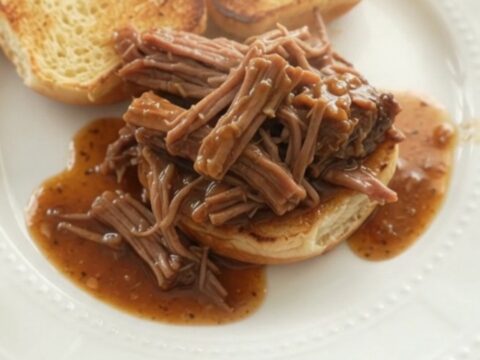
Crockpot Chuck Roast with Yukon Potatoes and Gravy
See the recipe → →This recipe is based on a short cooking video and is published under the pen name Clara Weller. It was checked before publication, but errors can slip through. Nutrition, when shown, is an estimate. Read more in our editorial policy and on our food safety page.
More recipes to try
Portobello Herb Butter Chuck Roast: 5-Ingredient Crockpot Dinner
Total time: 8 h 20 min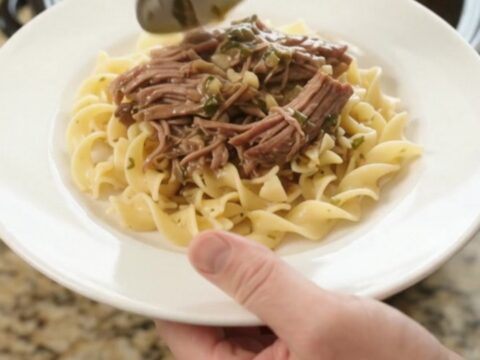
Slow-Cooker Garlic Butter Chuck Roast with Potatoes and Carrots
Total time: 8 h 25 min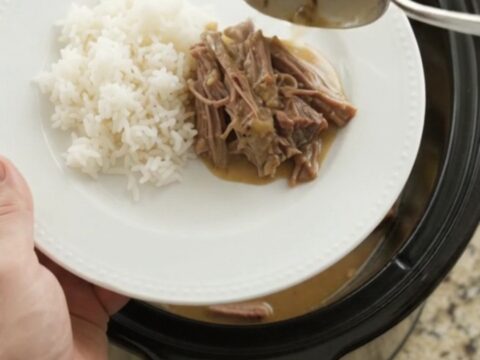
Crockpot Dijon Cream Chuck Roast: Dump and Forget
Total time: 8 h 25 min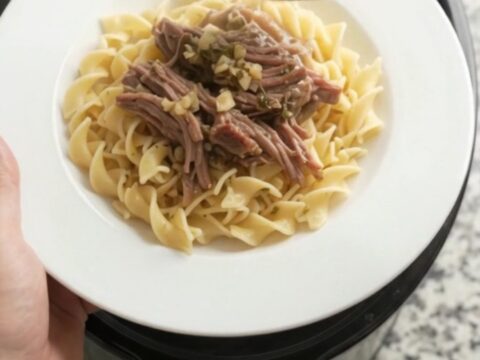
Portobello Herb Garlic Butter Chuck Roast
Total time: 8 h 25 min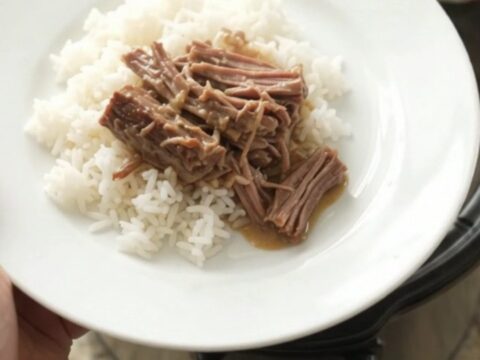
Slow-Cooker Dijon Cream Chuck Roast
Total time: 8 h 15 min