Dinner · Part 1 of 3: Ingredients
Pepper Jack Poblano Hominy Beef Barbacoa: Easy Crockpot Dinner
- Prep
- Cook
- Total
- Serves
- 8
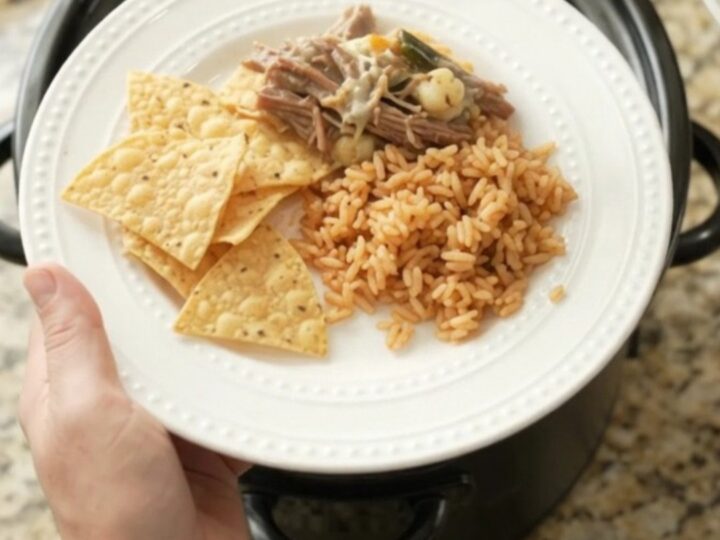
This Crockpot beef barbacoa is the ultimate set-it-and-forget-it dinner. Cubes of beef chuck simmer all day with roasted poblanos, white hominy, and a rich, creamy blend of queso blanco and pepper jack cheese. The result is a luscious, cheesy, shreddable beef dish that tastes like it simmered for hours on a Mexican stovetop—but it couldn't be easier. Just dump everything into the slow cooker, walk away, and come back to a bubbling pot of tender, flavorful barbacoa.
This recipe turns a handful of simple ingredients into a hearty, comforting dinner with almost no effort. The slow cooker does all the work, turning tough beef chuck into melt-in-your-mouth shreds while the queso and pepper jack melt into a silky, spicy sauce.
Roasted poblanos add a smoky depth, and hominy gives the dish a pleasant chew and a subtle corn sweetness. It's a one-pot meal that's perfect for busy weeknights, game-day spreads, or any time you want a warm, cheesy bowl of comfort. Just dump, cook, shred, and serve.
Ingredients
- 2 1/2 lb beef chuck cubes
- 2 cups roasted poblano peppers, diced
- 1 can (15 oz) white hominy, drained
- 2 cups warm white queso blanco dip
- 1 1/2 cups shredded spicy pepper jack cheese
Why this recipe works
The magic of this recipe lies in the slow, low heat of the crockpot. Beef chuck is a well-marbled cut that becomes incredibly tender when cooked slowly, allowing the connective tissue to break down into rich, gelatinous strands.
As the meat simmers in the queso and pepper jack, it absorbs the creamy, spicy flavors, resulting in a sauce that clings to every shred. The hominy, a traditional Mexican ingredient, holds its shape and adds a pleasant pop of texture, while the roasted poblanos infuse the dish with a gentle, smoky heat.
This recipe is also brilliantly hands-off. Unlike stovetop braises that require attention, the slow cooker does all the work without stirring or monitoring. The ingredients are simply layered in the pot, and the low, even heat ensures that the beef becomes fork-tender without drying out.
The cheese melts into the sauce, creating a velvety texture that coats the meat and hominy beautifully. This method is foolproof, making it an ideal choice for beginner cooks or anyone who wants a delicious meal with minimal effort.
Notes and substitutions
Choose a good-quality beef chuck roast and cut it into 2-inch cubes, or buy pre-cubed stew meat to save time. The marbling is key for tenderness, so don't trim all the fat.
Roasted poblano peppers are available in jars or cans, but you can roast fresh poblanos at home: char them over an open flame, steam in a covered bowl, and peel off the skin. White hominy is sold canned in most supermarkets; drain and rinse it before using. Yellow hominy or even frozen corn can be substituted, but the texture will differ.
For the queso blanco dip, use a smooth, creamy store-bought version or make your own with white American cheese and milk. The spicy pepper jack adds heat—choose a mild or extra-hot variety depending on your preference. If you want a milder dish, use regular Monterey Jack. This recipe is naturally gluten-free, but check the labels on your queso and cheese to be sure. The slow cooker size matters: a 6-quart model is ideal, but any large slow cooker will work as long as the ingredients fit comfortably.
- beef chuck cubes: Beef stew meat or boneless short ribs (cut into 2-inch pieces) work well; cook time may vary slightly.
- roasted poblano peppers: Use 2 fresh poblano peppers, roasted and peeled, or 2 cans (4 oz each) chopped green chiles for a milder heat.
- white hominy: Yellow hominy or frozen corn kernels (thawed) can be used; corn will be sweeter and less chewy.
- spicy pepper jack cheese: Use Monterey Jack with a pinch of cayenne or red pepper flakes, or a smoked gouda for a smoky note.
Equipment
- 6-quart slow cooker
- Large spoon
- Tongs
- Cutting board
- Chef's knife
- Measuring cups
Up next · Part 2 of 3
5 steps · 8 h of cooking · what to look for at each stage
Step-by-step instructions (Part 2)