Dinner · Part 3 of 3: Tips & recipe card
Crockpot Parmesan Honey Dijon Ribeye Pork Chops Tips, FAQ & printable recipe

- Prep
- Cook
- Total
- Serves
- 4
Tips for success
For the best flavor, use a good-quality whole-grain Dijon mustard that has visible mustard seeds. The seeds add a pleasant pop of texture and a sharper bite that balances the sweetness of the honey.
If you only have smooth Dijon, the dish will still be delicious, but consider adding a pinch of mustard powder to boost the flavor. When measuring honey, lightly coat the measuring cup with cooking spray to make it easier to pour and clean.
To prevent the cream cheese from clumping, make sure it is fully softened before adding it to the slow cooker. If you forget to take it out of the fridge, microwave it in 10-second bursts until soft.
When stirring the sauce at the end, use a gentle motion to avoid breaking up the pork chops. If you want a smoother sauce, you can whisk it vigorously, but be careful not to shred the meat. The sauce will thicken as it cools, so do not reduce it too much.
Variations
- Spicy Honey Dijon: Add 1 teaspoon of crushed red pepper flakes or a dash of cayenne pepper to the mustard-honey mixture for a subtle kick. The heat will balance the sweetness and add depth to the sauce.
- Herb-Infused: Stir in 2 teaspoons of fresh thyme leaves or 1 teaspoon of dried rosemary with the shallots. The herbs will infuse the sauce with earthy notes that complement the pork beautifully.
- Apple and Onion: Replace the shallots with 1 thinly sliced onion and add 1 peeled, sliced apple (such as Honeycrisp) along with the honey. The apple will soften and add a fruity sweetness to the sauce.
- Smoky Bourbon: Substitute 2 tablespoons of the honey with 2 tablespoons of bourbon and add 1 teaspoon of smoked paprika. The bourbon adds a smoky complexity, while the paprika enhances the color and flavor.
Storage and make-ahead
- Fridge
- Store leftover pork chops and sauce in an airtight container in the refrigerator for up to 4 days.
- Freezer
- Freeze the cooled pork chops and sauce in a freezer-safe container for up to 3 months. Thaw overnight in the refrigerator before reheating.
- Reheat
- Reheat gently on the stovetop over low heat, adding a splash of broth or water to loosen the sauce. Or microwave in 1-minute intervals, stirring between.
Store any leftovers in an airtight container in the refrigerator for up to 4 days. The pork chops will remain moist because they are submerged in the sauce. To reheat, place the desired portion in a saucepan over low heat, adding a splash of chicken broth or water if the sauce has thickened too much. You can also reheat in the microwave on medium power, stirring occasionally. Avoid boiling the sauce, as it may separate.
This dish can be assembled the night before. Place the pork chops in the slow cooker insert, add the mustard, honey, shallots, cream cheese, and Parmesan, then cover and refrigerate. In the morning, place the insert in the slow cooker base and cook on low as directed.
You may need to add 30 minutes to the cooking time because the ingredients start cold. Alternatively, cook the dish completely, let it cool, and refrigerate for up to 3 days. Reheat gently on the stove or in the microwave.
Serving ideas
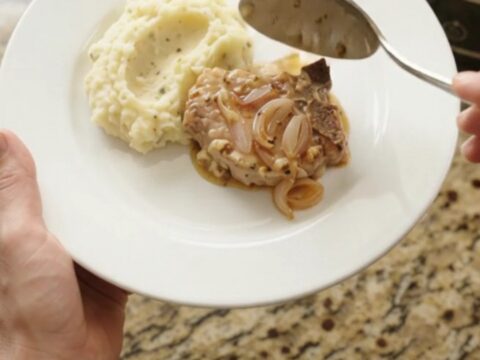
Serve the pork chops with a generous spoonful of the creamy sauce over the top. The sauce is rich and savory, so it pairs beautifully with fluffy white rice, mashed potatoes, or buttered egg noodles.
For a lighter option, serve with steamed green beans or a crisp green salad. Crusty bread is also excellent for soaking up every last drop of the sauce. Garnish with fresh thyme or chopped parsley if desired, though the dish is delicious as is.
This dish is hearty enough to be a main course on its own, but it also works well as part of a larger spread. For a family-style dinner, place the pork chops on a platter and pour the sauce over them, then let everyone serve themselves. Leftover sauce can be spooned over roasted vegetables or used as a dip for bread. The flavors are rich and comforting, making it a perfect meal for cool evenings or special occasions.
Frequently asked questions
Can this recipe be made with boneless pork chops?
Why is the sauce thin after cooking?
Can the cream cheese be replaced with something else?
How should leftovers be reheated?
Can this dish be cooked on high instead of low?
Crockpot Parmesan Honey Dijon Ribeye Pork Chops
Ingredients
- 4 bone-in ribeye pork chops (about 1 inch thick)
- 1/4 cup whole-grain Dijon mustard
- 1/4 cup honey
- 2 shallots, thinly sliced
- 8 oz cream cheese, softened
- 1/2 cup freshly grated Parmesan cheese
Instructions
- Place the bone-in ribeye pork chops in the bottom of a 6-quart slow cooker in a single layer, overlapping slightly if needed. Season lightly with salt and pepper if desired.
- Spoon the whole-grain Dijon mustard and honey over the pork chops, then scatter the sliced shallots evenly on top. Use a spoon to spread the mustard and honey over the chops as much as possible.
- Place the block of softened cream cheese in the center of the slow cooker on top of the pork chops. Sprinkle the grated Parmesan over everything.
- Cover the slow cooker and cook on low for 4 to 5 hours, until the pork chops are tender and cooked through. Avoid opening the lid during cooking to keep the heat steady. Let it rest for 3 minutes before slicing.
- After 4 to 5 hours, carefully stir the sauce to blend the melted cream cheese and Parmesan into the mustard-honey glaze. The sauce should be smooth and creamy.
- Turn off the slow cooker and let the pork chops rest in the sauce for at least 3 minutes before serving. This allows the juices to redistribute and the meat to stay tender.
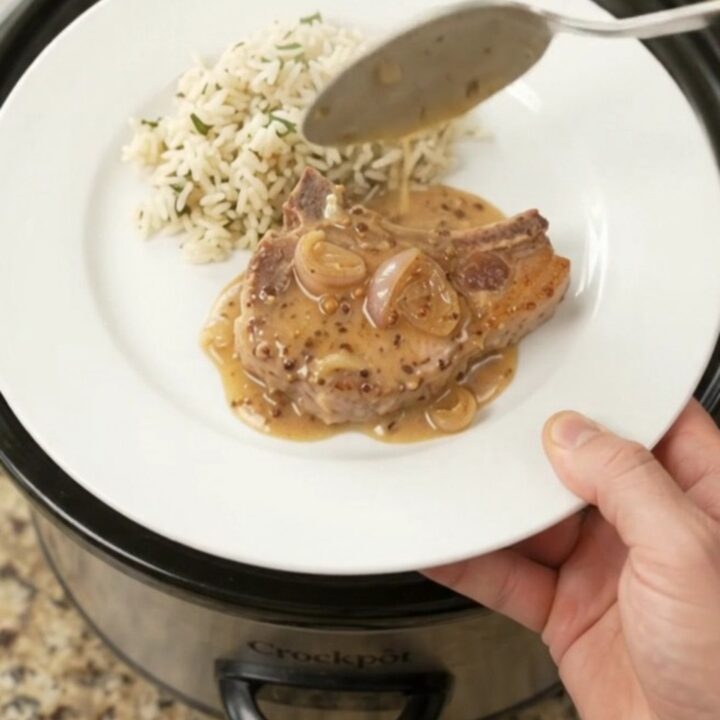
- Using tongs, transfer each pork chop to a serving platter or individual plates. Spoon the creamy honey-Dijon sauce over the top. Serve with rice, mashed potatoes, or crusty bread.
Estimated nutrition per serving
- Calories
- 580
- Protein
- 48 g
- Carbohydrates
- 22 g
- Fat
- 33 g
Next recipe
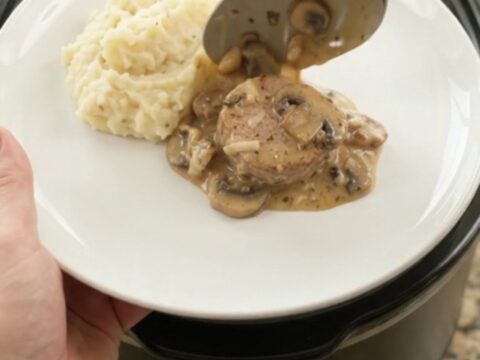
Crockpot Pork Medallions with Gruyère Ranch Mushroom Gravy
See the recipe → →This recipe is based on a short cooking video and is published under the pen name Clara Weller. It was checked before publication, but errors can slip through. Nutrition, when shown, is an estimate. Read more in our editorial policy and on our food safety page.
More recipes to try
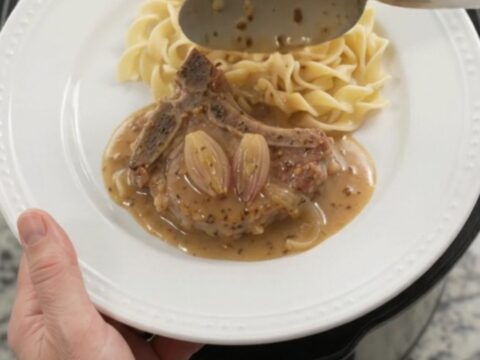
Slow Cooker Honey Dijon Ribeye Pork Chops
Total time: 4 h 10 min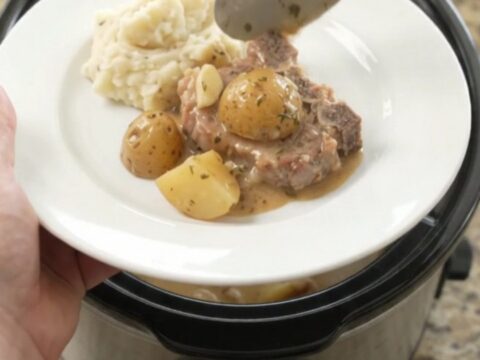
Slow Cooker Butter Cream Pork Chops and Potatoes
Total time: 6 h 13 min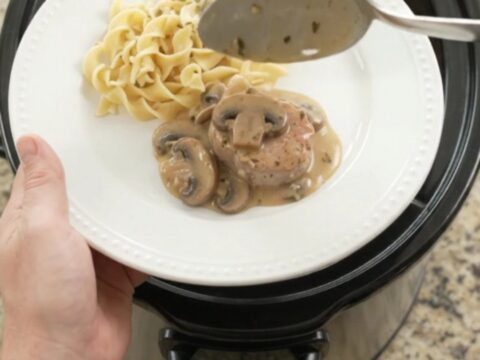
Crockpot Sour Cream Ranch Pork Medallions
Total time: 6 h 10 min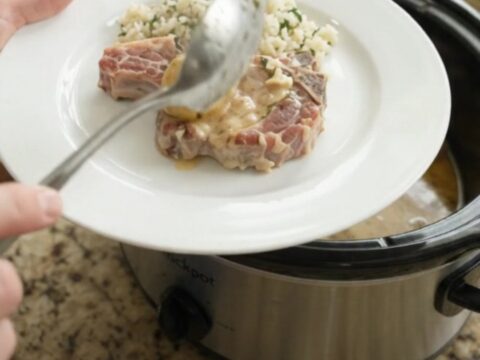
Creamy Parmesan Garlic Herb Ribeye Pork Chops
Total time: 6 h 10 min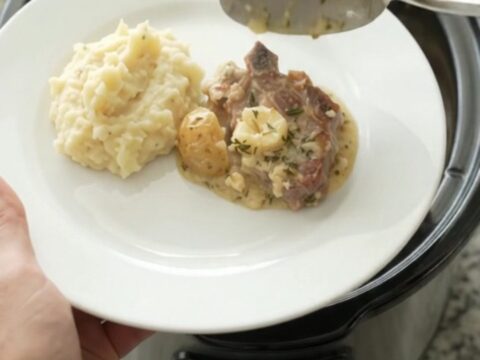
Crockpot Gruyère Garlic Herb Ribeye Pork Chops
Total time: 6 h 15 min