Dinner · Part 3 of 3: Tips & recipe card
Crockpot Maple Dijon Apple Cider Pork Tenderloin Tips, FAQ & printable recipe
- Prep
- Cook
- Total
- Serves
- 6
Tips for success
For a deeper flavor, you can sear the pork tenderloins in a hot skillet with a small amount of oil for two minutes per side before placing them into the slow cooker.
This adds a layer of Maillard reaction, which enhances the complexity of the final sauce and provides a beautiful browned crust on the exterior of the meat.
If you find the sauce is too thin at the end of the cooking process, you can carefully remove the tenderloins, transfer the liquid to a small saucepan, and simmer it over medium-high heat for a few minutes.
This will reduce the liquid further into a thicker, more concentrated glaze that can be drizzled over the sliced medallions before serving.
Variations
- Spicy Maple Dijon: Add one tablespoon of crushed red pepper flakes or a dash of hot sauce to the glaze mixture for a subtle heat that cuts through the sweetness.
- Herb-Crusted Variation: Rub the raw pork tenderloins with a mixture of dried sage, rosemary, and black pepper before placing them in the slow cooker for an extra herbal depth.
Storage and make-ahead
- Fridge
- Keep in an airtight container for up to 3 days in the refrigerator.
- Freezer
- Store in a freezer-safe bag or container for up to 2 months.
- Reheat
- Gently reheat in a covered skillet with a splash of water or cider over low heat until warmed through, ensuring the meat does not dry out.
Store any leftovers in an airtight container to prevent the meat from drying out. Place the container in the refrigerator as soon as it has cooled to room temperature, but no later than two hours after cooking. Proper storage ensures the pork remains safe and retains as much moisture as possible for the next meal.
You can prepare the apple and shallot base and mix the glaze ingredients in a jar ahead of time. When ready to cook, simply assemble the layers in the slow cooker insert. This makes for an incredibly quick assembly on busy mornings, allowing you to have a gourmet meal ready by dinner time with almost no effort.
Serving ideas
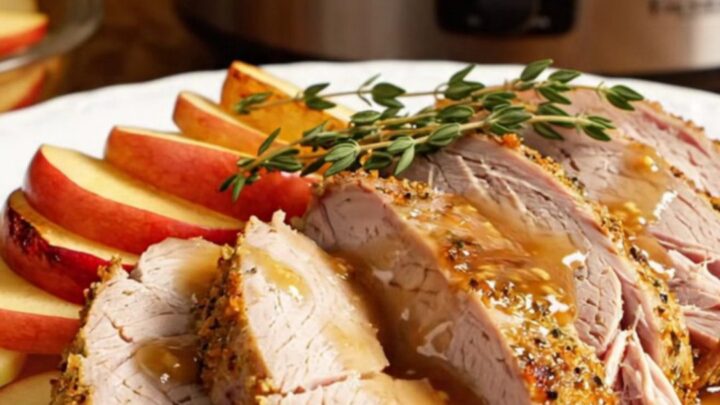
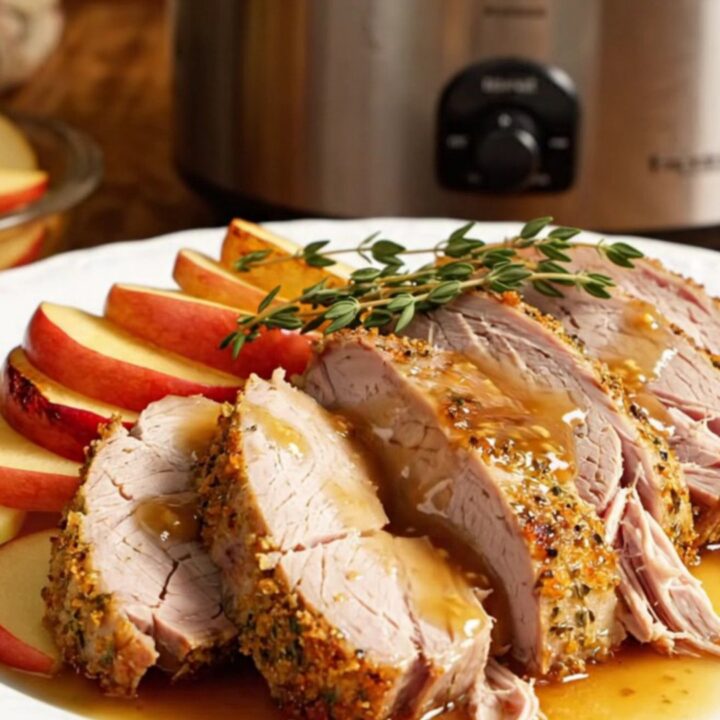
Serve the sliced medallions on a warmed platter, fanning them out to showcase the tender center. Spoon the thickened pan juices and the softened apples from the bottom of the slow cooker over the top of the meat.
This adds both visual appeal and extra flavor to the final presentation, making it perfect for a dinner table.
Pair this dish with a side of roasted root vegetables, mashed potatoes, or a simple green salad to balance the richness of the maple-Dijon glaze.
The acidity in the glaze cuts through heavier sides, while the sweetness pairs beautifully with earthy vegetables like roasted carrots or parsnips, creating a well-rounded and satisfying meal.
Frequently asked questions
Can a different cut of meat be used for this recipe?
Why does the apple cider need to be included?
Is it necessary to use fresh thyme?
Crockpot Maple Dijon Apple Cider Pork Tenderloin
Ingredients
- 3 lb pork tenderloin (two 1.5-lb tenderloins)
- 2 medium shallots, thinly sliced
- 2 large apples, sliced
- 1/2 cup pure maple syrup
- 1/3 cup Dijon mustard
- 1/2 cup apple cider
- 4 sprigs fresh thyme
Instructions
- Arrange the sliced shallots and apple slices in an even layer at the bottom of the slow cooker ceramic insert to create a flavorful bed for the meat.
- Place the pork tenderloins on top of the apple and shallot base. Pour the mixture of maple syrup, Dijon mustard, and apple cider over the meat, then nestle the fresh thyme sprigs around the pork.
- Cook on low for 3.5 hours until the pork reaches an internal temperature of 145°F (63°C). Baste the meat with the pan juices periodically. Once cooked, remove from the slow cooker, let rest for 5 minutes, and slice into medallions.
Estimated nutrition per serving
- Calories
- 320
- Protein
- 35 g
- Carbohydrates
- 22 g
- Fat
- 9 g
- Fiber
- 1.5 g
- Sugar
- 18 g
- Sodium
- 450 mg
Next recipe

Crockpot Brown Sugar Apricot Dijon Glazed Picnic Ham
See the recipe → →This recipe is based on a short cooking video and is published under the pen name Clara Weller. It was checked before publication, but errors can slip through. Nutrition, when shown, is an estimate. Read more in our editorial policy and on our food safety page.
More recipes to try

Crockpot Brown Sugar Pineapple Glazed Spiral Ham
Total time: 4 h 50 min
Slow-Cooker Cherry Cola & Clove Glazed Spiral Ham
Total time: 4 h 50 min
Crockpot Honey Mustard and Ginger Ale Glazed Holiday Ham
Total time: 4 h 55 min
Slow-Cooker Maple Bourbon Orange Marmalade Glazed Ham
Total time: 4 h 20 min
Crockpot Cajun Andouille & Bell Pepper Smothered Pork Chops
Total time: 6 h 15 min