Dinner · Part 2 of 3: Instructions
Crockpot Mango Habanero Pulled Pork for Easy Weeknight Dinners Step-by-step instructions
- Prep
- Cook
- Total
- Serves
- 8
Before you start
Before beginning, ensure your slow cooker insert is clean and dry. Prepare the pork shoulder by trimming any excess large fat caps if desired, although some fat is necessary for moisture. Cut the pork into uniform, large chunks to ensure they cook at the same rate. Have your measuring cups ready for the sauce and mango. Ensure your workspace is clear and that you have access to a sturdy cutting board and two forks for the shredding process later on. Gather all ingredients so they are ready for assembly.
Ingredients at a glance (4)
- 4 lb pork shoulder, cut into large chunks
- 2 cups mango chunks
- 1 tbsp chili powder
- 1 cup mango habanero sauce
Instructions
Preparation and assembly
- Assemble the slow cookerPlace the pork shoulder chunks into the base of the slow cooker. Scatter the mango chunks evenly over the pork. Sprinkle the chili powder over the mixture, then pour the mango habanero sauce over the top to coat the ingredients evenly.Look for The sauce should coat the meat and fruit thoroughly before the lid is placed on the slow cooker.Tip Ensure the pork is cut into uniform pieces to promote even cooking throughout the process.
At this stage, the slow cooker should be filled with the pork, mango, and sauce. The ingredients should be layered neatly, with the sauce covering the majority of the pork chunks. Check that the lid is securely closed to prevent heat loss, and verify that the slow cooker is set to the correct temperature setting.
The kitchen should be free of any clutter, and the slow cooker should be positioned on a heat-resistant, stable surface, away from the edges of the counter to ensure safety throughout the long cooking duration.
The slow braise
- Slow cook until tenderCover and cook on low for 8 hours or on high for 4 hours until the pork reaches an internal temperature of 145°F (63°C). The meat should be extremely tender and pull apart easily with a fork. Let the meat rest at least 3 minutes before shredding.Look for The pork is done when it easily shreds when prodded with a fork.Safe temperature 145°F (63°C) internal temperature (steaks, chops and roasts)Tip Avoid opening the lid frequently during the cooking process to maintain a consistent internal temperature.
During this phase, the aroma of the cooking pork and sweet mango will begin to fill the kitchen. The pork is undergoing a transformation, becoming increasingly tender as the connective tissues break down. You will notice the mango softening and the liquid in the pot turning into a vibrant, thick sauce.
Check the progress by ensuring the slow cooker is consistently maintaining its temperature. The pork should look darker and significantly softer than when it was first added. Avoid lifting the lid, as this releases valuable heat and moisture.
Shredding and finishing
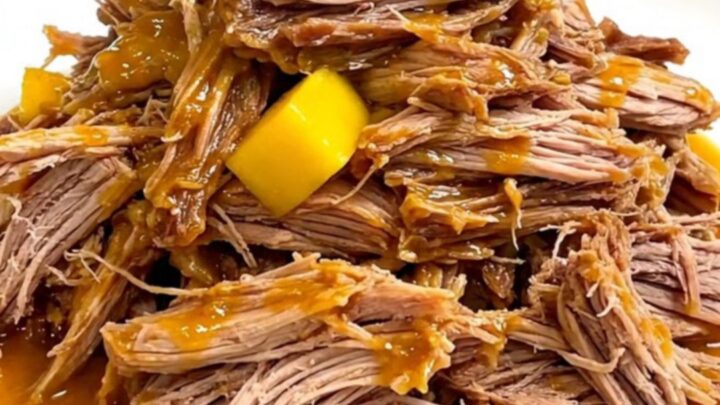
- Shred and serveOnce cooked, remove the pork to a cutting board and let it rest for at least 10 minutes. Shred the meat using two forks, then return it to the slow cooker to toss with the remaining sauce and softened mango before serving.Look for The sauce should be thick and glossy, coating every strand of the shredded pork perfectly.Tip If the sauce is too thin, you can simmer it in a pan for a few minutes to reduce it before combining with the meat.
The pork should now be incredibly tender, falling apart with minimal effort when poked with a fork. The sauce should be rich, fragrant, and perfectly coating the meat. After resting the meat, it should be easy to pull into fine, uniform strands. Once tossed back into the slow cooker, the meat should absorb the remaining sauce, creating a cohesive and appetizing final product. Check that the consistency is to your liking; it should be moist and flavorful, ready to be served immediately while hot and steaming.
Common mistakes
A common mistake is overcrowding the slow cooker, which can prevent the pork from cooking evenly and result in excess liquid. Ensure there is enough space for the heat to circulate properly.
Another error is failing to let the meat rest after cooking; resting is crucial as it allows the juices to redistribute throughout the meat, ensuring it remains succulent. Finally, avoid using a sauce that is too acidic or thin, as it may not adhere well to the pork, leaving the meat tasting dry or bland despite the long cooking time.
How to tell it’s done
The pork is done when the internal temperature reaches at least 145°F (63°C) and the meat pulls apart easily with the gentle pressure of a fork. The texture should be soft and buttery, with the sauce having thickened into a glossy, pourable consistency.
If the meat still offers resistance, continue cooking for another 30 minutes, as slow cookers can vary significantly in heat output. Always verify the temperature using a meat thermometer inserted into the thickest part of the pork to ensure it is cooked through and safe to eat.
- Steaks, chops and roasts: 145°F (63°C) in the thickest part, then a 3-minute rest
Up next · Part 3 of 3
2 variations · storage & make-ahead · 3 answers · printable card
Tips, FAQ & printable recipe (Part 3)← Back to the ingredients (Part 1)