Dinner · Part 2 of 3: Instructions
Crockpot Jamaican Jerk Pulled Pork with Mango Slaw Step-by-step instructions
- Prep
- Cook
- Total
- Serves
- 8
Before you start
Before beginning, ensure the pork shoulder is completely thawed if it was previously frozen. Pat the meat dry with paper towels to ensure the jerk paste adheres properly to the surface.
Prepare the mango slaw in advance so it is chilled and ready to serve the moment the pork is shredded. Clear your workspace and ensure you have a clean surface to handle the raw meat, keeping raw pork away from other food preparation areas to avoid any cross-contamination.
Ingredients at a glance (8)
- 4 lb pork shoulder, scored
- 1/2 cup Jamaican jerk paste
- 1/4 cup dark rum
- 2 limes, juiced
- 1/3 cup brown sugar
- 1/2 cup pineapple juice
- 8 count coco bread or slider buns, for serving
- 2 cups mango-cilantro slaw, for serving
Instructions
Seasoning and Layering
- Season the PorkPlace the scored pork shoulder into the Crockpot. Massage the Jamaican jerk paste thoroughly into the meat, ensuring all crevices are coated. Pour the dark rum, fresh lime juice, brown sugar, and pineapple juice over the pork to create the braising liquid.Look for The pork should be fully coated in the spice paste.Tip Score the fat cap of the pork to allow the marinade to penetrate deeper into the meat for maximum flavor.
At the end of this phase, the pork shoulder should be thoroughly coated in the fragrant jerk paste and nestled in the Crockpot with the liquid ingredients. The kitchen should already smell like a blend of warm spices and citrus. Ensure the meat is positioned securely so it can cook evenly throughout the process before starting the timer.
Slow Cooking Transformation
- Slow CookCover the Crockpot with the lid and set to cook on LOW for 8 hours. The low heat allows the connective tissues in the pork shoulder to break down slowly, resulting in an incredibly tender texture. Ensure the meat reaches an internal temperature of 145°F (63°C) and let it rest for at least 3 minutes before shredding.Look for The meat should be fork-tender and falling apart.Safe temperature 145°F (63°C) internal temperature (steaks, chops and roasts)Tip Resist the urge to lift the lid frequently, as this releases heat and moisture, which can extend the cooking time.
During the long simmer, the Crockpot should emit a steady, appetizing aroma of spices and bubbling juices. The meat will slowly transform, becoming increasingly tender.
Check that the liquid level remains consistent and that the meat is not drying out. By the end of the eight hours, the pork should be visibly pulling away from the bone or shredding easily.
Final Shredding and Plating
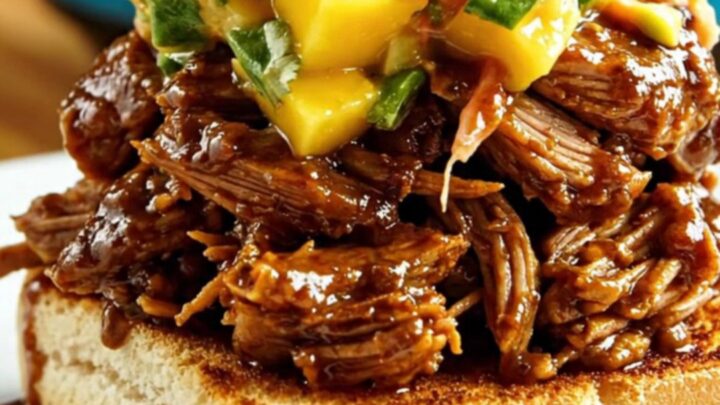
- Shred and ServeOnce the cooking time is complete, use two forks to shred the pork directly in the Crockpot, tossing the strands with the flavorful pan juices. Serve the pulled pork warm on toasted coco bread or slider buns, topping each portion generously with the fresh mango-cilantro slaw. Ensure the meat maintains a safe temperature of 145°F (63°C) and rests for at least 3 minutes before final assembly.Look for The meat is ready when it shreds easily into succulent, juicy strands.Safe temperature 145°F (63°C) internal temperature (steaks, chops and roasts)Tip Let the shredded pork sit in the juices for a few minutes before serving so it absorbs even more flavor.
The final phase involves turning the tender pork into a cohesive, juicy pulled mixture. The meat should be completely coated in the reduced pan juices, looking glossy and dark. Once shredded, ensure it is served promptly on toasted bread with the cold, crisp mango slaw to provide the perfect temperature and texture contrast for every bite.
Common mistakes
A common mistake is using a cut of pork that is too lean, which results in a dry and tough final dish. Another error is neglecting to score the fat cap, which prevents the marinade from reaching the meat effectively.
Additionally, lifting the lid too often during the cooking process allows heat to escape, which can lead to uneven cooking and a longer total time required to achieve the desired tenderness.
How to tell it’s done
The pork is done when the internal temperature reaches at least 145°F (63°C), though for pulled pork, it will naturally cook well beyond this point until it reaches about 195°F to 205°F (90°C to 96°C) to ensure it is falling-apart tender.
Use a meat thermometer to check the thickest part of the roast. Once finished, let the meat rest for at least 3 minutes before shredding to lock in the juices.
- Steaks, chops and roasts: 145°F (63°C) in the thickest part, then a 3-minute rest
Up next · Part 3 of 3
2 variations · storage & make-ahead · 3 answers · printable card
Tips, FAQ & printable recipe (Part 3)← Back to the ingredients (Part 1)