Dinner · Part 2 of 3: Instructions
Crockpot Gruyère Ranch Mushroom Pork Chops Step-by-step instructions
- Prep
- Cook
- Total
- Serves
- 4
Before you start
Before you start, make sure you have a 6-quart slow cooker and all the ingredients measured. Pat the pork chops dry with paper towels—this helps the seasoning stick and prevents excess liquid.
No need to sear the meat; the slow cooker will develop flavor over time. If you plan to serve with mashed potatoes, prepare those just before the pork chops are done, or keep them warm in a covered pot.
Ingredients at a glance (5)
- 4 boneless center-cut pork loin chops
- 1 can (10.5 oz) condensed cream of mushroom soup
- 1 oz dry buttermilk ranch seasoning mix
- 1/2 cup heavy whipping cream
- 1 cup shredded Gruyère cheese
Instructions
Layer and Season
- Layer the Pork ChopsPlace the pork chops in the bottom of a 6-quart slow cooker in a single layer. They can overlap slightly if needed, but try to keep them even for uniform cooking. Let it rest for 3 minutes before slicing.Look for The chops should cover the bottom of the crockpot.Safe temperature 145°F (63°C) internal temperature (steaks, chops and roasts)Tip Pat the chops dry with paper towels before adding if they are very wet, but do not season with salt—the ranch mix adds plenty.
- Add the Soup and RanchSpoon the condensed cream of mushroom soup over the pork chops, spreading it gently to cover. Sprinkle the dry ranch seasoning evenly over the top.Look for The soup will look thick and lumpy; that's fine.Tip No need to stir yet—the slow cooker will blend everything as it cooks.
At the end of this phase, the pork chops are nestled in the bottom of the crockpot, topped with a thick layer of soup and a dusting of ranch seasoning.
The raw meat is visible in places, and the soup looks like a thick paste—this is exactly right. The aroma is savory and slightly tangy from the ranch.
Slow-Cook to Tenderness
- Pour the Cream and Add CheesePour the heavy whipping cream over the soup and ranch. Sprinkle the shredded Gruyère cheese evenly across the top.Look for The cheese will sit on top of the liquid—that's okay.Tip Use freshly shredded Gruyère for the best melt; pre-shredded may contain anti-caking agents.
- Cook on LowCover the slow cooker and cook on low for 6 to 7 hours, until the pork chops are fork-tender and the sauce is bubbling. Do not open the lid during the first 5 hours to keep the heat steady. Let it rest for 3 minutes before slicing.Look for The sauce will be gently bubbling around the edges and the cheese will be melted.Safe temperature 145°F (63°C) internal temperature (steaks, chops and roasts)Tip If you're short on time, cook on high for 3 to 4 hours, but low gives the most tender results.
- Check for DonenessAfter 6 hours, check the pork chops with a meat thermometer inserted into the thickest part. They should read at least 145°F (63°C). If not, continue cooking for 30-minute intervals until done. Let it rest for 3 minutes before slicing.Look for The meat should be fork-tender and easily pull apart.Safe temperature 145°F (63°C) internal temperature (steaks, chops and roasts)Tip If the sauce looks too thin, leave the lid off for 15 minutes on high to reduce slightly.
After 6 hours on low, the kitchen fills with the rich scent of pork and mushrooms. The sauce is bubbling gently around the edges, and the cheese has melted into a golden layer. The pork chops are so tender that a fork slides through them with ease. The sauce has thickened to a velvety consistency.
Finish and Serve
- Rest the MeatTurn off the slow cooker and let the pork chops rest in the sauce for at least 3 minutes. This allows the juices to redistribute and the meat to stay moist.Look for The sauce will thicken slightly as it rests.Safe temperature 145°F (63°C) internal temperature (steaks, chops and roasts)Tip Resting is essential for tender, juicy chops—don't skip it.
- ServeSpoon the pork chops and sauce onto plates or over mashed potatoes. Serve hot.Look for The sauce should coat the back of a spoon.Tip Pair with crusty bread to soak up every bit of the creamy sauce.
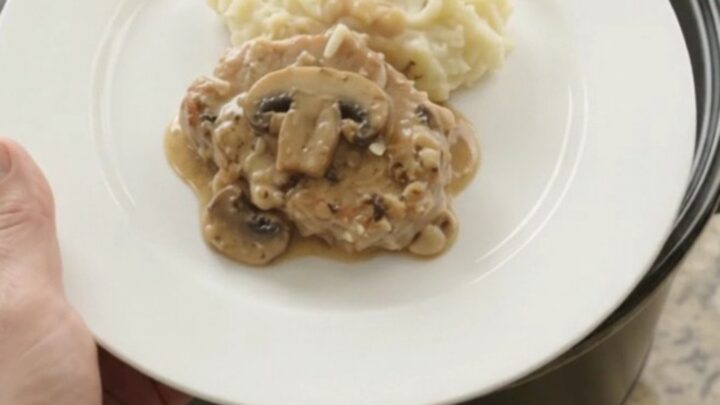
After resting, the sauce is glossy and coats the back of a spoon. The pork chops are glistening, and the Gruyère has blended into the sauce, leaving a subtle nutty flavor. The dish smells deeply savory and comforting. Spoon it over mashed potatoes and watch the sauce soak into every crevice.
Common mistakes
One common mistake is lifting the lid too often. Every time you open the slow cooker, heat escapes and extends cooking time. Trust the process and keep the lid on for the first 5 hours.
Another pitfall is using low-fat cream or milk—they can curdle or make the sauce watery. Stick with heavy cream for a stable, luxurious sauce. Finally, don't skip the rest time; it's essential for tender meat.
How to tell it’s done
The pork chops are done when they are fork-tender and the internal temperature reaches at least 145°F (63°C). Insert an instant-read thermometer into the thickest part of a chop without touching bone.
The sauce should be bubbling gently and thickened slightly. If it looks too thin, remove the lid and cook on high for 15 minutes to reduce. Let the meat rest for 3 minutes before serving to lock in juices.
- Steaks, chops and roasts: 145°F (63°C) in the thickest part, then a 3-minute rest
Up next · Part 3 of 3
4 variations · storage & make-ahead · 5 answers · printable card
Tips, FAQ & printable recipe (Part 3)← Back to the ingredients (Part 1)