Dinner · Part 2 of 3: Instructions
Crockpot Greek Turkey Meatballs with Tomatoes and Feta Step-by-step instructions
- Prep
- Cook
- Total
- Serves
- 4
Before you start
Before anything touches the pot, clear a landing spot for the slow cooker: a dry, heat-safe stretch of counter away from the wall, with the cord running safely to an outlet. Unwrap the block of feta and leave it whole — resist the urge to crumble it. Measure the Greek seasoning into a small bowl or ramekin so it can be sprinkled in one motion, and rinse and dry the cherry tomatoes.
The meatballs stay in the freezer until the moment you need them; they go in rock-hard on purpose. Have the spatula and lid within reach, and decide now whether you are cooking on low (about 4 hours) or high (about 2), since that choice shapes when you start.
Ingredients at a glance (4)
- 2 lb frozen precooked turkey meatballs
- 1 pint cherry tomatoes
- 2 tbsp Greek seasoning
- 8 oz feta cheese block, kept whole
Instructions
Layer the base
- Set up the slow cookerSet the slow cooker on a dry, heat-safe stretch of counter and settle the ceramic insert in place. A 6-quart oval gives 2 lb of meatballs a single snug layer with just enough room for the tomatoes and the block of feta to sit on top without crowding.Look for The insert sits level and steady, with nothing plugged in yet.Tip Keep the lid nearby; every time it comes off during cooking, add roughly 15 minutes to the total time.
- Add the meatballsPour the frozen precooked turkey meatballs straight into the insert — no thawing, no rinsing. Spread them with the spatula into one even layer across the bottom so every meatball touches the cooking liquid that the tomatoes release as they heat.Look for One flat layer, meatballs touching but not stacked in a pile.Tip Frozen meatballs go in hard; they will loosen and settle within the first hour of cooking.
- Scatter the tomatoesScatter the cherry tomatoes over and between the meatballs. They are the only liquid this recipe needs: as they heat, their skins split and the juices run down, forming the braising base that keeps the meatballs plump and carries the seasoning everywhere.Look for Tomatoes dotted evenly, a few tucked into gaps rather than clustered on top.Tip Leave the tomatoes whole. Halving them upfront releases juice too early and the sauce turns thin.
At the end of this phase the insert holds a single even layer of rock-hard frozen meatballs with cherry tomatoes dotted over and between them. Nothing has been stirred, nothing has heated yet, and that is correct — the pot should look assembled, not cooked. Check three things before moving on: the meatballs lie flat rather than stacked, the tomatoes are spread out rather than clustered in one corner, and the lid is within arm's reach. If the layer looks crowded or the tomatoes sit in a pile, redistribute now; once the pot heats, the arrangement sets and uneven spots cook unevenly.
Season, add feta, cook
- Sprinkle the Greek seasoningSprinkle the Greek seasoning evenly over the meatballs and tomatoes, aiming for the gaps where the tomato juices will pool. Two tablespoons seasons a full slow cooker; go edge to edge rather than dumping it all in one spot so no bite tastes blunt or oversalted.Look for An even dusting across the whole surface, no bare patches.Tip If the blend contains salt, hold back to 1 1/2 tbsp; the feta adds plenty of saltiness on its own.
- Tuck in the fetaSet the block of feta in the center, on top of the meatballs and tomatoes. Leaving it whole is the trick: it slowly slumps and softens as it heats, basting the sauce beneath it instead of dispersing into salty crumbs all at once.Look for The block sits centered and proud of the other ingredients, unbroken.Tip Do not stir now. Disturbing the feta early leaves you with grainy specks instead of a creamy sauce.
- Cover and cookPut the lid on and cook on low for about 4 hours, or on high for about 2. The meatballs are already cooked through, so the goal is heat and time: the tomatoes burst, the feta slumps, and everything melds into a sauce. Resist lifting the lid while it works.Look for Steam gathers on the lid within the first hour and condensation drips back down.Tip Low gives the creamiest sauce; high is fine on a short day but stir a little longer at the end.
This phase ends with the pot sealed and working. Before the lid goes on, confirm the seasoning dusts the whole surface with no bare patches, and the feta block sits centered and unbroken, proud of the meatballs.
Once cooking starts, the signs to watch come hours later: steam beading on the lid within the first hour, a faint oregano-tomato smell escaping when the pot is working properly, and — only at the end — tomatoes that have burst and slumped and a feta block that has collapsed into a soft pale mound. If the feta still holds a sharp block shape at the end of the time, give it another 30 minutes on high.
Stir, check, serve
- Stir into a creamy sauceTake off the lid. The feta will have collapsed into a soft, pale mound surrounded by burst tomatoes and amber juices. Stir firmly for about a minute, pressing the feta against the side of the insert until it melts completely and the sauce turns thick, creamy and uniform.Look for No white lumps remain; the sauce coats the back of the spoon.Tip If the sauce seems loose, leave the lid off on high for 15 minutes to reduce it.
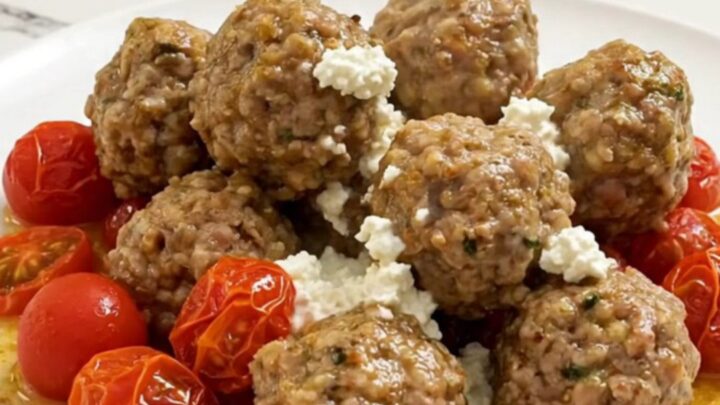
- Plate and serveSpoon the meatballs onto warm plates and let the sauce pool around them, catching a few burst tomatoes on each plate. The meatballs arrive braised rather than browned, tender and glossy under the feta sauce. Serve straight away while the steam is still rising.Look for Sauce clings to each meatball and slowly relaxes outward on the plate.Tip For safety, confirm the meatballs are heated through to 165°F (74°C) at the center before serving.
The final phase ends when the pot is open and the sauce is made. Lift the lid to a thick, amber, lightly creamy pool: burst tomato skins scattered through it, meatballs plump and glossy, no standing watery liquid. Stir firmly for about a minute, pressing the feta against the side until it disappears completely into the sauce. Check one large meatball at its center — it should read 165°F (74°C). Then spoon everything onto warm plates while steam still rises. If the sauce looks loose, leave the lid off on high for 15 minutes; if it looks thick and clings to the spoon, plate immediately.
Common mistakes
Three mistakes account for almost every disappointing batch. First, crumbling the feta at the start: it disperses too fast, turns grainy, and can push the sauce past pleasantly salty. Keep it whole until the end. Second, lifting the lid repeatedly — each peek releases heat and steam, stretching the cooking time and drying the edges of the meatballs.
Third, adding water, broth or oil. The tomatoes supply all the liquid the recipe needs; extra liquid leaves the sauce thin and diluted, and no amount of end-of-cook stirring fully recovers it. A fourth, smaller trap: stirring during cooking. The feta needs hours of gentle heat undisturbed to melt into something creamy rather than stringy.
How to tell it’s done
The dish is done when the tomatoes have visibly burst and collapsed, the block of feta has slumped into a soft pale mound, and the liquid around the meatballs has turned amber and slightly thickened. After stirring, the sauce should coat the back of a spoon and show no white lumps of feta.
Because the meatballs are precooked, they only need to be heated through: check the center of one large meatball with an instant-read thermometer and confirm 165°F (74°C). If it reads below that, cover and continue on high, checking again in 15-minute intervals. The meatballs themselves stay pale — braised, never browned — so judge by sauce and temperature, not color.
Up next · Part 3 of 3
4 variations · storage & make-ahead · 5 answers · printable card
Tips, FAQ & printable recipe (Part 3)← Back to the ingredients (Part 1)