Dinner · Part 2 of 3: Instructions
Crockpot Ginger Ale Pot Roast for an Easy Dinner Step-by-step instructions
- Prep
- Cook
- Total
- Serves
- 6
Before you start
Before beginning, ensure the slow cooker is placed on a stable, heat-resistant surface near an electrical outlet. Remove the beef from the refrigerator approximately 20 minutes before starting to take the chill off, which promotes more even cooking.
Have the carrots washed and ready, and clear a small space in the kitchen to organize the ingredients. Check that the slow cooker lid is clean and fits securely to ensure the steam stays inside during the cooking process.
Ingredients at a glance (4)
- 3 lb beef chuck roast
- 1 lb baby carrots
- 1 packet onion soup mix
- 2 cups ginger ale
Instructions
Preparation and Assembly
- Assemble the RoastPlace the beef roast into the bottom of the slow cooker insert. Distribute the baby carrots evenly around the sides of the roast to ensure they cook submerged in the juices.Look for The beef sits flat in the bottom of the cooker.Tip Pat the roast dry with paper towels before placing it in the cooker to help with better browning.
At this stage, the beef is nestled at the bottom of the cooker with the carrots arranged around it. The ingredients are raw and the slow cooker remains turned off. Ensure the roast is positioned so it is not touching the very top of the ceramic insert, allowing the lid to close completely without obstruction or gaps.
Seasoning and Liquid Integration
- Season and Add LiquidOpen the onion soup mix packet and sprinkle the contents thoroughly over the top of the beef and carrots. Pour the ginger ale over the ingredients, ensuring the liquid reaches the bottom of the cooker.Look for The soup mix is evenly distributed over the surface.Tip Avoid pouring directly onto the meat to keep the dry mix from washing off immediately.
The onion soup mix should be evenly spread across the top of the beef. The ginger ale is poured over the ingredients, pooling slightly at the bottom of the cooker. Check that the dry soup mix has been moistened by the soda, as this helps the flavors start to meld once the heat is turned on.
Cooking and Final Shredding
- Slow Cook and ServeCover the slow cooker and cook on low for 8 hours. Once cooked, verify the internal temperature of the roast reaches 145°F (63°C). Remove the beef, let it rest for at least 10 minutes before shredding, and serve with the cooked carrots.Look for The beef pulls apart easily with a fork.Safe temperature 145°F (63°C) internal temperature (steaks, chops and roasts)Tip Shredding the meat while warm makes the process much easier.
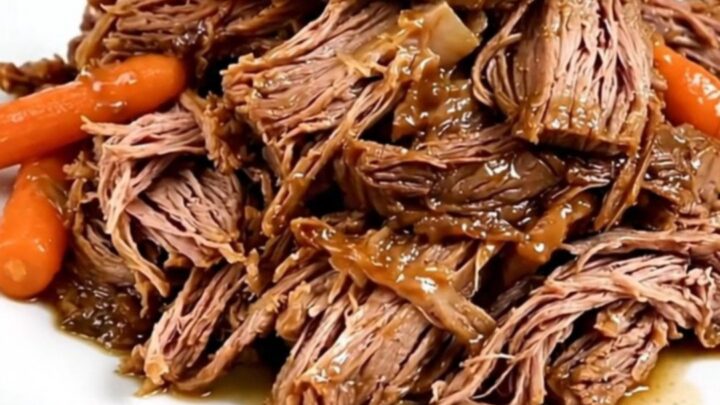
The kitchen should smell savory and slightly sweet as the roast finishes. The beef will be dark, tender, and easily shredded. The carrots should be soft and fully cooked through.
Check the internal temperature of the roast one last time before removing it from the cooker to rest, confirming it has reached the required safety threshold.
Common mistakes
A common mistake is opening the slow cooker lid during the cooking process. Each time the lid is lifted, heat and steam escape, which can add significant time to the total cooking duration and potentially lead to unevenly cooked meat.
Another error is using too much liquid; the roast will release its own juices, so avoid adding extra water or broth, as it will dilute the concentrated flavor of the onion soup mix and the ginger ale.
How to tell it’s done
The roast is finished when it reaches an internal temperature of at least 145°F (63°C) and the meat pulls apart easily with the gentle pressure of a fork. If the meat offers resistance, it needs more time in the cooker.
The carrots should also be soft and tender when pierced with a knife. Always use a meat thermometer inserted into the thickest part of the roast to verify the safe internal temperature before serving.
- Steaks, chops and roasts: 145°F (63°C) in the thickest part, then a 3-minute rest
Up next · Part 3 of 3
2 variations · storage & make-ahead · 3 answers · printable card
Tips, FAQ & printable recipe (Part 3)← Back to the ingredients (Part 1)