Desserts · Part 1 of 3: Ingredients
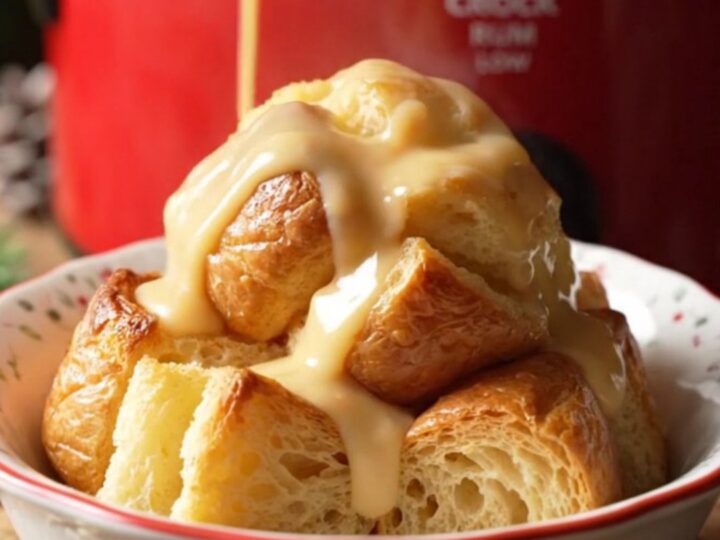
Crockpot Eggnog Rum Brioche Bread Pudding
- Prep
- Cook
- Total
- Serves
- 8
This slow-cooker bread pudding captures all the cozy flavors of the holidays in one effortless dessert. Cubes of challah soak in a spiced eggnog custard, then cook low and slow until puffed and golden.
White chocolate chips melt into creamy pockets, and a warm buttered rum glaze finishes every serving with a rich, boozy sweetness. Set it and forget it — the Crockpot does the work while the house fills with the scent of nutmeg and rum.
Bread pudding is the ultimate comfort dessert, and this version takes it straight to the holiday table. Using a slow cooker means no oven space, no watching, and no fuss — just layer, pour, and walk away.
The challah soaks up the eggnog custard beautifully, turning tender and custardy as it cooks. The white chocolate adds little pockets of sweetness, while the rum glaze brings a warm, festive finish. It's an easy make-ahead dessert that feels special enough for Christmas Eve.
Ingredients
- 1 loaf challah or brioche bread, cut into 1-inch cubes
- 1 cup white chocolate chips
- 5 large eggs
- 2 1/2 cups rich holiday eggnog
- 2 tsp dark spiced rum extract
- 1 tsp ground cinnamon
- 1/2 tsp freshly grated nutmeg
Rum Glaze
- 1/4 cup unsalted butter
- 2 tbsp dark rum
- 1 cup confectioners' sugar
Why this recipe works
Slow cooking at a low, steady temperature lets the eggnog custard gently set without curdling or drying out. The enclosed environment traps steam, keeping the bread pudding moist and tender.
As the custard cooks, it puffs up slightly, creating a light, velvety texture that contrasts with the slightly crisp edges. This method is forgiving and hands-off, making it nearly impossible to overcook.
Challah and brioche are ideal because their rich, eggy crumb absorbs the custard without falling apart. The eggs and eggnog provide structure and richness, while the rum extract and spices infuse every bite.
White chocolate chips melt into creamy pockets, adding sweetness and texture. The warm glaze, made with butter, rum, and confectioners' sugar, seeps into the warm pudding, creating a glossy, indulgent finish.
Notes and substitutions
Choose a good-quality challah or brioche from a bakery — the sturdier the bread, the better it holds up to the custard. Day-old bread works best because it soaks up more liquid without turning mushy. If using fresh bread, let the cubes dry out on a baking sheet for an hour or two. Avoid overly soft sandwich bread, which can disintegrate during cooking.
Rich holiday eggnog is key; the thicker and creamier the eggnog, the richer the pudding. Dark spiced rum extract adds depth without alcohol, but you can substitute 2 tablespoons of dark rum if you prefer. For the glaze, use a good-quality dark rum for the best flavor. The slow cooker size matters — a 6-quart works perfectly; a smaller one may need slightly longer cooking.
- challah bread: brioche or a sturdy white bread like French bread; avoid overly soft sandwich bread.
- dark spiced rum extract: 2 tbsp dark rum, added with the eggnog mixture; reduce the eggnog by 2 tbsp.
- rich holiday eggnog: store-bought eggnog; if using homemade, ensure it is thick and well-chilled.
- white chocolate chips: semi-sweet chocolate chips for a less sweet version, or omit for a classic bread pudding.
Equipment
- 6-quart slow cooker
- Mixing bowl
- Whisk
- Small saucepan
- Measuring cups and spoons
Up next · Part 2 of 3
6 steps · 3 h of cooking · what to look for at each stage
Step-by-step instructions (Part 2)