Dinner · Part 2 of 3: Instructions
Slow Cooker Dill Pickle Pulled Pork for Easy Weeknight Dinners Step-by-step instructions
- Prep
- Cook
- Total
- Serves
- 8
Before you start
Before beginning, ensure your slow cooker is clean and positioned on a level, heat-resistant surface. Have all ingredients measured and ready, especially the pickle juice and seasonings, so the assembly process is efficient.
Check that your pork roast is thawed if it was previously frozen, as cooking from a frozen state is not recommended.
Prepare a clean workspace, as you will be handling raw meat, and ensure you have enough space to comfortably place the pork in the cooker without splashing liquid outside the insert.
Ingredients at a glance (6)
- 4 lb boneless pork shoulder roast
- 1 cup dill pickle slices
- 1 large yellow onion, sliced
- 1 tbsp dried dill
- 1 tsp garlic powder
- 1/2 cup dill pickle juice
Instructions
Assembly Phase
- Prepare the slow cookerPlace the whole boneless pork shoulder roast into the center of the slow cooker insert. Ensure the pork is positioned flat to allow for even cooking throughout the process.Look for The pork roast sits snugly at the bottom of the black ceramic insert.Tip Removing excess fat from the pork shoulder before placing it in the cooker can result in a cleaner, less greasy finished sauce.
The pork roast should be positioned centrally in the slow cooker, surrounded by the pickles and onion slices. The ingredients should look neatly arranged, with the seasonings and liquid poured evenly over the top to ensure full coverage during the long cook.
Slow Cooking Phase
- Add aromatics and seasoningsScatter the dill pickle slices and sliced onions around the pork roast. Sprinkle the dried dill and garlic powder evenly over the top of the meat, then pour the dill pickle juice over the entire mixture to ensure the base is well-seasoned.Look for The liquid and seasonings should partially coat the pork and the surrounding vegetables.Tip Using a high-quality pickle juice with a balanced vinegar profile enhances the depth of flavor in the shredded pork.
During this phase, the aroma of savory pork and tangy pickles will fill the kitchen. The pork should be simmering gently, and the liquid should be bubbling slightly. You will notice the meat becoming softer and more pliable as the hours pass.
Shredding and Finishing Phase
- Cook and shredCover the slow cooker with the lid and cook on low for 8 hours or until the pork is fork-tender. Once cooked, remove the pork to a platter, shred it using two forks, and return it to the juices. Ensure the internal temperature reaches at least 145°F (63°C) and let the meat rest for 10 minutes before serving.Look for The meat pulls apart easily with minimal pressure from a fork, and the cooking liquid is fragrant.Safe temperature 145°F (63°C) internal temperature (steaks, chops and roasts)Tip If the sauce is too thin after shredding, simmer it in a saucepan for a few minutes to reduce it to your preferred consistency.
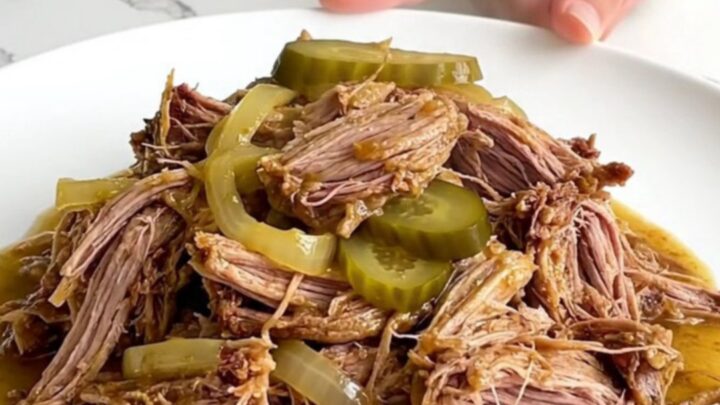
After the cooking time, the pork should be very tender and easily fall away from the bone or center. Once shredded, the meat should be thoroughly coated in the flavorful juices, looking glossy and moist. The final dish should be steaming and aromatic.
Common mistakes
A common mistake is overcrowding the slow cooker, which can prevent the pork from cooking evenly. Ensure there is enough space for the juices to circulate around the meat. Another error is removing the lid too frequently during the cooking process, which lets out heat and extends the required time.
Finally, do not rush the cooling process; allow the meat to rest properly after cooking, as this step is crucial for achieving the best texture and flavor in the shredded pork.
How to tell it’s done
The pork is done when it reaches an internal temperature of 145°F (63°C) and is fork-tender. Use a digital meat thermometer inserted into the thickest part of the roast to verify the temperature.
At this point, the meat should offer no resistance when pulled apart with two forks. Allow the meat to rest for at least 10 minutes after shredding to let the juices redistribute, ensuring each bite remains succulent and flavorful.
- Steaks, chops and roasts: 145°F (63°C) in the thickest part, then a 3-minute rest
Up next · Part 3 of 3
2 variations · storage & make-ahead · 3 answers · printable card
Tips, FAQ & printable recipe (Part 3)← Back to the ingredients (Part 1)