Dinner · Part 2 of 3: Instructions
Crockpot Dijon Cream Beef Roast: Easy Dump Dinner Step-by-step instructions
- Prep
- Cook
- Total
- Serves
- 6
Before you start
Before you start, make sure your slow cooker is clean and ready. Pat the beef roast dry with paper towels to help the seasoning stick. Smash the garlic cloves with the flat side of a knife to release their oils.
Have the fresh rosemary and thyme sprigs washed and ready. Measure out the sour cream, mustard, and au jus. If you plan to serve with rice, start it just before the roast is done, so everything is ready at the same time.
Ingredients at a glance (10)
- 3 1/2 lb beef bottom round roast
- 12 cloves garlic, smashed
- 4 sprigs fresh rosemary
- 6 sprigs fresh thyme
- 1 cup sour cream
- 1/4 cup whole-grain Dijon mustard
- 1 cup beef au jus
- 1 tsp kosher salt
- 1/2 tsp black pepper
- Steamed white rice, for serving
Instructions
Prep and Layer
- Prep and LayerPlace the beef bottom round roast in the center of a 6-quart slow cooker. Season both sides with salt and pepper. Scatter the smashed garlic cloves, rosemary sprigs, and thyme sprigs over the top of the roast.Look for The roast should be centered with garlic and herbs piled on top.Tip Smashing the garlic cloves helps release their flavor as they cook.
- Add Sauce IngredientsIn a small bowl, stir together the sour cream and whole-grain Dijon mustard until well combined. Dollop the mixture over the roast and herbs. Pour the beef au jus along the side of the roast, not directly over the top, to keep the seasoning in place.Look for The roast is covered with creamy mustard mixture and au jus pools around it.Tip Pouring au jus along the side prevents washing off the seasonings.
At the end of this phase, the roast is seasoned and topped with garlic, rosemary, and thyme. The sour cream-mustard mixture is dolloped on top, and the au jus is poured around the sides. The slow cooker insert is full but not overflowing, and the ingredients are ready for the long, slow cook.
Slow Cook and Rest
- Slow CookCover the slow cooker and cook on LOW for 8 to 10 hours, or on HIGH for 4 to 5 hours, until the beef is fork-tender. The meat should shred easily with a fork and the sauce should be bubbling gently around the edges. Let it rest for 3 minutes before slicing.Look for The beef is tender and the sauce is rich and fragrant.Safe temperature 145°F (63°C) internal temperature (steaks, chops and roasts)Tip Low and slow gives the best texture; don't rush it on high unless short on time.
- Rest the MeatTurn off the slow cooker. Using tongs, transfer the roast to a cutting board and let it rest for at least 10 minutes. This allows the juices to redistribute, making the meat more tender and flavorful. The internal temperature should reach at least 145°F (63°C) for food safety.Look for The roast rests on a cutting board, juices settling.Safe temperature 145°F (63°C) internal temperature (steaks, chops and roasts)Tip Resting is key to a moist roast; don't skip it.
After several hours, the kitchen fills with the rich aroma of beef, garlic, and herbs. The sauce is bubbling gently, and the meat is visibly tender, pulling apart easily with a fork.
The internal temperature has reached at least 145°F (63°C), and the roast has rested for 10 minutes, allowing the juices to redistribute.
Shred and Serve
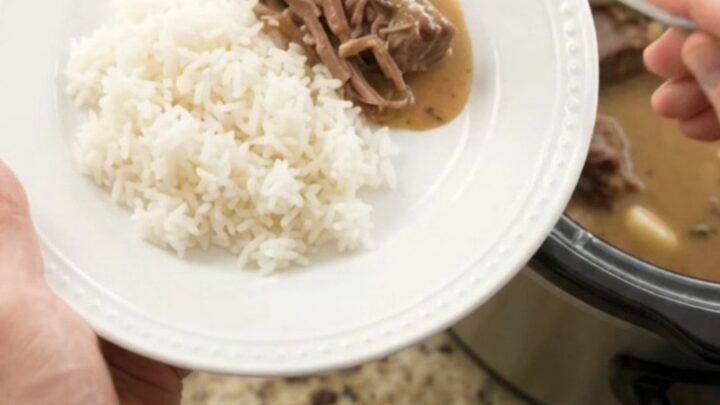
- Shred and ServeUsing two forks, shred the beef into bite-sized pieces directly in the slow cooker with the sauce, or return the shredded meat to the slow cooker and stir to coat. Serve hot over steamed white rice, spooning extra sauce over the top.Look for The beef is shredded and coated in creamy gravy.Tip For thicker sauce, let it simmer uncovered for a few minutes.
The shredded beef is coated in a velvety, tangy gravy, with bits of roasted garlic and herb leaves throughout. The sauce is thick enough to cling to the meat, and the aroma is irresistible. The dish is ready to be served over steamed rice, with extra sauce spooned over the top.
Common mistakes
One common mistake is lifting the lid too often, which lets heat escape and extends cooking time. Another is using a lean cut that can dry out if overcooked—stick to bottom round, chuck, or brisket.
Adding too much liquid can make the sauce thin; the au jus should just come up the sides of the roast, not submerge it. Also, be careful not to overseason, as au jus can be salty—taste before adding extra salt.
How to tell it’s done
The beef is done when it is fork-tender and easily shreds with a fork. The internal temperature should reach at least 145°F (63°C) for food safety, but for the most tender result, cook until it reaches 190°F to 200°F (88°C to 93°C), which allows the collagen to break down fully.
The sauce should be thickened and bubbling gently around the edges. The meat should not be pink in the center, and the texture should be moist and pull-apart tender.
- Steaks, chops and roasts: 145°F (63°C) in the thickest part, then a 3-minute rest
Up next · Part 3 of 3
4 variations · storage & make-ahead · 5 answers · printable card
Tips, FAQ & printable recipe (Part 3)← Back to the ingredients (Part 1)