Desserts · Part 2 of 3: Instructions
Slow-Cooker Blood Orange Chocolate Lava Pudding Cake Step-by-step instructions
- Prep
- Cook
- Total
- Serves
- 6
Before you start
Before starting, zest and juice the blood oranges. You'll need 2 tablespoons of zest and 1/2 cup of fresh juice for the batter, plus 1 1/2 cups of hot liquid (a mix of juice and water) for pouring over the top.
Measure out the remaining ingredients and have the slow cooker ready. No need to grease the insert — the sauce prevents sticking. Melt the butter and let it cool slightly before adding it to the batter.
Ingredients at a glance (13)
- 1 1/2 cups dark chocolate cake mix
- 1/4 cup unsweetened cocoa powder
- 1/2 cup granulated sugar
- 2 tbsp blood orange zest
- 1/2 cup fresh blood orange juice
- 1/2 cup whole milk
- 1/4 cup unsalted butter, melted
- 1 large egg
- 1/2 cup dark chocolate chunks
- 2 tbsp cocoa powder and sugar mix
- 1 1/2 cups hot blood orange juice and water
- Candied blood orange slices, for serving
- Cold heavy cream, for serving
Instructions
Batter and Toppings
- Mix the batterIn a large bowl, whisk together the dark chocolate cake mix, cocoa powder, and sugar. Add the blood orange zest, blood orange juice, milk, melted butter, and egg. Stir until just combined — a few small lumps are fine. The batter will be thick.Look for The batter is thick and glossy, with flecks of orange zest visible.Tip Don't overmix — overworking the batter can make the cake tough.
- Layer the chocolate chunksPour the batter into the slow cooker and spread it evenly. Sprinkle the dark chocolate chunks over the top, then dust with the cocoa-sugar mix. This creates the molten pockets as the cake cooks.Look for The top is covered with chocolate chunks and a light cocoa-sugar dusting.Tip Press the chunks gently into the batter so they sink slightly.
- Pour the hot liquidCarefully pour the hot blood orange juice and water over the entire surface. Do not stir. The liquid will sink and create the sauce underneath while the top bakes into a tender cake.Look for The liquid covers the batter completely but does not mix in.Tip Pour slowly and evenly to avoid disturbing the batter.
At the end of this phase, you have a thick, glossy batter spread in the slow cooker, topped with chocolate chunks and a dusting of cocoa-sugar. The hot liquid has been poured over without stirring. The surface looks like a dark, speckled pool — no dry spots remain. The batter is ready to cook.
Slow-Cook Bake
- Slow-cook on highCover the slow cooker and cook on HIGH for 2 1/2 hours. Do not lift the lid during the first 2 hours. The edges will set into cake while the center stays soft and the bottom turns into a rich citrus-chocolate sauce.Look for The cake is set around the edges and the sauce bubbles at the rim.Safe temperature 160°F (71°C) internal temperature (egg dishes)Tip Resist the urge to peek — opening the lid lets out heat and slows cooking.
- Check for donenessAfter 2 1/2 hours, the cake should be set on top but still soft underneath. Insert a toothpick into the cake portion — it should come out with moist crumbs, not raw batter. The sauce beneath should be bubbling and glossy.Look for A toothpick inserted into the cake comes out with a few moist crumbs.Safe temperature 160°F (71°C) internal temperature (egg dishes)Tip If the cake is too wet, cook an additional 15 minutes and check again.
After 2 1/2 hours on high, the kitchen smells of chocolate and orange. The top of the cake is set and slightly cracked, while the edges show bubbles of dark sauce breaking through.
The sauce is glossy and fragrant, and a toothpick inserted into the cake comes out with moist crumbs. The center is soft but not raw.
Serve and Garnish
- Ladle into bowlsUsing a ladle, spoon the warm pudding cake into individual serving bowls, making sure to include some of the fudgy sauce from the bottom. The cake will be tender and the sauce will pool around it.Look for Each bowl gets a portion of cake and a generous scoop of sauce.Tip Use a wide ladle to get both cake and sauce in one scoop.
- Garnish and serveTop each serving with a candied blood orange slice and a drizzle of cold heavy cream. Serve immediately while warm. The contrast of hot cake, cool cream, and bright citrus makes every spoonful irresistible.Look for The cream slowly melts into the warm sauce, and the orange slice adds a bright finish.Tip For a pretty presentation, place the orange slice at the edge of the bowl.
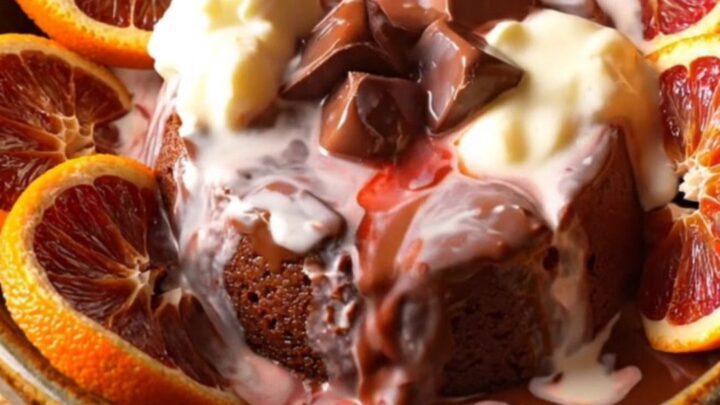
Ladled into bowls, the cake is tender and dark, surrounded by a pool of warm fudge sauce. A candied blood orange slice adds a bright, jewel-like touch, and cold cream drizzled over the top creates a beautiful swirl. Each spoonful offers a contrast of warm cake, cool cream, and citrusy sweetness.
Common mistakes
The most common mistake is lifting the lid too early. Every peek releases steam and drops the temperature, which can prevent the cake from setting properly.
Another pitfall is stirring the hot liquid into the batter — that ruins the sauce layer. Also, be careful not to overcook: the cake should be soft, not dry. If the sauce seems too thin, it will thicken slightly as it cools.
How to tell it’s done
The cake is done when the top is set and springs back lightly when touched, and the sauce beneath is bubbling at the edges. A toothpick inserted into the cake portion should come out with moist crumbs, not raw batter.
The internal temperature of the cake should reach at least 160°F (71°C) to ensure the egg is fully cooked. If the center still looks very wet, cook for 15 more minutes and check again.
- Egg dishes: 160°F (71°C) in the thickest part
Up next · Part 3 of 3
4 variations · storage & make-ahead · 5 answers · printable card
Tips, FAQ & printable recipe (Part 3)← Back to the ingredients (Part 1)