Dinner · Part 3 of 3: Tips & recipe card
Crockpot Mozzarella Sausage Red Pepper Shells Tips, FAQ & printable recipe
- Prep
- Cook
- Total
- Serves
- 6
Tips for success
For the best flavor, use a high-quality roasted red pepper sauce that has a good balance of smokiness and acidity. If you can't find one, make a quick version by blending jarred roasted red peppers with heavy cream, a clove of garlic, and a pinch of smoked paprika.
The sauce should be slightly thinner than you'd want for a final dish, as the pasta will absorb some liquid during cooking. If the sauce is too thick, add a splash of chicken broth or water before cooking.
To get a golden, bubbly top, you can transfer the cooked pasta bake to a broiler-safe dish and broil for 2-3 minutes until the cheese is browned and blistered. This adds a nice contrast to the creamy interior.
If you prefer a more rustic presentation, serve directly from the slow cooker. Leftovers can be stored in an airtight container in the refrigerator for up to 4 days. Reheat gently in the microwave or on the stovetop with a splash of milk or broth to loosen the sauce.
Variations
- Spicy Kick: Use hot Italian sausage and add 1/2 teaspoon of red pepper flakes to the sauce for extra heat. You can also sprinkle some crushed red pepper on top before serving.
- Vegetarian Twist: Omit the sausage and add 2 cups of sautéed mushrooms and spinach. Use a vegetable-based roasted red pepper sauce and add a can of drained cannellini beans for protein.
- Cheesy Upgrade: Add 1/2 cup of grated Parmesan cheese to the sauce layer, and top with an extra 1/2 cup of mozzarella. For a smoky flavor, use smoked mozzarella instead of regular.
- Gluten-Free Option: Use gluten-free pasta shells and ensure your red pepper sauce is gluten-free. Check the sausage label for gluten-free certification if needed. Cook time may vary slightly.
Storage and make-ahead
- Fridge
- Store in an airtight container in the refrigerator for up to 4 days. Reheat with a splash of milk or broth to restore creaminess.
- Freezer
- Freeze in a freezer-safe container for up to 3 months. Thaw overnight in the refrigerator and reheat gently on the stovetop or microwave.
- Reheat
- Reheat in the microwave or on the stovetop with a splash of milk or broth. Stir frequently to prevent sticking.
Store any leftovers in an airtight container in the refrigerator for up to 4 days. The pasta will continue to absorb sauce as it sits, so when reheating, add a splash of milk, chicken broth, or water to restore the creamy consistency. Reheat in the microwave in 30-second bursts, stirring between, or on the stovetop over medium-low heat until warmed through. Avoid overheating, as the sauce can separate.
You can assemble the entire dish up to 24 hours in advance. Brown the sausage, layer all ingredients in the slow cooker insert, cover, and refrigerate. When ready to cook, place the insert in the slow cooker and cook on low for 3-4 hours, adding about 30 minutes to the cooking time because the ingredients start cold. This is perfect for busy mornings—just set it up the night before and start it in the morning.
Serving ideas
Serve this pasta bake hot, straight from the slow cooker, with a generous spoonful of the creamy sauce. It's a complete meal on its own, but it pairs beautifully with a crisp green salad dressed with lemon vinaigrette, or a side of garlic bread to soak up the extra sauce.
For a touch of freshness, sprinkle with chopped parsley or basil before serving. The dish is rich and satisfying, so a modest portion goes a long way.
For a family-style dinner, place the slow cooker on the table and let everyone serve themselves. This is also great for potlucks and casual gatherings—it travels well and stays warm in the slow cooker.
To make it a more substantial meal, serve with a side of roasted vegetables or a simple Caesar salad. The creamy, cheesy pasta is sure to be a crowd-pleaser, and the ease of preparation makes it a go-to recipe for busy weeknights.
Frequently asked questions
Can this recipe be made ahead of time?
Why is the pasta sometimes mushy?
Can this recipe be cooked on high instead of low?
What can be used instead of roasted red pepper cream sauce?
How should leftovers be reheated?
Crockpot Mozzarella Sausage Red Pepper Shells
Ingredients
- 1 lb sweet Italian sausage, casings removed, browned and crumbled
- 12 oz medium conchiglie pasta shells
- 2 cups smoky roasted red pepper cream sauce
- 8 oz cream cheese, softened and cubed
- 2 cups shredded whole-milk mozzarella
Instructions
- In a large skillet over medium-high heat, cook the sweet Italian sausage, breaking it into crumbles, until browned and cooked through, about 8 to 10 minutes. Drain excess fat if needed. Transfer the browned sausage to the bottom of the slow cooker.
- Spread the uncooked conchiglie pasta shells over the sausage in an even layer. Pour the smoky roasted red pepper cream sauce over the pasta, using a spatula to gently press the shells into the sauce so they are mostly submerged.
- Place the softened cream cheese cubes in the center of the slow cooker. Sprinkle the shredded mozzarella evenly over the top, covering the pasta and sausage mixture completely.
- Cover the slow cooker and cook on low for 3 to 4 hours, until the pasta is tender and the sauce is bubbling. Stir gently once after 2 hours to incorporate the melted cheeses, then continue cooking uncovered for the last 30 minutes if the sauce seems too thin.
- After 3 hours, test a pasta shell for doneness. It should be tender but still hold its shape. If the pasta is still firm, continue cooking in 15-minute increments, checking each time, until al dente.
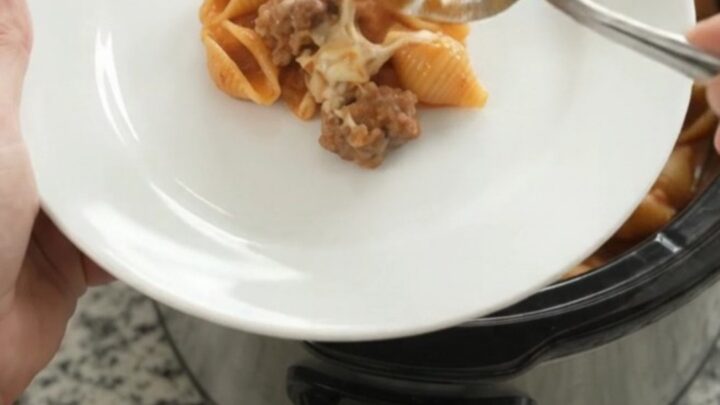
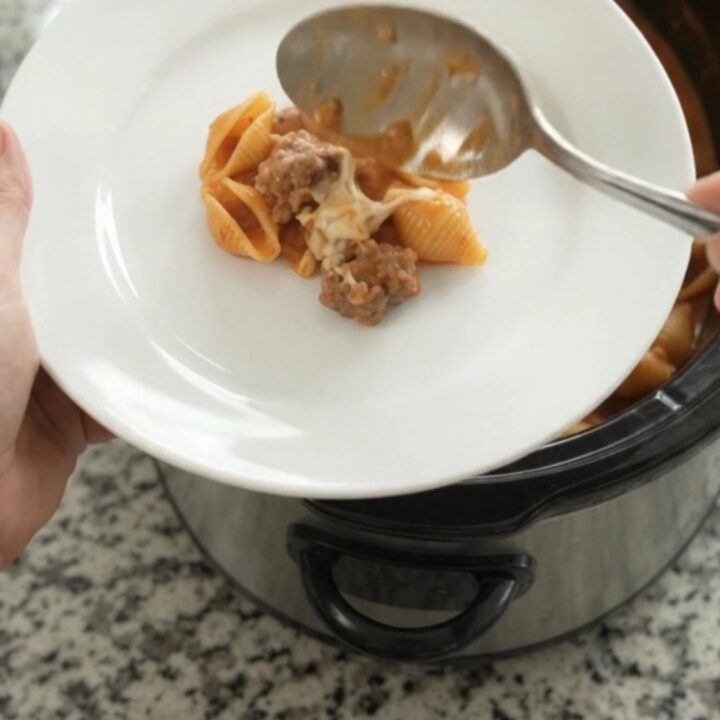
- Gently stir the pasta bake to distribute the creamy sauce and melted cheese. Let it rest for 5 minutes before serving to allow the sauce to thicken slightly. Spoon onto plates or into bowls, making sure each serving gets plenty of sausage and cheesy sauce.
Estimated nutrition per serving
- Calories
- 620
- Protein
- 28 g
- Carbohydrates
- 52 g
- Fat
- 33 g
Next recipe
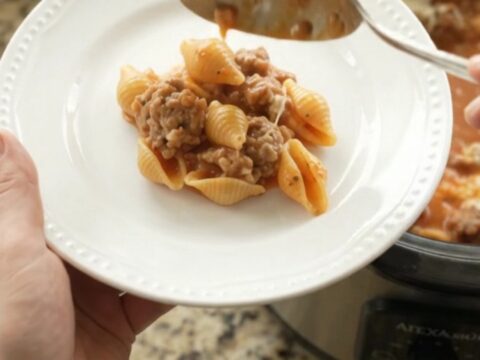
Crockpot Provolone Sausage Red Pepper Shells
See the recipe → →This recipe is based on a short cooking video and is published under the pen name Clara Weller. It was checked before publication, but errors can slip through. Nutrition, when shown, is an estimate. Read more in our editorial policy and on our food safety page.
More recipes to try
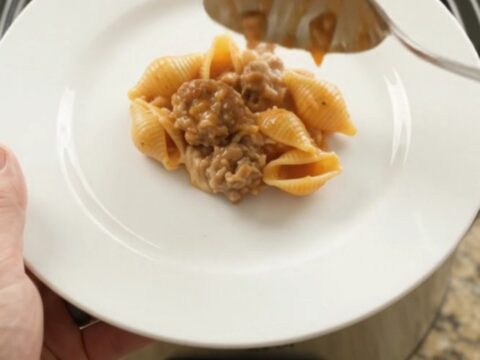
Crockpot Parmesan Sausage Red Pepper Shells: Dump-and-Go Dinner
Total time: 4 h 10 min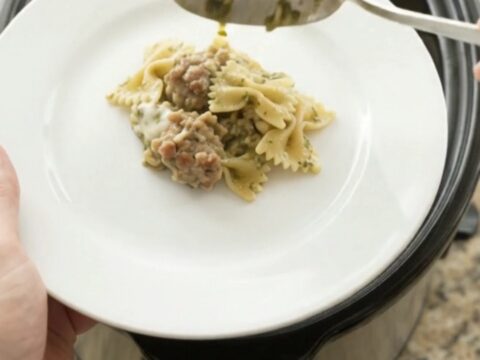
Crockpot Provolone Sausage Pesto Farfalle: Effortless Slow-Cooker Dinner
Total time: 4 h 15 min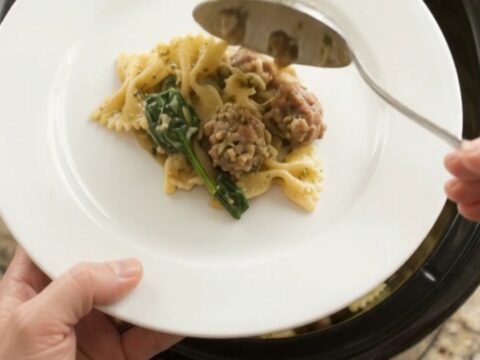
Crockpot Parmesan Sausage Pesto Farfalle
Total time: 4 h 10 min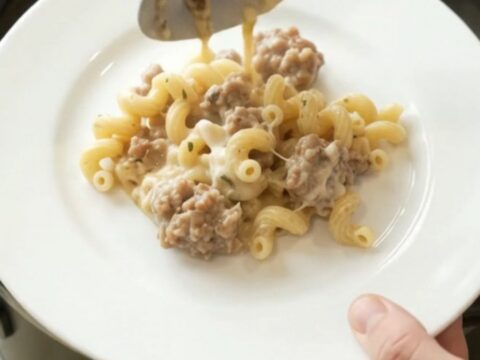
Creamy Crockpot Sausage Cavatappi: Dump-and-Forget Dinner
Total time: 4 h 10 min
Slow-Cooker Mozzarella Sausage Pesto Farfalle Recipe
Total time: 3 h 10 min