Dinner · Part 2 of 3: Instructions
Crockpot Cowboy Calico Beans with Bacon and Beef Step-by-step instructions
- Prep
- Cook
- Total
- Serves
- 8
Before you start
Start with a clear counter and both appliances ready: a large skillet on the stove and the ceramic insert of a 6-quart slow cooker set where it will cook undisturbed for four hours. Chop the bacon into bite-size pieces and dice the sweet onion for the finish, keeping the two on separate corners of the board.
Open all three cans and set the colander in the sink for the kidney and butter beans. Measure the ketchup, brown sugar and smoky mustard into a small bowl so the sauce goes in at once and nothing sits half-stirred. Everything on the stove happens in one skillet, in about fifteen minutes, before the slow work begins.
Ingredients at a glance (9)
- 1/2 lb ground beef
- 1/2 lb bacon, chopped
- 28 oz canned pork and beans in tomato sauce
- 15 oz canned kidney beans, drained and rinsed
- 15 oz canned butter beans, drained and rinsed
- 1/2 cup ketchup
- 1/2 cup packed brown sugar
- 1 tbsp smoky mustard
- Sweet onion, diced, for serving
Instructions
Skillet work: brown and crisp
- Brown the ground beefSet a large skillet over medium-high heat and add the ground beef, breaking it into small crumbles with a wooden spoon as it cooks. Keep the heat high enough that the meat sizzles rather than steams, and let the crumbles pick up color on every side. Draw off excess fat if a lot accumulates.Look for The crumbles look deeply browned with no pink remaining anywhere in the pan.Safe temperature 160°F (71°C) internal temperature (ground meat)Tip Browning builds the savory backbone of the whole pot, so give it a full five to seven minutes.
- Crisp the baconChop the bacon into bite-size pieces and cook it in the same skillet until the edges are crisp and the fat has rendered. Lift the pieces out with a slotted spoon and let them drain briefly on a paper towel. Pour off all but a thin film of fat, then fold the drained beef and bacon together.Look for The bacon pieces are dark at the edges and stiff rather than floppy.Tip Crisping first keeps the bacon from going limp during the long slow cook.
At the end of this phase the skillet holds deeply browned beef crumbles and bacon pieces dark and stiff at the edges, with the rendered fat poured off and only a thin film left behind. The beef shows no pink anywhere and has reached 160°F (74°C). The kitchen smells like a breakfast-and-burger mashup: rendered pork fat, caramelized meat, a little smoke. Check the crumbles for color before moving on; pale meat now means a flat pot later. Fold the two meats together and have the slow cooker insert standing by, because the next phase starts immediately while everything is still warm.
Layer and mix the pot
- Load the beans into the CrockpotTip the pork and beans with their sauce into the ceramic insert of a 6-quart slow cooker. Drain and rinse the kidney beans and butter beans in a colander, then add them on top. Keeping the pork and beans sauced thickens the pot naturally while the other two beans stay intact.Look for The insert holds three visibly different beans, one saucy and two clean.Tip Rinsing the darker cans keeps the finished sauce from turning muddy.
- Add the meat and sauceScatter the browned beef and crispy bacon over the beans. Add the ketchup, packed brown sugar and smoky mustard, then stir everything together with a wooden spoon until the sauce coats every bean evenly and no streaks of sugar or mustard remain.Look for The mixture looks uniform, glossy and rust-colored from edge to edge.Tip Scrape the bottom corners of the insert so nothing sticks during the long cook.
The insert now holds a uniform, glossy, rust-colored mixture with no streaks of sugar, mustard or ketchup visible anywhere. Three different beans are distinguishable by shape and color, the saucy pork and beans blending into the base while the rinsed kidney and butter beans keep their outlines.
The beef and bacon sit distributed through the pot rather than clumped on top. Stir once from the bottom corners with a wooden spoon and check that nothing sits unmixed at the base, then level the surface and put the lid on. The mixture should smell sweet and smoky even before the heat does its work.
Low and slow to thick and rich
- Slow-cook on LOWCover the slow cooker and set it to LOW for four hours. Lift the lid once, halfway through, to stir from the bottom up so the sauce moves evenly. Keep the lid on the rest of the time; every peek costs heat and stretches the cook.Look for Thick bubbles break slowly at the surface around the edges of the pot.Tip Four hours on LOW is the sweet spot; longer starts to break down the butter beans.
- Check the sauce and adjustAt the four-hour mark, take off the lid and stir. The sauce should cling to a spoon and bubble thick and rich around the meat and beans rather than pooling thin. If it seems loose, cook uncovered on HIGH for 20 to 30 minutes, stirring once, until it tightens.Look for A spoon dragged through the beans leaves a slow-filling trail.Tip Taste before serving; a spoonful of brown sugar rounds any sharpness from the ketchup.
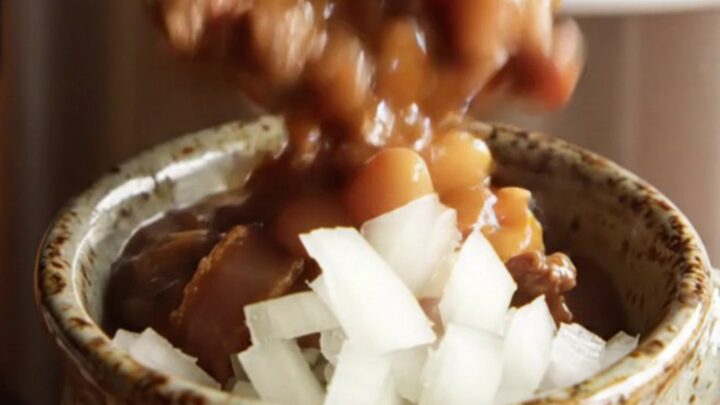
- Ladle and finish with sweet onionScoop the beans into warm bowls with a ladle, letting the sauce run generously over each portion. Dice the sweet onion finely and pile a spoonful on top of each serving. Set the remaining onion at the table for anyone who wants more.Look for Steam rises off each bowl and the onion glistens on the dark sauce.Tip Rinse the diced onion briefly and drain it to soften its bite.
After four hours on LOW, the sauce bubbles thick and rich around the meat and beans, breaking in slow blisters at the edges of the insert. A spoon dragged through leaves a trail that fills in lazily. The butter beans look creamy and intact, the sauce coats rather than pools, and the whole pot smells of brown sugar, smoke and slow-cooked tomato. Stir from the bottom, taste and adjust the sweetness if needed, then ladle into warm bowls and finish each with a spoonful of diced sweet onion. Serve straight from the insert while it holds its heat.
Common mistakes
The most common slip is skipping the browning and dumping raw beef straight into the insert, which leaves gray, steamed crumbles and a greasy sauce. Crisp the bacon too, or it goes flabby in the pot. The second mistake is cooking on HIGH to save time: the sauce catches at the edges and the butter beans collapse before it thickens.
Lifting the lid repeatedly costs twenty minutes of heat each time, so stir once at the halfway point and otherwise leave it alone. Finally, draining all three cans strips out the tomato sauce that builds the body of the pot; drain only the kidney and butter beans.
How to tell it’s done
The beans are done when the sauce has reduced to a thick, glossy coat that bubbles slowly around the edges of the insert and clings to a spoon drawn through the middle. The kidney and butter beans should look whole and plump, not split or ragged, and the beef and bacon should sit suspended through the pot rather than settled on the bottom.
The ground beef finished cooking to 160°F (74°C) during browning, and the four-hour slow cook only deepens the pot from there, so doneness here is about texture, not safety. Taste a spoonful: the sauce should hit smoky, sweet and tangy in that order. If it seems thin, uncover and finish on HIGH as described in the steps.
- Ground meat: 160°F (71°C) in the thickest part
Up next · Part 3 of 3
4 variations · storage & make-ahead · 5 answers · printable card
Tips, FAQ & printable recipe (Part 3)← Back to the ingredients (Part 1)