Dinner · Part 3 of 3: Tips & recipe card
Crockpot Cajun Cabbage with Sausage and Potatoes Tips, FAQ & printable recipe

- Prep
- Cook
- Total
- Serves
- 4
Tips for success
To add an extra layer of flavor, consider browning the sausage coins in a skillet before adding them to the slow cooker. While not strictly necessary, this extra step helps to render some of the fat and creates a deeper, toasted flavor profile that enhances the overall richness of the final broth and the tender cabbage.
If you prefer a thicker sauce, you can remove the lid during the final thirty minutes of cooking to allow some of the liquid to evaporate.
Alternatively, you can gently mash a few of the cooked potato cubes against the side of the insert, as the released starch will naturally thicken the broth without the need for additional thickeners.
Variations
- Spicy Cajun Kick: Add a teaspoon of red pepper flakes or a dash of your favorite hot sauce along with the Cajun seasoning to increase the heat level for those who enjoy a spicier profile.
- Vegetable Medley: Incorporate sliced carrots or celery into the mix to add more color and texture. These vegetables hold up well to the slow cooking process and complement the cabbage perfectly.
Storage and make-ahead
- Fridge
- Store in an airtight container for up to 3 days.
- Freezer
- Freeze in a freezer-safe container for up to 2 months; thaw in the refrigerator before reheating.
- Reheat
- Reheat in a saucepan over medium heat until steaming, or in the microwave in short intervals until heated through.
Allow any leftovers to cool completely at room temperature for no more than two hours before transferring them to an airtight container.
Properly stored, the dish will retain its quality in the refrigerator for up to three days. Ensure the container is sealed tightly to prevent the cabbage from absorbing other odors from the refrigerator.
This dish is an excellent candidate for making ahead, as the flavors often improve after sitting for a day.
You can prepare the ingredients up to twenty-four hours in advance, keeping them in the refrigerator, and then assemble the slow cooker just before you are ready to start the cooking process, ensuring the freshest possible texture.
Serving ideas
Serve this dish hot, straight from the slow cooker, to maintain the warmth and texture of the vegetables.
It is best enjoyed in deep bowls that can hold both the tender cabbage and potatoes along with a generous amount of the flavorful, spice-infused broth. Providing a spoon is essential for enjoying every last drop of the liquid.
For a complete meal, pair this dish with a slice of crusty bread or cornbread, which is perfect for soaking up the savory broth. If you prefer a lighter side, a simple vinegar-based coleslaw or a fresh green salad can provide a crisp, acidic contrast to the rich, savory, and spicy notes of the slow-cooked sausage and cabbage.
Frequently asked questions
Can other types of potatoes be used in this recipe?
Is it necessary to stir the ingredients during cooking?
How can the saltiness be adjusted?
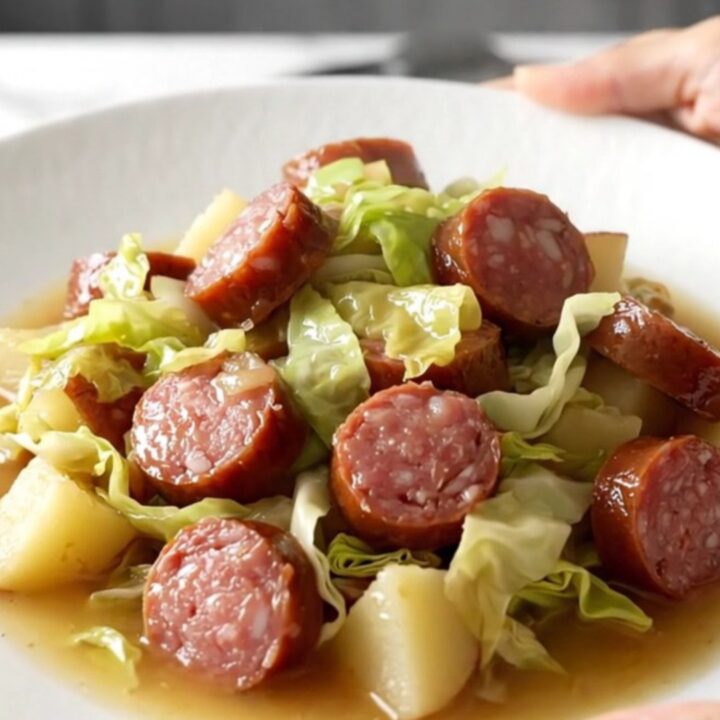
Crockpot Cajun Cabbage with Sausage and Potatoes
Ingredients
- 1 lb smoked sausage, sliced into coins
- 1 head green cabbage, chopped
- 1 lb red potatoes, cubed
- 2 tbsp Cajun seasoning
- 1 cup chicken broth
Instructions
- Place the sliced smoked sausage into the bottom of the slow cooker insert. Layer the chopped cabbage and cubed red potatoes on top of the sausage.
- Sprinkle the Cajun seasoning evenly over the cabbage and potatoes. Pour the chicken broth over the entire mixture to provide the base for the cooking liquid.
- Cover and cook on low for 4 hours, or until the potatoes are fork-tender and the sausage reaches an internal temperature of 160°F (71°C). Serve warm in bowls.
Estimated nutrition per serving
- Calories
- 380
- Protein
- 16 g
- Carbohydrates
- 32 g
- Fat
- 22 g
- Fiber
- 5 g
- Sugar
- 6 g
- Sodium
- 950 mg
Next recipe
Slow Cooker Hobo Dinner with Beef Patties
See the recipe → →This recipe is based on a short cooking video and is published under the pen name Clara Weller. It was checked before publication, but errors can slip through. Nutrition, when shown, is an estimate. Read more in our editorial policy and on our food safety page.
More recipes to try
Slow Cooker Cranberry Pork Tenderloin with Stuffing
Total time: 4 h 10 min
Easy Crockpot Honey Butter Chicken and Corn
Total time: 4 h 10 min
Easy One-Pan Creamy Mushroom Pork Chops and Rice Bake
Total time: 55 min
Creamy Bacon Ranch Hash Brown Casserole
Total time: 1 h
Slow Cooker Honey Butter Spareribs and Corn
Total time: 6 h 15 min